Study looks at reintroduction of storks in Britain

 Getty Images
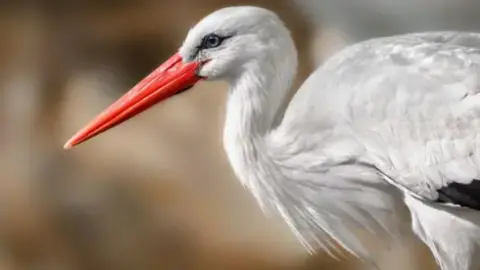
Farmers, landowners, and members of the public are being canvassed on whether storks should be reintroduced across Britain.
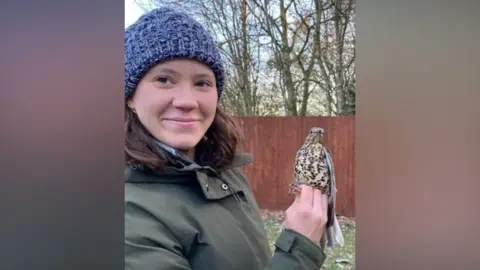
Ornithologist and Harper Adams University student Sophie Rabone is researching bringing the historically native birds back after their disappearance in the 1400s due to over-hunting and habitat loss.
Some breeding populations have been introduced at selected sites, and Rabone is looking into the feasibility of a large-scale reintroduction.
"As a species historically native to Britain and closely associated with the wetlands and farmland that have suffered most, its return signals a recovering landscape that benefits countless other species alongside it," she said.
"The UK is one of the most nature-depleted countries in the world - and after decades of intensive agriculture, habitat loss and urban expansion, nature has paid a huge price.
"Reintroducing species like the white stork is one piece of reversing that decline."
 Harper Adams University
Last June, 10 white storks were released in North Devon, in south-west England as part of a long-term rewilding.
In December, plans were announced for a breeding colony of white storks to be introduced to Eastbrookend Country Park in Dagenham in London for the first time in 600 years.
The work by Rabone, from South Staffordshire, will examine how well the white stork can adapt to different environments and habitats, alongside what the public, farmers and land managers think about the plans.
She is asking people to share their views by completing a survey as part of her PhD at the Shropshire-based university.
"Increasing biodiversity not only has beneficial effects on the natural ecosystem - but also on the human populations that share the space," she said.
Follow BBC Shropshire on BBC Sounds, Facebook, X and Instagram.
