How tiny 'backpacks' and sniffer dogs could save hedgehogs from extinction

 Getty Images
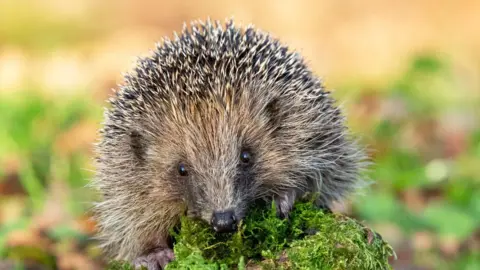
Hedgehog "backpacks" and a specially trained detection dog could be the key to protecting the tiny mammal as its population continues to fall across Europe.
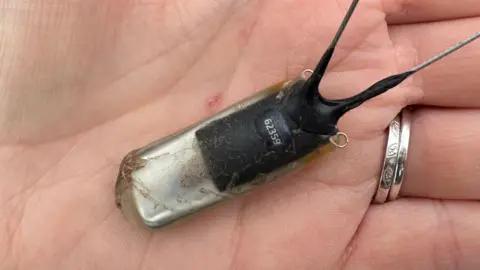
A recently launched tracking project sees a small GPS device attached to a hedgehog's spine – resembling a backpack – as researchers try to piece together their movements.
As part of the process the first hedgehog detection dog for Ireland has been specially trained to help track them down.
The common western European hedgehog has been listed as Near Threatened by the International Union for the Conservation of Nature.
The project, led by Ulster Wildlife, sees a small device, reminiscent of a "tiny little backpack" temporarily fitted onto a hedgehog.
Only male hedgehogs are chosen to avoid disturbing nesting females.
The trackers allow the charity to map exactly where the hedgehogs travel each night, including how many gardens they pass through, the roads they navigate, where they locate food and where they rest.
Ulster Wildlife said recent research emerging from across the UK and Ireland suggested hedgehogs were retreating to towns and cities and that urban gardens may be their last refuge.
However, almost nothing is known about how hedgehogs navigate urban environments and what obstacles they face.
Ulster Wildlife's Katy Bell said the GPS does not impact the hedgehog as "they can still roll up into a ball".
Russell the hedgehog sniffer dog
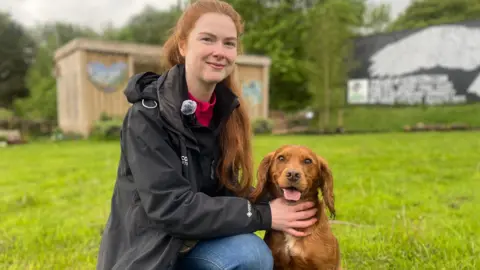
The hedgehog detection dog is being trained by Conservation Detection Dogs NI and will track down the tags if they fall off and help locate hedgehogs more efficiently.
This is Patrice Kerrigan and her two-year-old cocker spaniel Russell's department.
She has two dogs that are fully trained to find bat and bird carcasses around wind farms and wind turbines.
But Russell has been promoted to dealing with hedgehogs.
"There are two parts where Russell is going to help," she said.
"His first is to track hedgehogs that aren't coming to feeders because we want to see what they are doing and what their movements are because, at the moment, Ulster Wildlife are catching the hedgehogs that are coming to feeders that are artificially set up - that's the only data they are getting."
His second task is to help with the hedgehogs that are being tagged.
"But those tags can stop omitting their sound and that's when tags and the hedgehogs kind of get lost," said Kerrigan.
"That's where Russell comes in to help with those as well."
Hedgehogs are a 'gardener's friend'

Katy Bell said the hedgehog population had "declined by millions" since the 1950s.
As a senior conservation officer with Ulster Wildlife she said "a lack of good habitat and food would be the main reasons" for that decline.
Bell also said the tracking project would provide Northern Irish specific data on hedgehogs' movements.
"It's really exciting, we are hoping all of this data will inform conservation action for hedgehogs going forward," she said.
Describing the animal as "the gardener's friend" Bell said the health of the population was vital as they "come into your garden and eat slugs," but also that "they're just lovely to see".
Hedgehog highways

Maureen Carvill is a gardening officer with Ulster Wildlife.
She said there were many changes we could make to our gardens to "let hedgehogs in and make things more suitable for wildlife".
The data from the project will help inform people how they can change their gardens to make modifications such as "hedgehog highways" and building log piles which will attract insects and mini-beasts to feed hedgehogs.
A hedgehog highway is a space that allows them to move through various gardens with ease.
"One garden doesn't provide a mate and all its food," said Carvill.
"So it needs these highways to travel across the countryside".
"Hedgehogs can travel up to 3km (1.9 miles) a night and their home range can be anything up to 20 hectares. So they are not always in your garden, they are in someone else's garden."
Carville said strimmers, electric lawnmowers, slug pellets, cars, cattle-grids and ponds were among the many man-made actions that contribute to hedgehog decline.
Putting out shallow dishes of water, log piles, plant pollinator friendly plants were some of the steps we at home can make to facilitate hedgehogs.
"People go into garden centres and they don't really know what to buy," she said.
"If you look for anything that has the RHS logo on it, with a little bee, that means it's pollinator friendly and will start to bring in the butterflies and the moths which will bring in all the insects and there's your food chain for the hedgehog," she added.
