Walkers urged not to trample fragile bluebells

 BBC
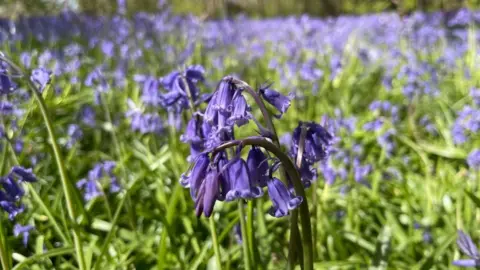
BBCA charity is urging people to "stick to the path" when visiting bluebell woods to make sure the flowers are still there next year.
The Woodland Trust is concerned people on the hunt for the perfect photograph in south-west England may walk into copses of bluebells, standing on the plants in the process.
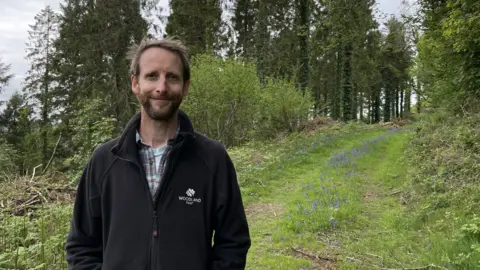
Joe Middleton, Devon site manager for the Woodland Trust, said: "Stay on the path, keep your dog on a lead, use the zoom on your camera, don't trample all over them."
He said trampling not only caused the flowers to break but also meant the ground underneath the plants becomes compacted so new plants could not grow.
The charity has also warned about the impact on insect populations.
Middleton said bluebells provided much needed pollen to emerging insects in early spring which then go on to feed birds and other animals.
"We don't need humans trampling flowers to add to the list of pressures that our wildlife is already facing," he said.
The Woodland Trust don't want people to not come and see the flowers but they want people to do so in a way that protects all species in the habitat.
"There are not just fragile flower populations, there's also birds trying to nest on the ground."
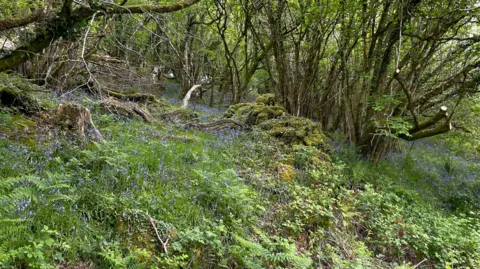
Bluebells are native to western Europe and south-west England is a species stronghold, says the trust. They are associated with ancient woodland and often used in combination with other species as a clue that a wood is ancient.
They reach their greatest densities in the UK's woods where many thousands of bulbs can exist in one woodland, creating the incredible blue carpets associated with spring.
The bluebell is protected under the Wildlife and Countryside Act (1981). This means digging up the plant or bulb in the countryside is against the law and landowners are prohibited from removing bluebells from their land to sell.
Follow BBC Devon on X, Facebook and Instagram. Send your story ideas to spotlight@bbc.co.uk.
