Opera singer welcomes double cochlear implant trial

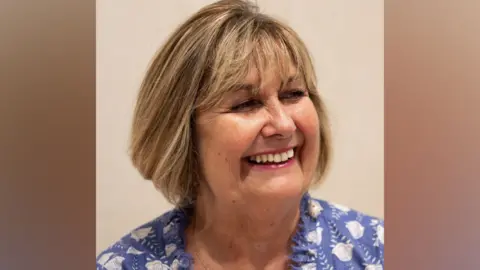 Janine Roebuck/CUH
A national trial to explore the benefits of giving deaf adults double cochlear implants could be "utterly life changing", according to a former opera singer.
Janine Roebuck hid her deteriorating hearing for 30 years while pursing her singing career. She received bilateral implants, which she partly funded, after retirement in 2019.
The trial is being co-led by Addenbrooke's Hospital and the University of Cambridge and will run in 14 hospitals, benefitting more than 250 patients.
Roebuck, who is from London, said struggling to hear "can be extremely isolating", adding: "I also feel safer and more secure having the two implants."
"If anything goes wrong with one of the implants, I'm not suddenly plunged into a world of total silence," said the mezzo-soprano, who was diagnosed with a genetic condition that caused hearing loss as a teenager.
"Having two implants is light-years away from just one; sound quality is so much better, sounds are fuller, clearer, louder and more natural," she said.
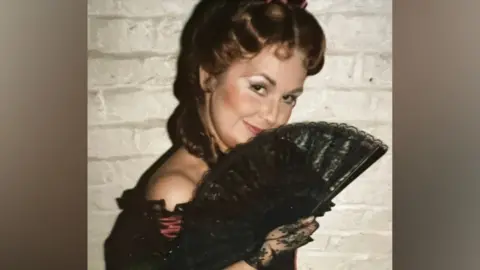 Janine Roebuck
More than 1,000 adults a year in the UK receive cochlear implants to restore their hearing, but under current NHS guidance adults only receive a single implant.
The implants work by turning sound into electrical signals and sending them to part of the inner ear called the cochlea; from here, the signals travel to the brain and are heard as sound.
The trial, which was designed in collaboration with Roebuck and other patients, is being funded by the National Institute for Health and Care Research.
Participants - who will need to be deaf later in life and cannot already have an implant - will be monitored for 12 months after surgery to assess the effects of the implants on wellbeing, ability to hear speech in noise and quality of life.
The study will also be evaluated for its economic benefits and cost for the NHS.
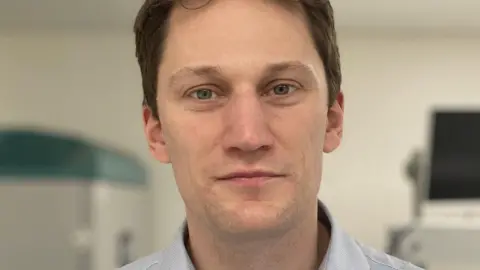 CUH
CUHChildren already routinely receive bilateral implants, which "can have a transformative effect on their quality of life and interactions with other people", said Matthew Smith, an ear, nose and throat surgeon at Addenbrooke's.
"Through this study, we can offer the same opportunity to adults who have become deaf, and understand the potential added value of bilateral cochlear implants, not just in terms of hearing, but also how they enrich quality of life," he added.
Prof Debi Vickers, a speech and hearing scientist in the university's Department of Clinical Neurosciences, is the study's other co-lead.
"Adults tell us, and I agree, that they should be given the same hearing opportunities as children," she said.
"In turn these will result in reduced social isolation, enriched communication, improved mental health, and better overall quality of life."
Roebuck, whose singing career included performing at London's Royal Opera House, as well as in operettas and musicals, used hearing aids before receiving the implants.
"With bilateral implants, I no longer consider myself to be deaf," she said.
"They have been utterly life-changing and, for me, have broken a generational curse."
The trial is expected to begin recruiting patients in the autumn.
Do you have a story suggestion for Cambridgeshire? Contact us below.
Follow Cambridgeshire news on BBC Sounds, Facebook, Instagram and X.
