'It's sink or swim... you feel like you're drowning'

 John Fairhall/BBC
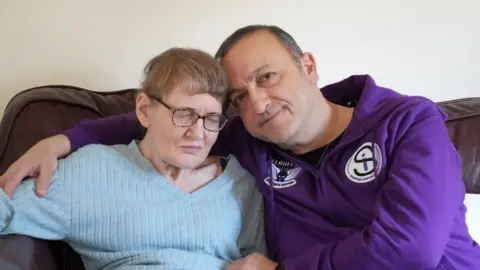
"It's sink or swim but at times you feel like you're drowning," says John Manitara who cares for his wife Gillian who has a rare neurological condition.
Gillian, 62, of Roydon, Essex, was diagnosed with progressive supranuclear palsy (PSP) in January 2024, leaving her unable to communicate and she rarely opens her eyes.
PSP affects about 5,000 people in the UK and causes problems with balance, movement, speech and vision.
John, also 62, says a lack of awareness about PSP means the condition can be misdiagnosed as dementia or Parkinson's disease, with patients and their families left confused and isolated.
 John Manitara
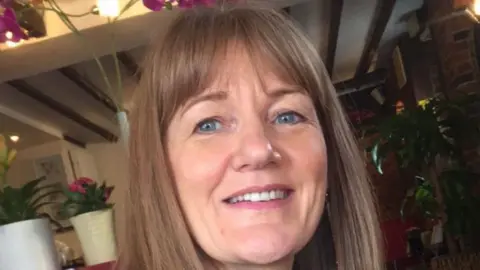
Gillian's family began to notice small changes in her behaviour in September 2022.
John says at first the changes were attributed to the menopause, but in March 2023 he noticed his wife had become more irrational and did not react as expected when she had a car crash.
"She just seemed different and distant in some ways from how she would have reacted," he says.
Gillian was initially diagnosed with dementia in 2023, but after being treated by Dr Timothy Rittman, a consultant neurologist at Addenbrooke's Hospital, Cambridge, she was correctly diagnosed as having PSP in January 2024.
The mother-of-two and former head receptionist at French Connection now needs round-the-clock care.
"It's horrible, it's heart-breaking but you've got to be realistic and get on with it - but it's been a complete rollercoaster and emotionally draining," says John.
"It's a rare illness, it's hard to diagnose and easier to misdiagnose," he adds.
 John Fairhall/BBC
Gillian's daughter, Anna Manitara, 26, says she misses being able to share her life with her mother, such as her recent engagement.
"My mum was always really bubbly, friendly, what I love the most about her is that she always had the right answer for everything.
"She was so fun, we used to do so much together - we'd literally go to the theatre all the time together, go to gym classes and just go out."
 Alex Pope/BBC
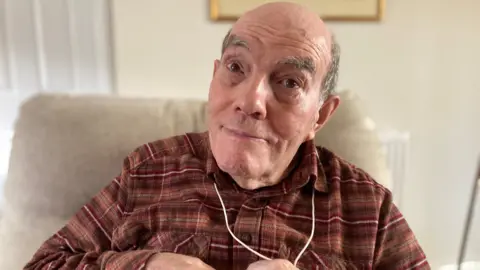
Clive Hughes, 77, was diagnosed with PSP in 2022 after his symptoms were first mistaken for Parkinson's disease.
In 2008 Clive and his wife Barbara moved to Sheringham, Norfolk, to enjoy their retirement.
He volunteered at the Poppy Line heritage railway, as a fireman and later station master, and led ramblers' walks across Norfolk.
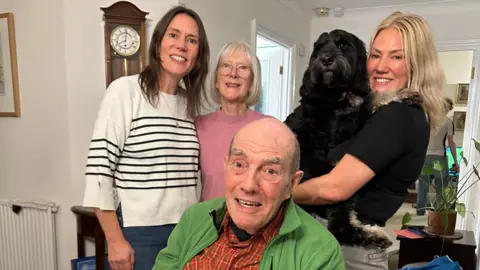
Then in 2023, due to Clive's ill-health the couple moved back to Wootton, Bedford, to be close to their daughters Anna Saunders and Ceri Evans.
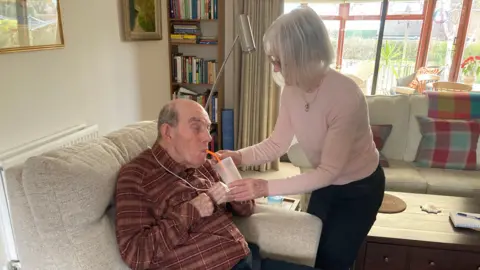
Clive is still able to talk, but cannot walk unaided and uses a wheelchair and needs help with personal care.
 Clive Hughes
"Life now is very different to what it was a few years ago. It's not what I expected our retirement to look like at all," Clive says.
Evans adds that her dad was "active, curious and fiercely independent, loved to walk, and followed steam trains across the country".
"It's a life lost," she adds, but not just for dad but also for her mum, who is now his full-time carer.
 Ceri Evans
Clive says he misses the life he planned, adding: "Go places, spend time with the people you love, and enjoy yourself along the way.
"I've got some great memories - India, Australia, New Zealand, the USA - and I still enjoy looking back at the photos."
 John Fairhall/BBC
Gillian, Clive and their families are part of research into the condition at Addenbrooke's Hospital and Clive and his daughter Evans have signed up to have their brains and spinal cords donated for research.
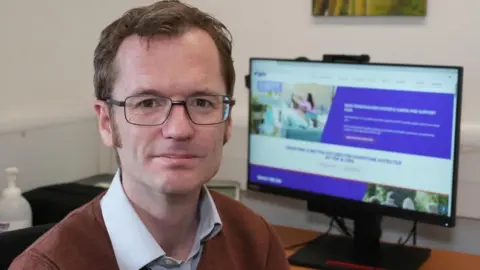
Rittman says he sees between 80 and 100 patients with the condition and says it is important that patients get the right care and support.
"When people have the combination of those early subtle symptoms it can be hard to pick up because of the walking problems and the balance problems, people often have a diagnosis of Parkinson's disease and when they don't respond to the treatments, then as the penny drops and we realise it could be PSP," he says.
There is no medication that can slow the disease down, but medication for Parkinson's can help, he adds.
 Alex Pope/BBC
The families want to raise awareness of the condition and have called for more research and support.
James Cusack, the chief executive of charity PSPA, which supports people living with PSP and corticobasal degeneration (CBP), said the progressive nature of PSP "means over time [it can] impact balance, speech, vision, swallowing and mobility - yet most people have never heard of them, including some working within healthcare settings".
"That lack of awareness has real-life consequences: people do not receive a timely diagnosis or the support and care they need.
"For one in three people, it takes over a year just to be referred to a neurologist, and 60% are misdiagnosed along the way.
"Earlier diagnosis means better care, better support, and more time for families to plan and adjust."
 Family handout
A Department of Health and Social Care spokesperson said: "We are taking steps to ensure those affected receive the support they need as early as possible.
"We are investing millions into pioneering research platform Rare Disease Research UK, which is working closely with patients, relatives, charities and researchers to improve early assessment, diagnosis and treatment of this condition and others."
Do you have a story suggestion? Contact us below.
Follow East of England news on X, Instagram and Facebook: BBC Beds, Herts & Bucks, BBC Cambridgeshire, BBC Essex, or BBC Norfolk.
