What is 'zip-merging' and when should you do it?

 PA Media
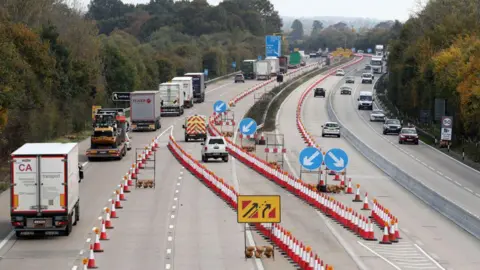
If you've ever been sitting patiently in a lane closure queue only to witness motorists whizz past you, you're not alone in your quiet fury. But in a roundabout way, these queue-jumpers are inadvertently helping matters by "zip-merging".
It's a method National Highways actually considers best practice and could be particularly useful on roads like the A417 in the Cotswolds, where people have been urged to "drive more French" by adopting the zip-merging method.
So what is it and how does it help keep traffic flowing?
What is zip-merging?
 PA Media
Zip-merging is a traffic flow measure that originated in North America, according to the RAC.
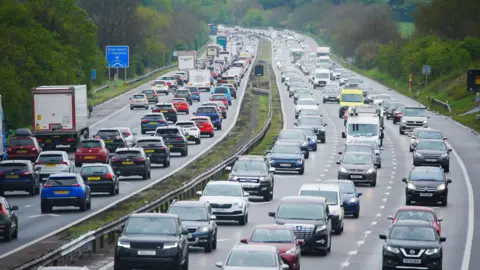
Instead of moving as soon as a lane closure is announced, drivers should merge one at a time at the point of the lane closure - like the teeth of a zipper coming together.
By using both lanes fully, traffic build-up is said to be significantly shortened.
And it can be especially useful on busy roads such as the A417, where the heavily-congested single carriageway will be replaced with a three-mile (4.8km) dual carriageway between Gloucester and Cirencester.
Why does zip-merging work?
When motorists encounter a lane closure on a motorway or dual carriageway, the majority of drivers follow the etiquette of moving over early, but this creates one long, slow line of traffic and a near-empty outside lane, said the RAC.
National Highways encourages zip-merging instead.
"By keeping both lanes in use until the merge point, congestion is minimised and journey reliability is improved," it said.
Avon and Somerset Police agreed, adding the method "helps make full use of the available road space".
"Problems tend to arise when drivers are unwilling to allow others to safely merge, or when motorists change lanes aggressively, without adequate observation, signalling or consideration for other road users," a spokesperson said.
Is zip-merging legal?
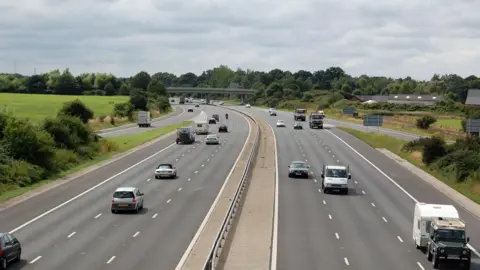
Using an open lane until the merge point instead of joining a queue is not considered an offence, said the force.
In fact, rule 134 of the Highway Code recommends "merging in turn" if it is safe to do so.
However, motorists are reminded they shouldn't change lanes unnecessarily. Blocking a driver trying to merge lanes in England and Wales could also violate rule 137.
When and where should you merge lanes?
Zip-merging should occur at the exact point where the lane closure begins.
National Highways said drivers should maintain both a steady speed and safe gap with the vehicle in front while doing so.
They should also be careful not to change lanes suddenly without signalling, move into the single lane too early, or tailgate to prevent other vehicles merging.
A spokesperson added: "Dangerous, careless or inconsiderate driving can occur if a driver forces their way into traffic, deliberately obstructs other vehicles, or carries out manoeuvres which create a risk of collision."
Follow BBC Gloucestershire on Facebook, X and Instagram. Send your story ideas to us on email or via WhatsApp on 0800 313 4630.
