The hidden Edo-era bathhouse that embodies Tokyo

 Konparu-yu
There is no more intimate way to understand Tokyo's unique blend of past and present than shedding your clothes and engaging in "naked friendship" in this Edo-era insitution.
There are few cities where the future and past feel as present as in Tokyo. Neon-lit skyscrapers rise above centuries-old temples, bullet trains speed past meticulously tended Japanese gardens and robot cafes sit nearby family-run businesses that have existed for generations.
But there may be no better place to experience Tokyo's unique blend of innovation and ancient roots than inside Konparu-yu: a 163-year-old sento (public Japanese bathhouse).
Your local expert:
Mizuki Uchiyama is a Japanese journalist who lived in Tokyo for more than 10 years and regularly returns. She has visited sento across Japan and visits Konparu-yu whenever she’s back in Tokyo.
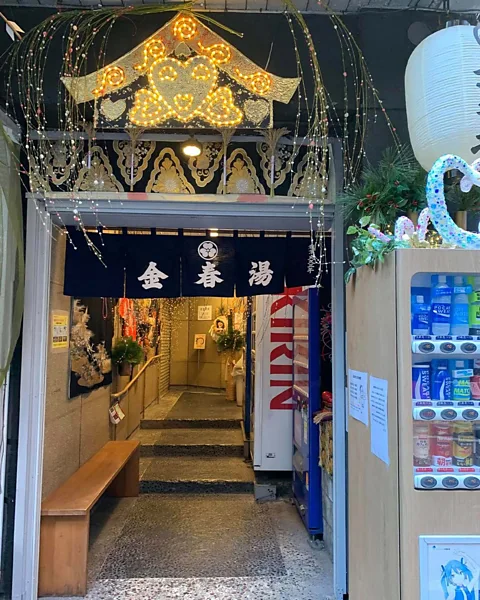
First-time visitors could easily walk past Konparu-yu without noticing it. Hidden amidst a sea of modern glass towers, Michelin-starred restaurants and high-end department stores in the ritzy Ginza shopping district, a narrow side street leads to discreet doorway marked by a traditional lantern and a faded indigo noren curtain.
As I push past the noren, shed my clothes and sink naked into a steaming-hot tub, I begin one of the most uniquely Japanese experiences you can have.
 Konparu-yu
A 1,200-year-old tradition
Sento have played an important role in daily life among Japanese people for more than 1,200 years. Born during the spread of Buddhism in the 700s when cleansing one's body and spirit was thought to be an important duty to serve Buddha, these temple-shaped structures became particularly popular during the Edo period (1603-1868) and spread throughout the archipelago. Since most citizens didn't have private bathtubs at home, the local sento (literally: "coin bath") was a place to cleanse oneself relatively cheaply while socialising with friends and neighbours.
"In Edo, when society was sharply divided by class, bathhouses were among the few public places where samurai, merchants and labourers could bathe together," said Shinobu Machida, a researcher of Japanese bathhouse culture. "Samurai removed their swords before entering. Once people stepped into the bath, they returned to being simply human."
Centuries later, this sense of hadaka no tsukiai ("naked friendship"), where everyone is nude and equal, is still true at Konparu-yu. Outside, the world's largest metropolis might often feel frenetic and status-obsessed, but inside this Edo-era institution, watches and handbags disappear into lockers, job titles and salaries melt away in the steam and people from all walks of life sit nude in the same soothing water.
Over the years, I've shared steaming-hot baths at Konparu-yu with elderly regulars, white-collar office workers, young creatives and even the occasional visitor from overseas. Its tranquil tubs attract a perfect snapshot of life in Tokyo – past and present.
 Alamy
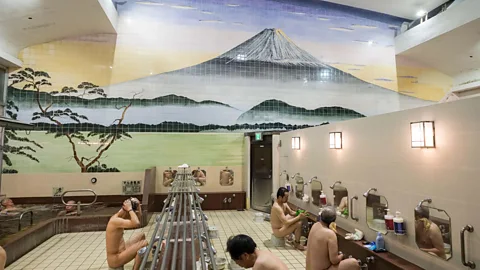
AlamyEntering Konparu-yu is also – quite literally – an immersion into Japanese culture. While no two sento are the same, visitors always follow the same time-honoured bathhouse etiquette: place your shoes and belongings in wooden lockers, wash yourself thoroughly and then enter a gender-divided room.
Inside, strangers sit side by side in the same steaming water in near silence, greeting familiar faces with a quiet "konnichiwa" (hello). Long hair is tied up, towels are kept out of the bath and voices remain low, reflecting the shared understanding that – in the sento as in Japan itself – everyone is expected to abide by the unwritten rules of social etiquette to preserve the calm atmosphere and environment.
A singular sento
While hundreds of sento are scattered across Tokyo's outskirts, Konparu-yu is one of the last surviving ones in central Tokyo. The bathhouse has stood in Ginza since 1863, and over the years, it has witnessed the city rise, burn and transform from its unique location.
Ginza is often considered the birthplace of modern Tokyo. When Japan opened to the West following its centuries of self-imposed isolation at the end of the Edo period, Ginza was rebuilt with brick buildings and broad streets. By the 1930s, it had become the centre of Tokyo's urban culture, filled with cafes, theatres and jazz halls.
 Mizuki Uchiyama
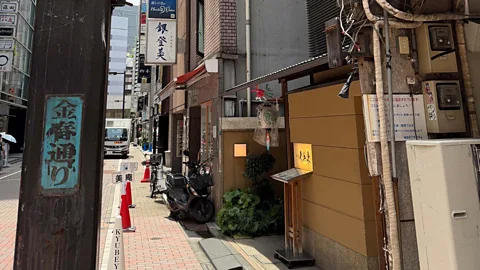
Visitors experience this layered history before they even enter the bathhouse. After wandering through Ginza's polished main streets full of international chain brands, Konparu Street feels like a time capsule: the narrow, brick-lined backstreet brims with small, locally owned restaurants, bars and long-standing shops. A few steps away from the sento, a wooden Edo-era wooden water pipe and bricks from Ginza's early development are hiding in plain sight.
Like Tokyo itself, Konparu-yu fell victim to the city's turbulent 20th Century. The original bathhouse was destroyed in the March 1945 firebombing of Tokyo during World War Two, when much of the capital was reduced to ashes, and rebuilt in its original location in 1957.
When Tokyo redeveloped in the decades after the war, many of its newer homes were designed with private bathrooms. As a result, the number of sento across Tokyo – as well as in Japan – has been steadily vanishing for decades. To help attract a new generation of bathers, many sento owners have renovated their bathhouses in recent years with sleek contemporary designs, social media marketing and even in-house craft beer bars.
Tokyo resident Akihiro Fujimoto has visited bathhouses across the capital and believes that what makes Konparu-yu unique is that it has stuck with tradition. Visitors are greeted by the receptionist from an elevated wooden bandai (welcome desk), retro wooden lockers line the changing rooms and tiny plastic stools are placed in each gender-separated bathing area for patrons. "Konparu-yu has stayed true to the classic Tokyo sento. The baths are simple, the water is hotter than most, and the atmosphere still feels like the Tokyo of decades ago."
 Mizuki Uchiyama
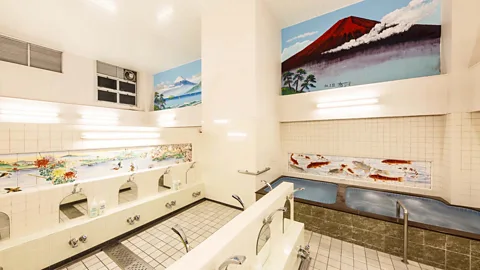
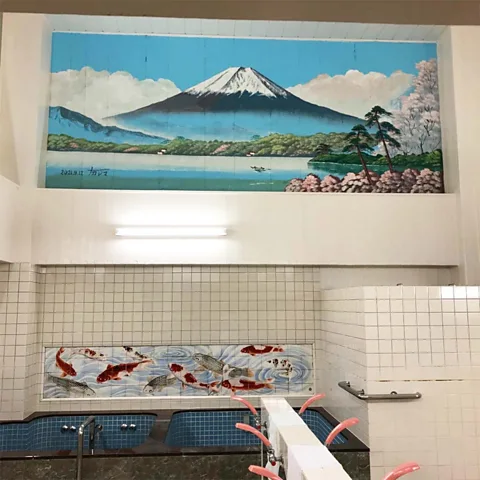
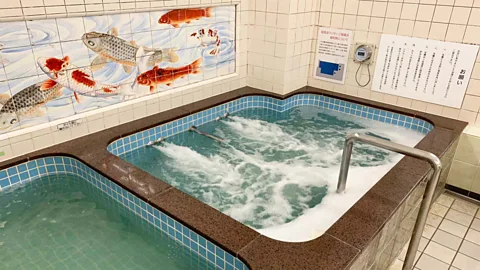
After sinking into the piping-hot 43C tub alongside a group of elderly regulars, I leaned back against the smooth tiles and looked up at a hand-painted mural of Mount Fuji's snow-covered summit. Below it, a vivid Kutani porcelain mural depicted plump koi carp gliding through a pond, their scales shimmering in crimson, yellow and cobalt blue. Back in the changing area, another painted wall showed sparrows and ducks flying through the changing seasons of cherry blossoms giving way to hydrangeas and crimson maple leaves.
These bucolic landscapes (especially those showcasing Japan's most iconic mountain) are one of the defining features of traditional Japanese sento, as the soothing scenes help transport bathers into a Zen-like oblivion. But because there are just a handful of sento mural masters left, these once-iconic murals have become increasingly harder to find.
More like this:
To first-time visitors, the tiles may simply seem decorative. But according to bathhouse historian Shinobu Machida, they reflect a uniquely Tokyo tradition of transforming ordinary spaces into unexpectedly elaborate oases that help residents escape the bustling city outside.
"If bathing were only about washing, there would have been no need to paint Mount Fuji or decorate the walls," he said. "Konparu-yu's owner wanted ordinary people to experience something extraordinary."
 Konparu-yu
More than a century later, that sense of escape still draws people through Konparu-yu's indigo noren.
Tokyo office worker Kaho Nagashima says she frequents Konparu-yu so much that it has become a home away from home for her. "Before going home, I stop by and switch myself off," she said. "It is a place where I reflect on the day and put my thoughts in order. The traditional atmosphere helps me relax."
Tokyo-based journalist Emiko Yodogawa says she had visited Ginza more than 100 times before she discovered this "oasis in the city".
"I had no idea such [a traditional] bathhouse existed in the middle of Ginza," she said. "Being able to wash away sweat for a few hundred yen [about £3] in the middle of Ginza is something I am truly grateful for," she said.
During my last visit, I ended up staying at Konparu-yu far longer than I'd intended. Time seemed to slip away as I watched the mist rise beneath Mount Fuji's brush-stroked crater. When I eventually stepped back out onto the streets of Ginza, the city was still racing forwards. But behind an old noren, Tokyo had reminded me that its future has always made room for its past.
--
If you liked this story, sign up for The Essential List newsletter – a handpicked selection of features, videos and can't-miss news, delivered to your inbox twice a week.
