What are ancient trees and how are they protected?

 Getty Images
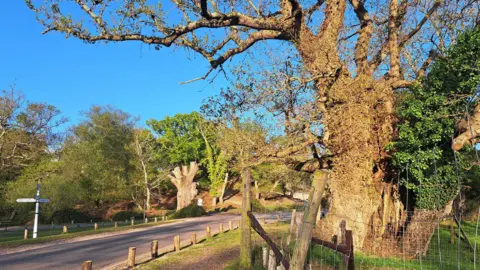
Work has taken place to protect an ancient oak tree estimated to be up to 700 years old.
The Queen Oak, at Moyles Court near Ringwood, Hampshire, is one of the largest oaks in the New Forest.
Posts have been installed to stop drivers parking on its roots, amid concerns about damage.
The tree is one of thousands of ancient and veteran trees across the south of England - but what makes a tree ancient and what protections do they really have?
What is an ancient tree?
 New Forest National Park Authority
Trees are classed as ancient once they reach a certain stage of maturity, though there is no single age threshold.
Jon Stokes, director of trees, science and research at The Tree Council, said ancient status depended on both species and lifespan.
"A birch tree might make maximum 150 years old," he said. "An oak tree might make 1,000 years old, and a yew tree might in theory make 2,000 or 3,000 years old."
Ancient trees are generally considered to be in the final quarter of their expected lifespan.
As trees age, they often become squat, hollow and broad-trunked, with decaying wood, cavities and rot.
Trees that are not old enough to be ancient but share similar features, such as decay or hollowing, are often classed as veteran trees.
Why are ancient trees so important?
 Getty Images
Ancient trees are not valuable despite their decay and rot - but frequently because of it.
Though it may sound like a cause for concern, decay is a natural part of a tree's development.
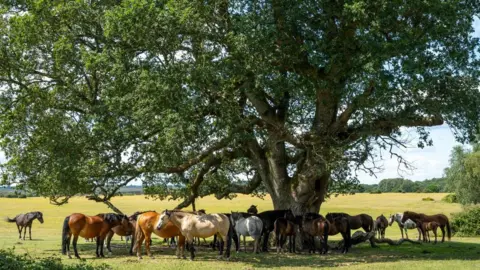
Splitting bark, cavities, hollow trunks and pockets of water create "microhabitats" that support bats, birds, insects, fungi and other species.
"All of these little microhabitats are what make an ancient tree more ecologically important," said Stokes.
"It's all the other things that live in and around it. Oaks can support up to 2,000 different species."
But beyond their ecological value, ancient trees also serve as living links to the country's past.
The oldest yew tree in Hampshire, at All Saints Church in Farringdon near Alton, is estimated to be between 2,500 and 3,000 years old.
That means it may have first taken root long before the Roman conquest of Britain, predating Christianity itself.
Across Britain, some ancient trees are older than Stonehenge.
Stokes said: "That's an astonishing thought process because everybody sees Stonehenge as part of the nation's heritage.
"But a tree that's quietly been growing for the same period of time wouldn't necessarily be on anybody's radar as part of our heritage."
What threatens ancient trees?
Ancient trees may have survived for centuries but they remain vulnerable to a growing range of threats.
Development remains a major concern, with the Woodland Trust warning that more than 1,000 irreplaceable ancient woods have been threatened over the past decade.
But one of the most common dangers is soil compaction, caused by repeated footfall, vehicles or animals compressing the ground around roots.
That compacted soil reduces airflow and water movement, making it harder for trees to absorb nutrients.
That was one of the concerns surrounding the Queen Oak, where vehicles parking too close risked damaging its root system.
Other threats include climate change, pollution, overshading from younger trees and pests and diseases, like ash dieback and oak processionary moth.
Many of the threats stem from a lack of awareness about how ancient trees age and survive.
"It's usually not deliberate destruction, it's benign neglect," said Stokes.
How are ancient trees protected?
 Getty Images
Ancient status alone does not automatically grant a tree legal protection.
Instead, ancient and veteran trees are protected through a variety of policies and planning safeguards.
Tree Preservation Orders (TPOs), issued by local authorities, can protect trees with value as public amenities, while felling licences regulate removal of trees on a larger scale.
Ancient trees may also receive some protection through planning laws where development threatens irreplaceable habitat.
However, campaigners and experts have warned these protections are often limited and not specifically designed for ancient trees.
The Woodland Trust has described existing safeguards as offering only weak legislative protection in some cases.
What are the South's most significant trees?
 Getty Images
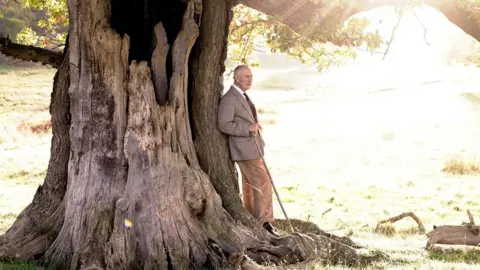
The Tree Council says Britain has more ancient trees than any other country in Europe, with the South containing some of its most important concentrations.
The New Forest and Windsor Great Park are internationally recognised for their historic tree populations.
In Hampshire, the Queen Oak near Ringwood is thought to be between 650 and 700 years old, while the Knightwood Oak remains one of the New Forest's best-known ancient trees.
The county is also home to the ancient yew at All Saints Church in Farringdon.
Oxfordshire's Blenheim Palace estate contains ancient oaks in High Park, with several dating back to 1000 AD and beyond.
In Berkshire, Windsor Great Park is home to Offa's Oak, believed to be about 1,300 years old.
Dorset's notable trees include Wyndham's Oak at Silton, thought to be about 1,000 years old and among the county's largest, as well as the Tolpuddle Martyrs' Tree, which is closely tied to one of the most important moments in early trade union history.
What can communities do to protect trees in their area?
Communities can play an important role in protecting ancient trees close to home.
The Tree Council encourages people to identify and celebrate significant local trees, while also reducing avoidable harm such as soil compaction.
That can include supporting TPOs, responding to planning applications, recording trees on inventories and seeking specialist advice for management.
Simple measures, such as rerouting footpaths, relocating benches or preventing vehicles from parking near roots, can also make a major difference.
Stokes said the first step was often simply awareness.
"Spot them, celebrate them and bring them to people's attention.
"Make it something that says 'this isn't just a tree, it's part of our history. It's part of our culture. It's part of what makes us a village in Oxfordshire or a town in Hampshire'."
