Seaside town celebrates its fossil finding history

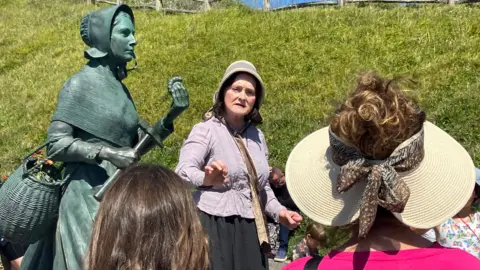
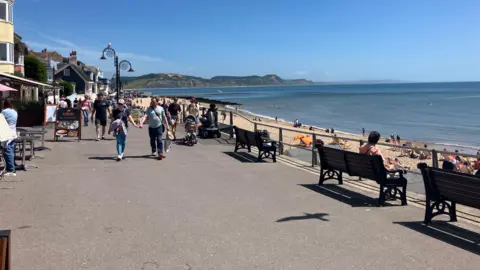
Crowds have descended on a seaside town for an annual festival celebrating the Jurassic Coast and its role in the history of fossil finding.
Set against the dramatic cliffs and beaches where important discoveries have been made, Lyme Regis Fossil Festival 2026 on the 13 and 14 June is one of the UK's biggest science and heritage weekends.
Organised by Lyme Regis Museum, in the town known as the birthplace of palaeontology, the event hosts expert-led fossil walks on nearby beaches, talks by leading palaeontologists and interactive exhibits.
It also recognises the work of Mary Anning, the pioneering 19th Century fossil collector, whose finds helped change scientific understanding of prehistoric life.
Kieran Satchell, engagement and learning officer for Lyme Regis Museum, said: "Our museum is the place where Mary Anning lived, it's where her shop, where she sold her fossils to make a living was, and to be able to work in that location is amazing."
Satchell said he was privileged to "rub shoulders with some of the best in palaeontology" and be able to give a talk at the event.
"It's exciting to see everybody come together in one place, enjoying and sharing that same love for fossils, dinosaurs, palaeontology," he said.
He described the area as a "dynamic" coastline where new discoveries are always being made.
He referenced a discovery in April, when an amateur fossil hunter found a rare fragment from the jaw of the world's oldest marine crocodile.
"Even though it was small, it was so exciting because things like that are rare," he said.
