Hats off to NHS trust making reusable headwear

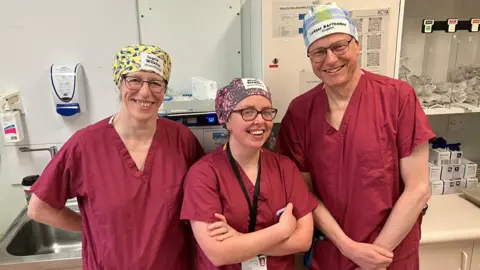 Supplied
A health trust is cutting costs and making operating theatres more inclusive by making reusable hats from old shirts.
The sustainability project at North Cumbria Integrated Care Foundation Trust, has won a regional NHS Excellence Award, and involved clinicians raising funds by busking on a bus.
The trust was spending £12,000 annually on paper hats with more than 64,000 going in the bin after use. Staff with Afro-Caribbean textured hair or who wear hijabs were also struggling to find suitable coverings.
Leading the project, consultant surgeon, Ludger Barthelmes, said: "Getting projects like this moving can be challenging, but all the hard work everyone has contributed is paying off."
The trust said hats produced in a wider range of sizes for colleagues in those groups who had previously found standard disposable hats uncomfortable or unsuitable, had removed a barrier to working in theatres.
It also said adding staff names to reuseable headwear supported clearer communication and helped staff feel more visible at work.
The savings helped create paid employment through People First and Goodlives, two charities supporting people get jobs.
 Supplied
Barthelmes said: "We even dusted off our musical instruments to go busking at the train station to raise money."
People attending the charities helped make the hats out of old shirts and second hand bed linen.
Barthelmes said the support from the charities also took "pressure off" his wife because she had stitched about 1,000 hats.
 Supplied
A £2,650 grant from train operator Avanti's sustainability fund helped pay for state-of-the-art equipment to launder the hats at West Cumberland Hospital.
It also provided an hourly direct bus link between Cumberland Infirmary and West Cumberland Hospital
Consultant anaesthetist Ingrid Wilkins said: "If you've got curly hair or lots of hair, the disposable hats don't really fit."
Barthelmes said the single use hats do not fit people with afro-caribbean texture hair and "some members of staff cried secretly in the changing room trying to glue two hats together".
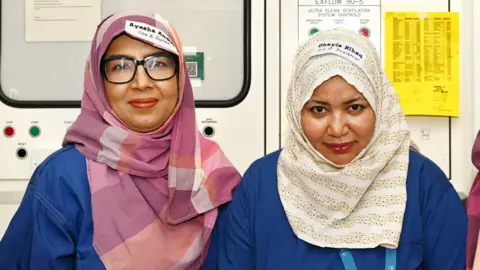 Supplied
He said Muslim colleagues "sometimes have to put a single use hat over their hijab".
Ear, nose and throat specialty registrar Marwa Saad said: "I have had quite a few compliments on my reusable hijab with the name patch.
"For someone who always struggled with head coverings in theatre, this is incredible and we need to spread the word."
