I am now the boss of my pain - it no longer controls me

 BBC
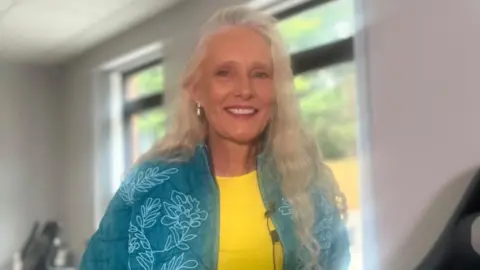
BBCFor years Julie-Ann Walkden had relied on pills and injections to cope with chronic pain, but it was an understanding of what was going on that helped her get her life back.
"I didn't want to take strong medication which made me feel ill, not in control and often so confused that I felt I'd dementia," she said.
She was among more than 100 patients who have completed a pain rehabilitation programme, using exercise, talking and psychological therapies to help them understand the source of their pain.
Walkden was speaking after a new study revealed that people in the most deprived socio-economic areas of Northern Ireland are at higher risk of chronic pain and three times more likely to face pain-related depression.
An intensive programme in Belfast
Ten years ago, Walkden, 58, was prescribed strong pain medication for a long-standing stomach injury, but said it only provided short-term relief and made her feel worse.
However, she found new ways of coping with her condition following a three-week intensive programme at Knockbracken Health Care Park in Belfast, which teaches psychological techniques to deal with pain rather than relying on medication.
"The tools have allowed me to become the boss of the pain instead of it controlling me," she said.
"I am not afraid to exercise, especially to walk, I even talk to the pain but I no longer allow it to prevent me from living a life.
"Understanding the source of my pain and what it is doing to me mentally, never mind physically, has been life changing."
Data collected from the Knockbracken programme has formed part of new research from Queen's University Belfast (QUB) and the Belfast Health Trust.
While more than 100 people within the Belfast Trust physically took part, the study also analysed the data of 491 patients living with chronic pain in Northern Ireland.
It found that 42% of those were living in the most deprived areas and reported much higher levels of distress, disability and pain-related burden.
Researchers 'shocked' by the findings
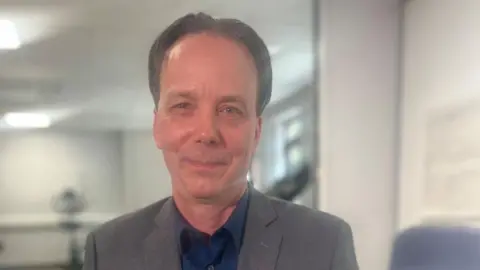
Professor Kevin Vowles from QUB, who led the study, said: "What we found is that individuals who live in high areas of social deprivation are at substantially increased risk of huge disruptions in social functioning, emotional functioning, physical functioning.
"The degree of that difference is so significant that as researchers and clinicians we were genuinely shocked; we did not expect the result to be as bad as it was.
"We found extremely high levels of anxiety and from a statistical perspective that pattern of findings is hugely unique, hugely unexpected and hugely significant."
According to the study, chronic pain costs the UK £10bn annually in healthcare and lost productivity.
'I curled into the foetal position'
Chronic pain is defined as pain that lasts longer than three months and means the nervous system stays stuck in emergency mode.
Learning how it works is the first step toward getting the right care and taking control of your life again.
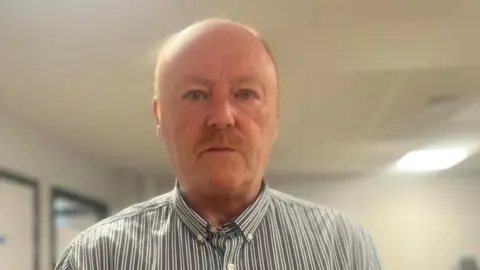
Frank McCoubrey, a Belfast City Councillor, said his pain ,which was based in his spine, has at times made his life unbearable for more than 15 years.
"Some days I just curled into the foetal position and stayed in bed because the pain was so severe," he said.
"I became frightened of it and how it controlled me, " McCoubrey said.
Like Walkden, medication made McCoubrey feel drowsy, nauseous and caused disturbed sleep.
McCoubrey said he was not shocked to discover that people living in the most deprived areas were more adversely affected by pain than others.
"People in my area talk about how physical pain prevents them from working, exercising and pain can generally just drag you down, " he said.
Strategies to manage pain
The study found that depression and anxiety increased proportionally with deprivation levels.
The most deprived group experienced up to three times more pain-related issues with mental health, social functioning, and physical disability, compared to the least deprived.
"There are times I am still in a great deal of pain, but the difference now is I understand it, the source of it and I control it - it doesn't control me," McCoubrey said.
Dr Rory Maguire, a consultant in pain medicine, said the programme marks a change from relying on medication and procedures.
"What we're looking to do by just incorporating physical strategies, psychological strategies, is give them really long-term means to manage pain and to build their life up to have a successful quality of life again," he said.
