Henry Nowak's death raises more questions about UK policing and race

 Reuters
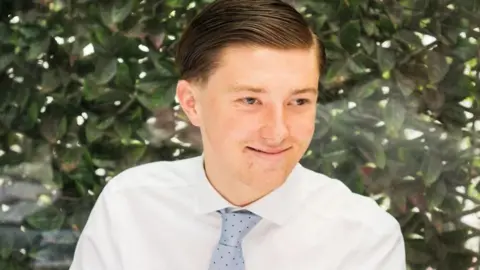
The murder of Henry Nowak and the way he was treated by police in his final moments has prompted outrage and condemnation, and an apology from the police to his family.
How could it be that police officers arriving at a crime scene in Southampton last December did not immediately rush to help the 18-year-old as he lay slumped on the ground? Instead, video from a bodycam showed police putting the dying teenager in handcuffs.
Why did they readily believe the false claim by Vickrum Digwa, a Sikh man, that he had been racially abused by the student he had fatally stabbed?
A separate Independent Office for Police Conduct (IOPC) investigation into the officers' behaviour is ongoing, and it will be some time before we fully understand what happened in this case or whether it is indicative of wider problems in policing.
Regardless, it has prompted another crisis in public trust in the police related to race - though this time, the questions are different.
It has also led some serving officers to question whether a series of scandals and highly critical reports detailing biased treatment of ethnic minorities by police have made officers more sympathetic to claims of racism than other offences.
One officer told me: "We've had several reports about how racist we are in the last few years when it comes to black people and Asian people, and so we're very cautious when handling cases involving different races - and so what happened in Southampton is easy to see why. Maybe we're too cautious now."
Another said: "We have such a hard job and we're always scrutinised. But we need to get it right. I just wish people got the pressure we're under because of the claims we're racist by those who've [written critical reports]."
This snapshot of opinion should not be taken as reflecting the views of all officers, but others have privately echoed similar sentiments.
The fact that police forces have been under pressure to address racial bias should be no surprise when the revelations of recent years are taken into consideration, including the failure of the Metropolitan Police to properly investigate the racist murder of Stephen Lawrence in 1993.
In 2022, IOPC found evidence of highly discriminatory messages being exchanged between Met officers.
A year later, Dame Louise Casey's investigation concluded again that the Met was institutionally racist, words that reverberated across UK policing.
In October 2025, a BBC undercover investigation uncovered racism at Charing Cross police station, as well as other discriminatory behaviour.
There have been cases away from the capital too - for example, since 2022 eight members of staff at West Yorkshire Police have been dismissed following misconduct investigations over racial discrimination.
Then there are long-running issues like "stop and search" tactics, which studies suggest have disproportionately been used on black people in London.
The scandals and investigations mean senior officers have done a lot of work addressing possible racial bias within their forces in recent years.
Simultaneously, there have been allegations of so-called two-tier policing - the claim that minority communities get an easier ride because officers are so worried about being accused of racism.
One senior serving officer put it like this: "A history of racism in policing is something we've had to look at and react to - but perhaps we've gone too far the other way?
"At the heart of what we do is treat everyone the same - and we need to make sure we're doing that".
This week there has been particular focus on the wording of a 2022 document called the Police Race Action Plan, which was issued to police forces setting out how officers should approach race.
The National Police Chiefs' Council (NPPC) committed to "responding to individuals and communities according to their specific needs, circumstances and experiences".
The document goes on to say that "does not mean treating everyone 'the same' or being 'colour blind'".
Some have pointed to that wording as evidence police officers are being trained to prioritise avoiding bias above all else.
But it is important to note this is not the only document informing police behaviour. The College of Policing's code of ethics states: "We earn the public's confidence when we listen to what they have to say, make decisions that are fair and unbiased, and are open and honest about our decisions."
The National Police Chiefs' Council has announced it will review of race guidance, after suggestions that it may have shaped how officers reacted at the scene, and the home secretary believes the wording used in the 2025 document was clumsy.
Barrister Abimbola Johnson, who was chair of the independent board set up to oversee the writing of those documents, told BBC Radio 5 Live's Nicky Campbell it was wrong to link it to the Henry Nowak case.
She said the commitment was borne out of a "recognition that when you look at all of the disproportionality in relation to use of force… black communities are the ones who receive the worst of policing".
In order to treat everyone fairly, Johnson said, officers have to be aware of "seeing people's differences, recognising circumstances and then treating people accordingly".
She continued: "I have seen horrific examples of footage like Henry Nowak's death, where you see police handcuffing people when they are in moments of vulnerability, when they are unwell, when they are in a moment of crisis, against the guidelines which are set out for use of force… and unfortunately the disproportionate people who are on the receiving end of that tend to be the people of colour."
 PA Media
But Sue Sim, former chief constable of Northumbria Police, called for the 2022 document to be withdrawn and rewritten.
She said: "Those officers appear to have attended a scene with a belief that they must put anything that is allegedly racially motivated above anything else. And that is absolutely inaccurate, it's wrong."
However, like several other senior officers, she rejected the notion that two-tier policing exists.
Shabnam Chaudri, a former senior Met detective with 30 years' experience, rejected the idea anti-racism training could account for how officers responded the night Henry Nowak was killed.
She told Radio 5 Live: "In my personal opinion, they breached every aspect of the basic principles of policing."
Neil Basu, former counter terrorism lead of the National Police Chiefs' Council (NPCC), also vehemently denied the claim, who said "in my 30 years of policing I have not seen evidence of two-tier policing across the profession", adding the suggestion was "wrong, dangerous and unsupported by fact".
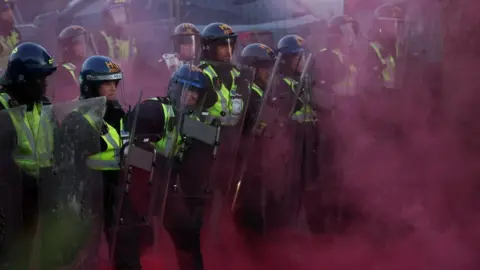
The perception of two-tier policing has taken hold for some. In Southampton on Tuesday, 11 police officers were injured during clashes with a crowd which included some known far-right activists.
So the question facing British police is this: how can forces ensure racism in policing is stamped out, while also retaining the confidence of a section of white British society who believe they are now more likely to be victims of bias?
In the wake of a case as upsetting and troubling as the death of Henry Nowak, that will not be an easy question to answer.
