'Campsite ban could be the end of our business'

 Supplied
A farmer fears plans to tighten rules for pop-up campsites in a national park could spell the end of her business.
The Lake District National Park Authority (LDNPA) wants to make it compulsory for temporary campsites to require planning permission. Current rules allow sites operating for fewer than 60 days to be set up by simply notifying the authority.
Ruby Cardiff runs Newlands Valley Campsite, near Keswick, during the summer to supplement income from her Keskadale Farm. She said the ban would "strip away a crucial source of income" from farmers who depend on diversification "for their survival".
The LDNPA said the proposal aimed to "prevent unneighbourly or harmful sites".
Cardiff started using one of her fields as a pop-up site after the coronavirus pandemic, when travel bans meant more people holidayed in the UK.
She said the site's popularity helped her business plug the gap left by the phasing out of EU funding following Brexit.
"This has been absolutely perfect for us because obviously it's just seasonal so it doesn't take away from our other farming operations, we can still lamb and we can still have cows in the winter, because obviously there's only so much we can do."
 Supplied
Cardiff said when she tried applying for permission to run the campsite for up to 80 days to have more flexibility in operations, the LDNPA turned down the proposal because of the visual impact on the landscape.
She said: "We live in the valley, we live in the Lake District, there's fells all around us so the visual impact, we were never going to mitigate that, so we could never get around it."
If plans to ban pop-up campsite are confirmed following the LDNPA consultation, Cardiff said she feared she would not get planning permission again.
"It could be the end of our business and many other businesses."
Data from Pitchup.com, a campsite booking service, showed pop-up campsites in Cumbria generated about £1.6m in revenue this year, with a further £800,000 being spent in local businesses such as pubs, shops and attractions.
Cardiff has launched a petition opposing the LDNPA's proposal, which garnered hundreds of signatures.
Those in favour of pop-up campsites argue they help to deal with the Lake District's popularity and tackle issues such as fly camping.
However, critics have said the unregulated nature of them means residents are left to deal with potential problems such as noise, anti-social behaviour and impacts on the environment alone.
Bowness-on-Windermere resident Sarah Wilson campaigned with neighbours for the LDNPA to tighten rules.
She said the campaign asked for "the same planning scrutiny as everyone else" and sought to protect the national park, which is a Unesco World Heritage site.
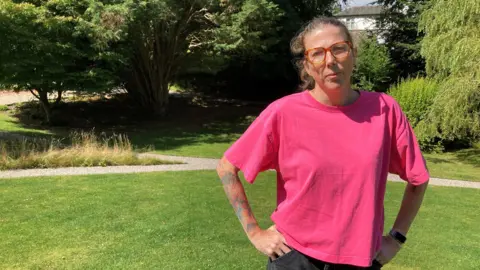
"What we don't want to do is create pop-up campsites that damage the very environment that these visitors are coming to see."
She said she was in favour of farms diversifying, but oversight was needed to ensure heritage and landscape protections were in place.
"We're just trying to make sure that the Lake District National Park is kept as beautiful as it is already."
The LDNPA's head of development management Andrew Smith said greater control of pop-up sites would help manage problems.
"Many temporary recreational campsites are well operated, but they can also be poorly sited and have negative impacts – for example there is currently no minimum separation required between a permitted development campsite and a neighbour's house."
He added a consultation on the proposal was open until 16 November and any comments were welcome.
Follow BBC Cumbria on X, Facebook, Nextdoor and Instagram and listen to Radio Cumbria on BBC Sounds.
