The farmers getting paid to help prevent flooding

 North East Cotswold Farmer Cluster
A £100m project to transform the countryside, boost wildlife and help prevent flooding is now paying farmers for their work for the first time.
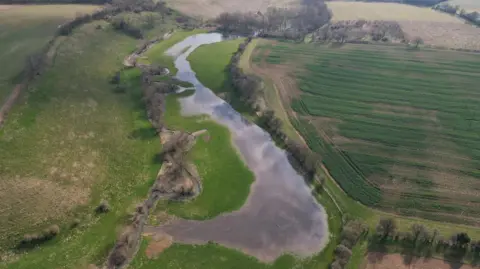
More than 50 farms are involved in the Evenlode Landscape Recovery Project, restoring 3-thousand hectares of Cotswold farmland.
Investors including Network Rail, SSEN and Oxfordshire County Council are now investing in the largely government-funded scheme, in the hope that infrastructure, like roads and rail lines, will be better protected by the work.
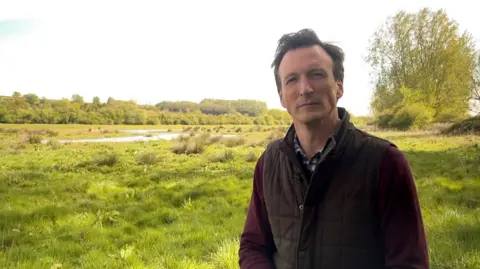
Tim Field from North East Cotswold Farmer Cluster, which manages the project, said getting to this stage "means a huge amount... this is now something which is very replicable and scalable".
The 20 year scheme aims to reconnect floodplains whilst restoring rivers including the Evenlode, the Glyme and the Dorn.
Tim Field said it had taken three or four years of hard work to get to this stage: "A lot of design work and a lot of negotiations, and it's all come together at once which is fantastic".
One of the early pilot parts of the project was between Chipping Norton and Kingham, where the Chipping Norton Brook had been diverted down a short, straight ditch.
The project blocked the ditch, allowing the brook to find its own course across a field, creating hundreds of metres of new waterway.
"It created lots of habitat. In the shallow spaces you create fast rapids and that's where you get lots of invertebrates and some trout spawning... then in the deeper, slower parts you get more vegetation growing and that's trapping sediments and improving water quality... there's an entire ecosystem".
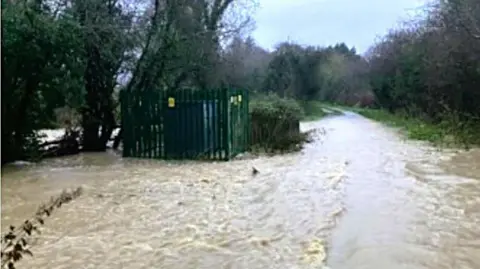
"We want this water to slow down and not gush all the way through the channels. We want to hold it back in the landscape".
 Tim Field
One of the investors, electricity supplier SSEN, expects the work will help protect some of its infrastructure from flooding, including the local substation in Lyneham, Oxfordshire.
Director for asset management Chris Bratt said it avoids the need to build their own solution: "What we would end up doing is completely replacing the equipment. We'd raise it up probably on stilts you know by a good metre or so with carbon-intensive concrete".
Alan Lovell, chairman of the Environment Agency (EA), said he hoped the project would "make a real difference" in the local area.
"We are extremely optimistic that this project will succeed and have very good impact in many ways related to the recovery of nature and increase in biodiversity," he said.
"It will also be good for the farmers, they will continue to be producing food on the land, so it really is trying to tick all the boxes."
You can follow BBC Oxfordshire on Facebook, X (Twitter), or Instagram.
