Bonfire clean-up and protections cost housing body £1.4m

 PA Media
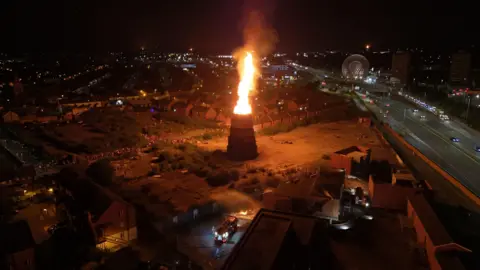
More than £1.4m was spent by the Northern Ireland Housing Executive in the past four years to protect and repair homes and property near annual bonfires.
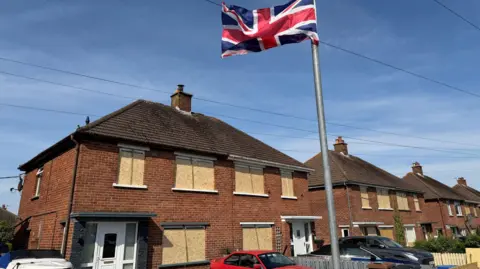
The costs included boarding up doors and windows, removing downpipes and clearing up ash and debris after the burning of the pyres.
Local councils and other public bodies have also incurred bills worth tens of thousands of pounds, according to figures obtained by BBC News NI.
The Housing Executive said it works to "reduce any risks" associated with bonfires built without permission on its land "in so far as we reasonably can".
Hundreds of bonfires are lit annually in mainly unionist communities in July and a small number are built in republican areas in August.
While many pass without major incident, others have attracted controversy over their size, proximity to housing and use of contentious displays.
A bonfire in Moygashel in County Tyrone this year has been widely condemned for including a replica of a mosque.
The figures were obtained by BBC News NI through Freedom of Information (FOI) requests.
Most of the spending related to Eleventh night bonfires, which are held to usher in the Twelfth of July - the main date in Northern Ireland's parading season.
The Housing Executive recorded spending more than £1.4m between 2022 and 2025 on preparation and clean-up measures associated with summer bonfires - including more than £512,000 spent last year.
The spending involved boarding up doors and windows, the removal of guttering and downpipes and erecting protective fencing.
Clean-up measures included removing unburnt materials, ash and debris and re-seeding any affected grassed areas.
The Department for Infrastructure (DfI) said that between 2022 and 2025 it recorded almost £43,000 in relation to clean-up costs following July bonfires.
Libraries NI said more than £25,000 was spent between 2022 and 2024 on measures to protect Tullycarnet Library in east Belfast from a nearby bonfire.
The measures included the boarding up of dozens of windows with plywood panels.
Local councils also reported spending tens of thousands of pounds on clean-up and preparation measures for bonfires last summer.
The costs included more than £61,000 incurred by Antrim and Newtownabbey Borough Council due to asbestos concerns.
This related to "decontamination on council land in relation to asbestos which the council believes was within the remains of a bonfire", according to its FOI response.
In a statement the council said the bonfire was located at the Neillsbrook site in Randalstown, County Antrim.
The remnants of the bonfire were "removed by a specialist waste contractor due to the presence of asbestos".
"The matter was reported to the Northern Ireland Environment Agency (NIEA) but they were unable to assist as the asbestos was on council land."
'A complex issue'
NIEA said the council had "advised that no further action was required from NIEA, as arrangements had been made for a contractor to undertake remediation works".
"The management of annual bonfires is recognised as a challenging and complex issue which requires a range of agreed multi-agency preventative and, where appropriate, enforcement activity," it added.
"NIEA does not authorise or permit controlled waste to be burned on bonfires."
Belfast City Council said in its FOI response it did not hold any details because bonfire-related costs "are absorbed within our annual street cleansing budget".
The Housing Executive said it would "not provide approval" for bonfires built on its land but recognised it was a "complex issue and one which can be very divisive".
"When dealing with bonfires on our land, we work with all relevant agencies, elected representatives and the community and take steps to reduce any risks in so far as we reasonably can," a spokesperson added.
"We're pleased that more of our local communities have moved away from bonfires to more environmentally friendly beacons."
 PA Media
Stormont's five main parties were approached for comment.
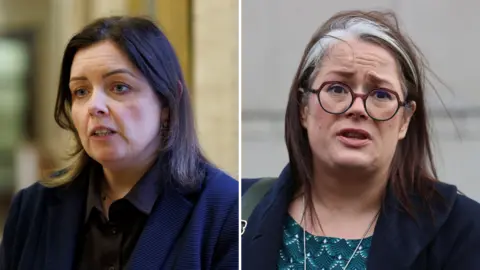
Sinn Féin assembly member Deirdre Hargey said the "current unregulated approach to bonfires has failed".
"There must be a united political response to tackle these illegal, costly bonfires to ensure safety and tolerance are at the heart of any cultural celebrations," she added.
Alliance Party assembly member Sian Mulholland described the spending as "extremely frustrating" at a time when "public services are underfunded and people are struggling".
She added that "everyone has the right to celebrate their culture" but it should "always be done in a safe, respectful and legal manner".
A Stormont body was set up a decade ago to address disputes over cultural and identity issues including bonfires and flags.
Its final report was published December 2021, but no political consensus has been found on a way forward since then.
