Heat alert raised to amber among health warnings

 BBC Weather Watcher/Geography Simon
A heat health alert has been raised from yellow to amber for the South West, with warnings hot weather could affect vulnerable people and health workers.
The UK Health Security Agency (UKHSA) has put the alert in place until 17:00 BST on Thursday, with record temperatures forecast to continue across the region on Tuesday.
Chaam Klinger, a South West UKHSA health protection consultant, said "the really high temperatures can especially affect people who are vulnerable", as well as healthcare workers in heated workplaces.
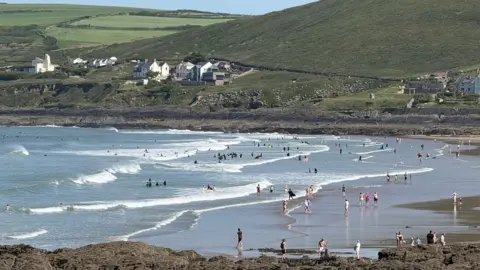
Cornwall-based chair of the National Water Safety Forum Prof Mike Tipton warned, on average, a person a day died in this "most dangerous" time of the year due to cold water shock caused by hot air and cold water.
 BBC Weather Watcher/Poppy
The UKHSA's Amber alert meant there was an increased risk of deaths, particularly among those aged over 65 with health conditions. There may also be impacts on younger age groups.
The alert covers the south-west and west of England including Devon, Cornwall, Somerset, Bristol, Gloucestershire and Wiltshire.
An amber alert also meant a likely increased demand on all health and social care services.
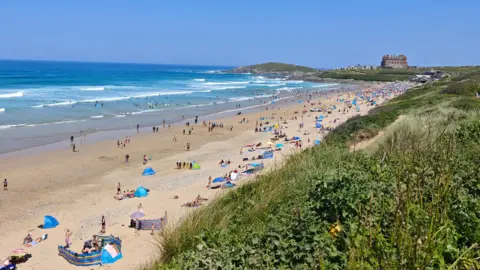
BBC South West senior broadcast meteorologist David Braine said Bude had reached 31C (88F) on Monday, beating the previous record for Cornwall at Treknow of 28.5C (83F) on 25 May 2012.
At Chivenor, a maximum temperature of 30C (86F) was recorded for Devon on Monday, which had beaten the previous record at Rumleigh near Bere Alston of 28.2C (82F) on 24 May 1989.
 BBC Weather Watcher/Raven
Tipton said: "This is the worst time of the year because the air temperature can shoot up into the 30s but the water temperature is still pretty wintery, about 13C.
"Once air temperatures get above 30C we see a 70% increase in the risk of drowning.
"The sudden fall in skin temperature evokes what we called many years ago the cold shock syndrome."
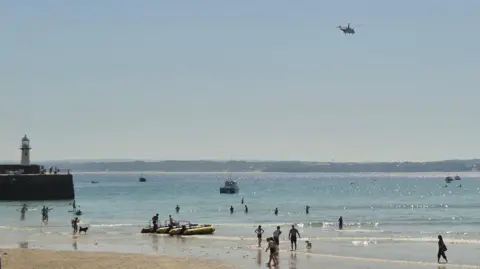
The professor advised people who got into trouble to float to live.
"Fight the instinct to thrash about. Stay absolutely still, then roll onto your back.
"Get your head back and scull a little until you've got your breathing under control.
"After 90 seconds, you will have gone past the most dangerous part of immersion which claims 60% of the lives we see lost in cold water in the UK."
If anyone saw someone in danger they should "phone, float, throw," he added.
"Phone the emergency services, tell the person to float and throw them something to help them float if possible."
Chaam Klinger said some of the population was at risk in extreme heat.
She said: "People who are elderly or have heart, lung or kidney conditions, and who can't tolerate the heat, can become unwell and need to go to hospital."
She said people aged over 65, children aged five and under and those with chronic health conditions were particularly vulnerable to heat.
She also said workers in hospitals and care homes were at risk of overheating as they tended to be especially warm workplaces due to their nature.
She recommended people use sunscreen, wear light clothing, stay hydrated and avoided exercise during the more intense heat levels between 11:00 and 15:00.
