Heat health alert as holiday temperatures near 29C

 FayeRae
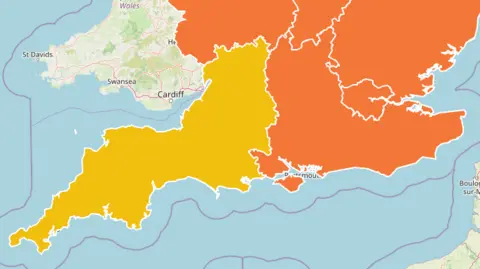
A yellow heat health alert has been issued for the South West over the bank holiday weekend, with warnings that hot weather could put pressure on the NHS and affect vulnerable people at home.
The UK Health Security Agency has put the alert in place until 17:00 BST on Wednesday, with a forecast of temperatures hitting 29C in Exeter on Tuesday.
The UKHSA says there could be a rise in deaths among older people. Beachgoers are being warned about swimming dangers and barbecues are banned on Dartmoor to avoid wildfires.
BBC South West senior meteorologist David Braine said a heatwave could be declared in Devon and Cornwall if temperatures hit 25C for three consecutive days.
Dr Beth Smout, interim regional deputy director of health protection for the South West at the UKHSA, urged people to check on friends, family or neighbours who are more vulnerable and "ensure they are aware of the forecasts and are following the necessary advice".
The agency advises keeping your home cool by closing windows and curtains in rooms that face the sun, covering up with suitable clothing, such as a hat and sunglasses, and seeking shade and applying sunscreen regularly.
The UKHSA said the "significant impacts" could include:
- A rise in deaths, particularly among those aged 65 and over or with health conditions. There may also be impacts on younger age groups
- A likely increase in demand for health services
- Internal temperatures in care settings (hospitals and care homes) may exceed the recommended threshold for clinical risk assessment
- The heat affecting the ability of the workforce to deliver services
- Indoor environments overheating increasing the risk to vulnerable people living independently in community and care settings
Analysis: BBC SW senior meteorologist David Braine
Heatwaves at this time of year are unusual, as they are more commonly seen in July and August.
With temperatures expected in the high 20s, they could beat the current record for Cornwall in May which was 28.5C on 25 May 2012 at Treknow.
The maximum temperature recorded for Devon in May was at Rumleigh, near Bere Alston, with 28.2C on 24 May 1989.
A combination of factors drives the hotter conditions. High pressure creates still, sinking air that warms as it descends, while strong sunshine heats the ground. In built-up areas, stone, concrete and tarmac can further raise temperatures, a phenomenon known as the urban heat island effect.
Warm, humid air moving in from countries such as Spain and France can also push up both daytime and overnight temperatures, making conditions feel more intense.
While inland areas are more likely to meet heatwave thresholds, coastal communities may stay slightly cooler due to lower sea temperatures and the risk of sea fog.
 EPA-EFE/REX/Shutterstock
The Royal Life Saving Society (RLSS) UK said warmer weather could give a false sense of safety, with many people drawn to the water.
Sea temperatures across the UK are still low for the time of year, ranging from about 9C in Scotland to 13C in the South West, increasing the risk of cold water shock.
Ashley Jones of the RLSS said: "As air temperatures rise, it's important people don't underestimate the risks associated with entering open water.
"Even during a heatwave, water will remain dangerously cold and cold water shock is a very real danger.
"Sudden immersion can cause an involuntary gasp, rapid breathing and panic, which can quickly lead to a loss of control in the water, even for strong swimmers."
He urged people to swim at lifeguarded beaches, supervise children closely and never enter the water to try to rescue someone in trouble, instead calling 999 and throwing something that floats to help keep them safe.
 Devon & Somerset Fire & Rescue Service
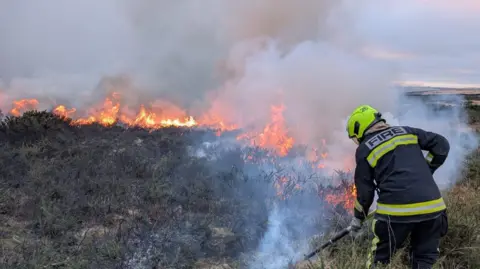
People heading to Dartmoor have been told not to light barbecues and bring a picnic instead to avoid wildfires.
Dartmoor National Park also asked everyone to take their litter home, dispose of cigarettes and vapes safely, and keep glass bottles out of direct sunlight.
"Wildfires are devastating for our local communities, livestock, and wildlife like ground-nesting birds and reptiles," said a spokesperson.
"Before heading out, please take a moment to think about how you can enjoy Dartmoor safely and responsibly. A few small choices could make a big difference in protecting this special landscape."
