How did a fatal arson suspect end up dead in a bin?

 Merseyside Police
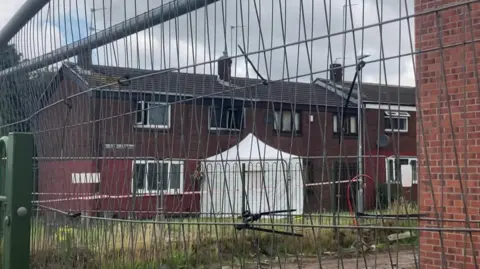
On a warm summer night last year a drug-addict doused the front door of a house in St Helens, Merseyside, with petrol and then lit a match.
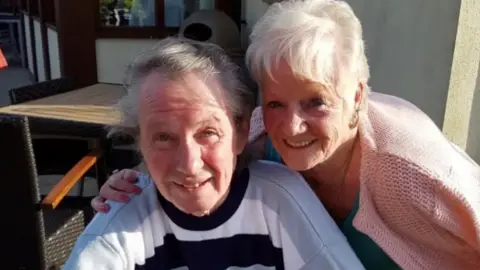
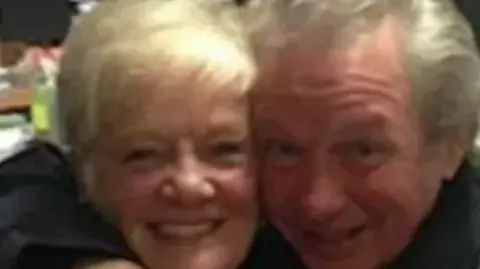
Inside was Sheila Jackson, 83, and her long-term partner Eric Greener, 77, who would go on to "die a horrible death" due to the injuries they sustained in the blaze.
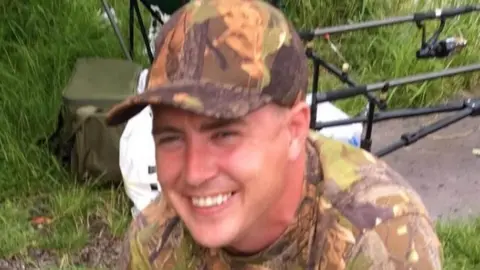
That fire was started by 40-year-old Paul Smith, a father-of-five known as 'Smigger' to his associates in the north Liverpool drug world.
Smith would never face trial for his role in killing Sheila and Eric, described as the "glue that held us all together" by their families, that night on South John Street.
As an inquest on Wednesday heard, his body was found stuffed inside a wheelie bin behind a set of derelict properties in Everton, north Liverpool, on 22 July 2025, seven days after the fatal fire.
The circumstances of his death, and how his body ended up being dumped into the bin, are still not clear.
The inquest heard a report was made to police of a man either drowning or overdosing in a bath in a property on Coniston Street, which backs on to the area where Smith's body was found.
 Merseyside Police
A post-mortem revealed he had taken a "massive overdose" and a coroner returned a conclusion of death by mixed-drug toxicity.
There had been questions over whether anyone could have held Smith underwater, but police said they were satisfied his death was not the result of a criminal act by a third party.
There had been good reasons other than the bizarre location his body was dumped - which remains under criminal investigation - for the suspicion about how he died.
As the investigation into the arson attack progressed, it became clear it was not Smith's own idea.
The driving force behind it was feared Liverpool drug-dealer Kevin Weetman, nicknamed Red due to his ginger hair.
In February this year Liverpool Crown Court heard that some time before the fire Smith had crossed 34-year-old Weetman in some way.
The precise reason for Weetman's anger was never revealed, but the court heard Smith was considered "unstable and unreliable" and could not be trusted to mind other people's drugs.
He was also known by witnesses in his circle to occasionally resort to robbing other drug-dealers and users at knife-point.
On 12 July 2025, Weetman and two other men caught up with Smith at a house in Coniston Street and dished out a savage "punishment" beating with an iron bar.
Merseyside Police would go on to find a video on Weetman's phone showing Smith in what a judge described as a "wretched and desperate condition".
Weetman had recorded himself telling Smith he would "break your [expletive] neck, arms and legs".
He was treated in hospital for serious injuries to his face and jaw, but checked himself out of hospital the following morning.
Smith was now the "ideal person" to carry out another revenge scheme Weetman had in mind.
As trial judge Mr Justice Jay told Weetman: "He was terrified of you and would do almost anything to avoid further violence."
During Weetman's trial, the jury heard he had been planning to expand his drug-dealing network into St Helens.
An associate, long-term drug user and St Helens native Kylie Maynard, was duly dispatched to begin dealing for him.
 Merseyside Police
At some point that year Maynard, 37, met and sold cocaine to George Jackson - the son of Sheila.
On 7 June Jackson found Maynard in a distressed state after she was robbed by other drug dealers and, in an act of pity, invited her to the home he shared with Sheila and Eric for a shower and to recover.
Maynard left the following day and returned to Liverpool, where she told Weetman about Jackson's act of kindness - starting a chain of events which led to the fatal fire.
On 10 June 2025, Weetman called Jackson seemingly to express his gratitude for helping Maynard out.
During that call he offered Jackson some cocaine as a "reward", which was accepted.
However there was an ulterior motive; to entice Jackson to start selling drugs for Weetman.
Giving evidence in court, Jackson said a few days after he was given the supposedly free cocaine, Weetman called him to offer "work".
The court heard Jackson declined, and was asked "what about my dough?."
 Merseyside Police
The call ended without any direct threats, and Jackson claimed he was completely unaware his refusal to accept the "work" would have catastrophic consequences.
An audio recording made on a phone on 13 July 2025, described as a "nasty, sordid conversation" by the judge, recorded Weetman suggesting to Maynard he would "just burn Jacko out".
When Maynard pointed out that Jackson's mother Sheila would be at the address, Weetman simply responded: "Sound, I'll burn her."
Smith, by that point desperate not to provoke Weetman again, was then "intimidated" into carrying out the attack and was provided with a motorbike.
Maynard gave him Jackson's address and showed him a photograph of the target - George Jackson - downloaded from Facebook.
Smith left a house in Thirlmere Road, Everton, at around 19:32 BST on 14 July and decided of his own accord to recruit a fellow drug user called Lee Owens.
Owens, 46, had only just left police custody and was, in the words of the judge, "preparing for a night of extravagant drug and alcohol consumption" when he was called by Smith.
 Family Handout
The two men drove to St Helens on the white motorbike provided by Weetman and parked close to Jackson's address.
In a consequential twist of fate, Smith and Owens saw George Jackson leaving the house with a friend, so knew their target was not at home.
Justice Jay said he accepted it was not clear that Smith knew anyone else was in the property.
The judge suggested he probably "knew he could not return to Liverpool having not done anything" for fear of further punishment by Weetman, so decided to ignite the fire anyway.
As the men fled, neighbours raised the alarm and firefighters were able to carry the two elderly victims out of the house.
The extent of their burns and smoke inhalation meant they died from their injuries about 48 hours later.
In the words of Justice Jay, "they died a horrible death".
In the week between igniting the fire and taking the overdose that killed him, Smith was described by witnesses as "full of remorse".
But the question of what he did or did not know about who was in the house died with him.
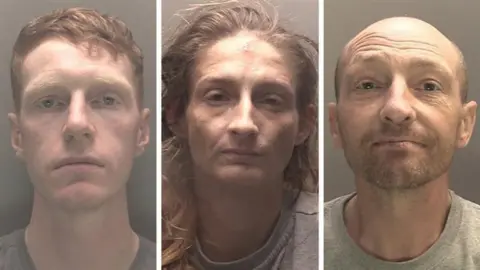
Weetman was cleared of murder but convicted of manslaughter and conspiracy to supply Class A drugs and jailed for life with a minimum term of 25 years in prison.
Maynard was convicted of the same charges and jailed for 23 years, while Owens pleaded guilty to manslaughter and was jailed for 13 years.
Listen to the best of BBC Radio Merseyside on Sounds and follow BBC Merseyside on Facebook, X, and Instagram. You can also send story ideas via Whatsapp to 0808 100 2230.
