Lampard Inquiry: Concerns raised before death were not acted on

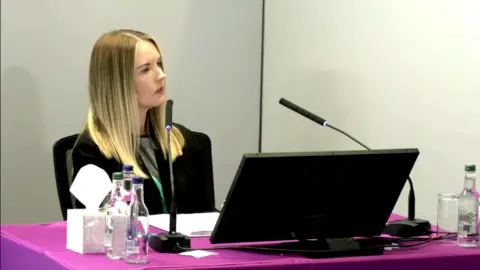 Lampard Inquiry
A manager at the mental health trust at the centre of a public inquiry has said concerns she raised before the death of a patient were not acted on.
Chloe Cawston was giving evidence to the Lampard Inquiry, which is examining the deaths of more than 2,000 patients who received care from mental health services in Essex between 2000 and the end of 2023.
Cawston was a ward manager at Basildon Mental Health Unit when 28-year-old Bethany Lilley died in January 2019.
The inquiry heard she had raised concerns about patient transfer procedures before and after Bethany's death. Asked whether any action had been taken before she died, Cawston replied: "Not that I can recall."
 Family supplied
Cawston was asked if she knew why there had not been any action.
"No," she replied, but accepted it was an "urgent issue".
Bethany was found unresponsive after being transferred to Basildon. The inquiry heard the ward did not receive all the relevant paperwork or case notes and there was not an appropriate handover between hospitals.
Cawston told the inquiry she had been a registered mental health nurse since 2011 and became a ward manager at Basildon in 2018.
During her evidence, she also accepted there had not always been enough beds for people in mental health crisis.
"Nationally there's been a shortage of mental health beds," she said.
She told the inquiry that if no bed was available, a plan would be put in place for a patient to attend A&E if they needed immediate help.
Cawston said if someone left A&E before a bed became available, staff would try to contact them and alert police if necessary.
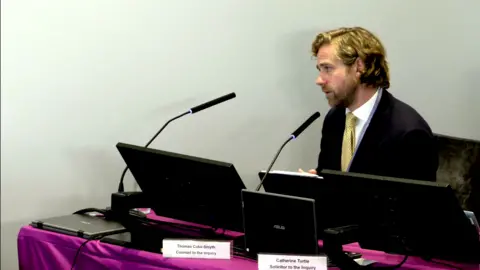 Lampard Inquiry
Asked about ward culture, she said staff falling asleep at work had been "a feature throughout her whole career", although it was less common now.
She also accepted that risk assessments before patients went on leave had not always been carried out properly.
'Fear culture'
Cawston said failures to make contemporaneous notes had been a problem at Essex Partnership University NHS Foundation Trust (EPUT), but that it was important to create a culture in which staff felt able to explain why records had not been completed at the time.
She said the trust had worked hard to change what she described as a "fear culture", but that it remained an ongoing issue.
Cawston also accepted there had been a lack of activities for patients in the past.
However, she said services had changed, with therapy groups and classes now taking place throughout the day.
She also said sensory rooms had been introduced for autistic patients, along with ear defenders to help reduce the impact of alarms.
Trevor Smith, chief executive of the Essex Partnership University NHS Foundation Trust, said: "There will be many lessons for all of us across healthcare to learn from the accounts of patients, their families and those working within mental health services in Essex over the last 24 years.
"We're really clear that there's more to do to ensure that the care we provide continues to improve and the recommendations of the Lampard Inquiry will be an important part of this."
The inquiry is due to continue hearing evidence until autumn 2027.
Do you have a story suggestion for Essex? Contact us below.
Follow Essex news on BBC Sounds, Facebook, Instagram and X.
