Heatstroke cases rising: Inside A&E as UK swelters

 BBC
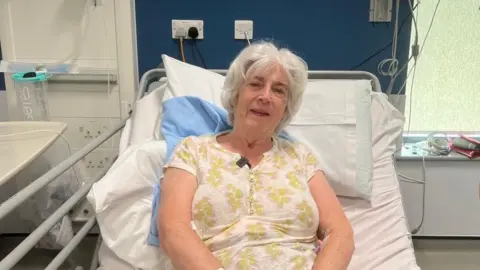
BBCSusan Tunnicliffe got up early to do some gardening before the weather got too hot, but within hours she was in a hospital bed with heatstroke.
Despite avoiding peak sunshine, by lunchtime the 80-year-old said she felt "violently sick" and her worried daughter called an ambulance.
She was one of hundreds admitted to the A&E department at Walsall Manor Hospital in the West Midlands on Wednesday, which is facing more admissions than the busiest days in winter amid record-breaking temperatures.
Patients are presenting with severe heatstroke, insect bites and there is even a rise in urinary tract infections as people forget to drink more fluids.
Symptoms of heatstroke include a very high temperature, hot skin without sweating, fast breathing, fast heartbeat and confusion, according to the NHS.
Tunnicliffe said she was shocked to have declined so quickly despite taking precautions.
"I never thought where I was, under the shade and in the breeze, that it would affect me," she said.
"I got the shivers. I kept thinking, what could it be?"
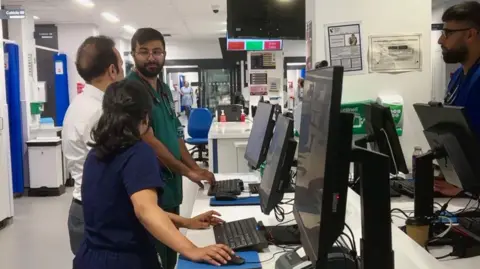
Screens showing waiting times flashed red stating "increased pressures", as well as showing the average length of a stay in the department was just over 16 hours.
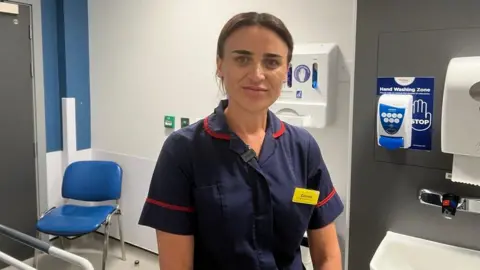
Matron Corrine O'Callaghan said the last two weeks, since the start of previous heatwave, had presented challenges.
"It's been very busy, where there's been lots of patients coming in with respiratory problems and heart failure problems which could be related to the heatwave that we're having.
"Patients have been in the department for a little bit longer than we would expect just because of the demand on the admissions."
A number of hospitals across the country struggled during recent hot weather, with some wards reporting temperatures of 35C.
The Manor's A&E department is only three years old, however, so ventilation keeps the building cool.
Staff are still taking a number of precautions, said O'Callaghan.
"We are just making sure we are talking to our staff, making sure they are having plenty of cold drinks, encouraging them to take more breaks," she said.
"With patients we have got volunteers coming round the department giving drinks out for us to increase their hydration.
"In certain areas where it is warmer, we've got air conditioning units and we're asking staff to keep the windows shut and curtains shut."
The World Cup is adding to the pressures.
Walsall Healthcare NHS Trust saw its busiest period of the year when England beat Panama 2-0 on June 27.
Dr Fazle Alam said: "We had around 500 patients each day [at the weekend] and then the Monday after was the busiest day of the year, we registered 625 patients."
He described the cause as "a combination of heat, football, drugs and alcohol".
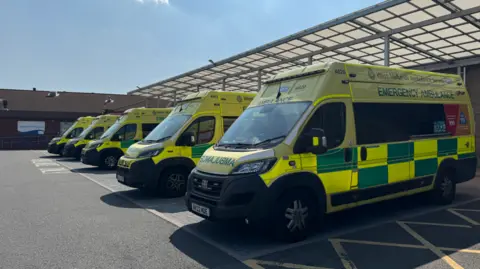
West Midlands Ambulance Service said it was also taking extra steps - anticipating more callouts when England plays Norway on Saturday night.
This includes additional frontline ambulance crews, more 999 call assessors and increased numbers of officers and ambulances on shift.
The service is expecting an increase in heat-related illness, dehydration and medical emergencies.
Meanwhile, Shropshire, Telford and Wrekin Community and Hospitals NHS Group said it had its highest week of emergency department attendances on record last week, "partly as a result of the impact of the heatwave the week before".
A spokesperson for University Hospitals Birmingham, which runs Good Hope, Heartlands, Queen Elizabeth and Solihull hospitals, said they were seeing cases of severe heatstroke.
"The Trust has not stepped activity down due to the extreme heat and has in place its heatwave plans to maintain the safety and comfort of our patients and colleagues," they said.
"We encourage our communities to follow the very good advice to stay safe by staying in the shade, staying well hydrated, looking out for their vulnerable friends and neighbours, do not swim in open water or places without a lifeguard present, and use sun protection if braving the sun."
What to do if someone has heat exhaustion or heatstroke
If a person is presenting with heat exhaustion:
- Get them to rest in a cool place - such as a room with air conditioning or somewhere in the shade
- Remove any unnecessary clothing to expose as much of their skin as possible
- Cool their skin - use whatever you have available, a cool, wet sponge or flannel, spray water, cold packs around the neck and armpits or wrap them in a cool, wet sheet
- Fan their skin while it is moist - this will help the water to evaporate which will help their skin cool down
- Get them to drink water - sports or rehydration drinks are fine too
- Stay with them until they are better.
They should start to cool down and feel better within 30 minutes. If they do not improve after 30 minutes of rest and you think they may have heatstroke, you should call 999.
Follow BBC Birmingham on BBC Sounds, Facebook, X and Instagram.
