DfI may have had 'hit and miss' approach to safety, inquest told

 Pacemaker
A government department may have adopted a "hit and miss" approach to safety in an area close to where Noah Donohoe disappeared, an inquest has been told.
The inquest into the schoolboy's death has been hearing evidence about potential risk and safety failings around the entrance to an underground water tunnel in North Belfast.
The tunnel is managed by the Department for Infrastructure (DfI).
The culvert inlet is beside Northwood Road where Noah was last seen before he disappeared in June 2020.
Dr Mark Cooper, a health and safety expert, resumed his evidence on Monday when he said DfI failed to conduct an "informed public consultation" at the time of improvement works at the site in 2017, three years before Noah's disappearance and death.
He said this should have happened because the views of all parties cannot be considered if they are not "put into the mix".
The department has maintained that there is no public access to the culvert entrance, and it has pointed out that the site is surrounded by high security fencing, bushes, and the private gardens of local homes at Northwood Road.
A senior official from the department has previously informed the inquest that residents, whose back gardens adjoin the culvert site, were "exceptionally vigilant" in terms of public access to the grounds.
However, Dr Cooper indicated that a reliance on residents is "a hit and miss control measure" whereas "an engineering control" would provide 24-hour protection at the site.
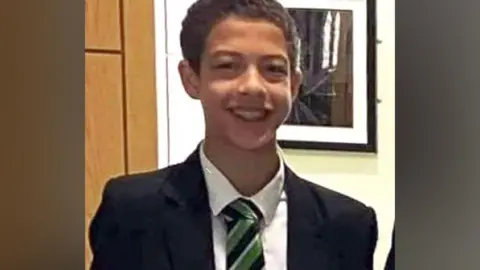
14-year-old Noah Donohoe disappeared in North Belfast after cycling across the city from his home in South Belfast in June 2020.
The last reported sighting of the schoolboy was in the Northwood Road residential area beside the concrete and steel entrance to the tunnel system.
There has been no conclusive evidence that Noah entered the culvert inlet, but the location has been a point of interest at the inquest because his body was found more than 600 metres downstream six days after he disappeared.
One theory is that he could have gone into the tunnel after he was seen going between houses at Northwood Road in the direction of back gardens close to where the culvert entrance is located.
The inquest has been exploring potential risk and public safety issues at the site between 2017, when the improvement works were carried out by DfI, and the time of Noah's death three years later in 2020.
The department has previously accepted that a hatch alongside a screen at the culvert was "probably" unlocked at the time of Noah's disappearance.
But the department has pointed out that it was a debris screen - as opposed to a security screen - and it's common for the hatch on this type of screen to be unlocked to facilitate flood risk management and to ensure that an escape is possible in the event of someone becoming trapped in the system.
The department has maintained that there is no public access to the culvert because of the security fence, bushes, and the private gardens of four homes at Northwood Road.
'Keeping people out is paramount'
Dr Cooper said he can't see any reason why there was no security screen at the culvert entrance, and he added: "The need to keep people out is paramount."
Brian Pope, an engineer who conducted a report on behalf of the next of kin, told the inquest that he believes the potential risks at the site included the possibility of someone climbing over the high security fence or gaining entry from a nearby residential area.
He said extra measures to reduce risk could have included more fencing, warning signage, a security screen, railings, or other deterrents.
Pope agreed with a lawyer for DfI that there had been no evidence of any unauthorised access to the site, but he said that doesn't prove categorically that there was no access.
Pope accepted that it is not possible to reduce all risk to zero, while Dr Cooper also agreed that it is not possible "to eliminate all risk".
