Fires and low rivers: How dry July hurt ecosystems

 BBC
BBCWetland habitats in Sussex are "losing wildlife" following exceptionally dry weather in July, a rivers restoration group has warned.
Provisional Met Office figures for July showed southern England had a particularly dry spell with just 2% of its long-term average rainfall for the month.
It comes after warnings of wildfire risk and calls for the public to help prevent blazes.
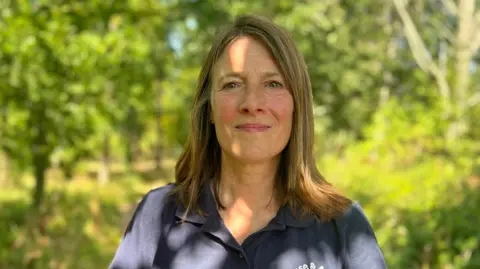
"Our wet habitats are the first habitats to be heavily impacted by lack of rainfall," said Rachel Paget, head of rivers and catchments at the Ouse & Adur Rivers Trust.
"Fish are an amazing ecological indicator," she told the BBC, adding they were the first to be impacted by the lack of river flow.
According to Paget, the group had received reports of fish deaths as river levels drop and the water rises in temperature.
"The oxygen comes out of the water so they basically don't have anything to breathe," she said.
"When there's no rainfall the flow in the river completely dries up or is very very low," Paget added. "This concentrates pollutants in the water."
Dr Jess Neumann, associate professor in hydrology at the University of Reading, said "critically low" river levels, crop failures and browning vegetation was "putting a lot of pressure on our systems and our water situation".
"We are seeing more fish in distress, we're seeing wildlife starting to struggle, and we're seeing an impact on our water supply as well," she said.
South East Water customers are subject to a hosepipe ban in an effort to conserve water supplies.
The firm told customers its drinking water storage tank levels were "lower than we would like".
"Climate change has a lot to answer for here," Neumann said, as well as a "growing population".
The UK was "behind the curve" and "should be adapting right now," the hydrologist told the BBC.
"That's why we are struggling with things like public water supply, because we have not invested in the critical infrastructure that we need."
Within a decade society could see "more severe restrictions" to avoid running out of water, Neumann warned, adding that "we may even start to see it later this summer".
The Environment Agency has declared Sussex has had "prolonged dry weather", while more than half of England is now considered to be experiencing drought.
The agency says it considers water levels Ardingly Reservoir in West Sussex to be "notably low".
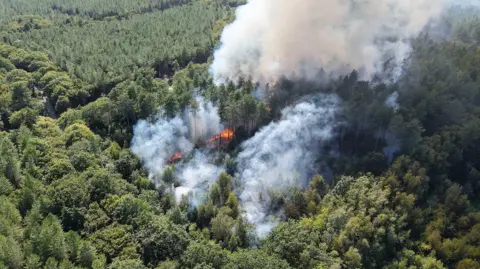
Emergency services in Sussex have issued warnings over the wildfire risk in the county and asked the public to play a proactive role in stopping fires from breaking out.
Sussex over the last month has seen wildfires in Ashdown Forest, the inspiration for the Winnie-the-Pooh stories, and in Abbot's Wood, near Polegate.
West Sussex Fire and Rescue Service's wildfires tactical advisor, Matt Gamblen, said it was "not possible to predict exactly where or when a wildfire may occur".
Firefighters in England and Wales responded to hundreds of wildfires in July alone, according to the National Fire Chiefs Council.
 Dan Jessup
"We've always had this sort of mindset, I think, in the UK that water is plentiful and abundant, and it rains lots," Neumann said.
"It does still rain a reasonable amount, we had a very wet winter, but what's changing is the way in which that rain is coming."
The hydrologist said the UK was experiencing more frequent "intense winter storms" followed by "heatwaves and droughts" in summers.
"This is what climate projections have been warning about and this is what we're seeing now on a regular basis," she told the BBC.
The consensus among scientists is that human activities are causing climate change, posing serious threats to people and nature.
The UN's climate body – the Intergovernmental Panel on Climate Change (IPCC) – concluded in 2023 that "human activities, principally through emissions of greenhouse gases, have unequivocally caused global warming".
Met Office scientist Dr Emily Carlisle, said parts of England and Wales had seen "extraordinarily low totals" of rainfall in July.
"Provisional figures suggest this could be one of the driest Julys in nearly two centuries of records," she said, "which is particularly notable when coupled with the exceptional heat experienced so far this summer."
The weather service said it expected England to record its driest July in 190 years when figures were confirmed.
Follow BBC Sussex on Facebook, on X, and on Instagram and listen to BBC Radio Sussex on Sounds. Send your story ideas to southeasttoday@bbc.co.uk or WhatsApp us on 08081 002250.
