AI firms should face 'minimum wage for robots' to limit job cuts, says tech boss

 Getty Images
A tech entrepreneur has warned politicians are not ready for the impact of artificial intelligence (AI) on workplaces and said charging companies to use it could limit job losses.
Charles Radclyffe, whose Wales-based company developed software that completes office tasks in seconds, said policymakers failed to grasp the speed and scale of the challenge.
He said a tax on its rollout - a "minimum wage" for robots - or a lever that the government could pull if businesses wanted to use AI and automation technology was needed.
The UK government said it would "monitor" the impact of AI and "act quickly as the economy changes".
Many parties standing in the Senedd election on 7 May back the responsible use of AI.
Radclyffe's firm developed technology that automates office tasks and administrative work such as form filling, with the work completed far more quickly - and cheaply - than by humans.
"Every time we bill [for a month's AI work], that is a job from the economy gone and moved into a data centre," he said.
Some data-entry spreadsheet tasks will take AI 20 seconds to complete, and a human two weeks, Radclyffe says.
"For big companies, you might even have a department of people whose job would be to intercept these requests and then they'll have a task list and they would just churn through it," Radclyffe said.
These types of tasks were a "perfect paradigm" for AI, Radclyffe added, leading to a "much shorter, much less painful process" once the technology was used.
When asked about the political reaction to the pace of change, he said it was "mystifying how we don't have a plan, ready to go, in case some of the worst prophecies come true".
The companies using AI were not necessarily cutting jobs at the moment, but Radclyffe said many were hiring fewer new staff as a result, warning of a future where some people could be out of work "for the rest of their lives".
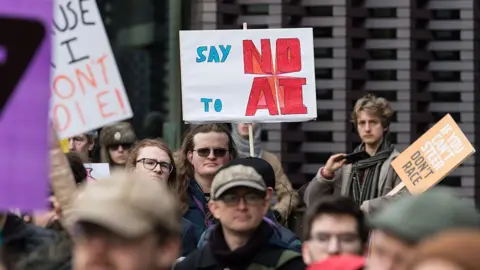
He believes a tax on AI's use would help slow its uptake by companies and would allow the government to intervene if the impact on human jobs was particularly disruptive.
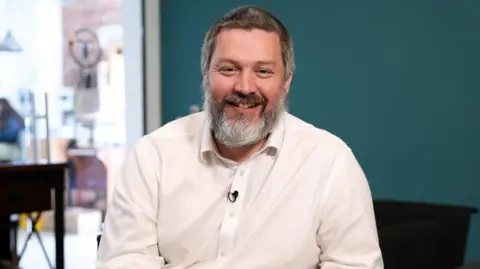
A tax on robotic and digital AI employees or a "minimum wage for robots" to manage the transition would give the ability to "throttle the adoption of AI and create a more level playing field", Radclyffe said.
He warned that without urgent action, places like south Wales risked repeating the painful industrial transitions of the past.
"If you really look at the individuals who are facing this transition now, and I would say white-collar workers in places like Cardiff are absolutely in firing line of AI, then I think this is a really serious problem," Radclyffe said.
A spokesperson for the Treasury said it was "committed to helping working people benefit from AI" and was "setting up a new AI Economics Institute to monitor impacts and ensure we can act quickly as the economy changes".
 Getty Images
At British Rototherm, a manufacturer of industrial sensors on the Kenfig Industrial Estate near Port Talbot, AI and automation are already reshaping how work is done.
"We started small... experimented, built confidence and then scaled up step by step," said managing director Oliver Conger.
The company designs and produces precision instruments used to measure temperature, pressure, level and flow, supplying customers in about 90 countries worldwide.
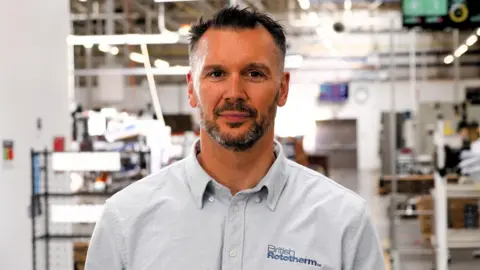
Conger said he now runs an "Alien Dreadnought Factory", where "AI and automation [work] hand-in-hand with our human team members".
He said the approach had delivered significant gains, with productivity increasing by more than 20% over the past two years and further improvements expected.
The focus was not on replacing workers, he added, but changing roles.
"We don't call them AI bots, we call them AI employees.
"Roles are changing, and as a business we have to support our team members through that," Conger said.
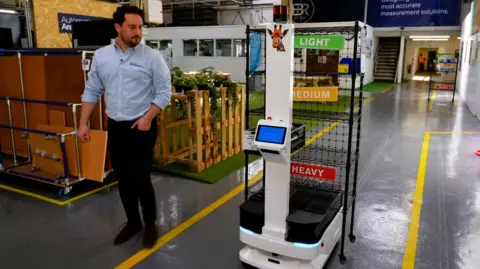
Some staff whose work has been automated have been upskilled to work in other areas of the business.
On the wider debate about regulating AI, Conger struck a more cautious tone than others in the industry.
While acknowledging the broader discussion around taxing automation, he said: "I don't think it's time to put anything into policy.
"We're at the very early stages. Let's encourage the use of it."
He argued governments should prioritise supporting adoption and boosting productivity.
Conger added that AI technology could "absolutely transform Welsh manufacturing in the next two or three years" and it required political support to manage that transition.
Where do the political parties stand?
Welsh Labour was focusing on using AI to cut bureaucracy in the public sector and building "digital infrastructure", pointing to the new "AI Growth Zones" in Wales to support wider uptake.
It will fund innovation through a dedicated grant scheme and wants to position Wales as a leader in "ethical AI" with a new Responsible AI Charter.
Plaid Cymru also highlights growth and productivity, but places more emphasis on skills, worker involvement and industrial strategy.
Its plan to create a national development agency would support the growth in digital skills and ensure AI adoption was "worker led" and protects rights.
The Welsh Conservatives also stress AI's potential to drive growth, particularly in modernising the NHS and improving services.
When it comes to safeguards, the party argues AI should "enhance rather than replace human work" and is used in a way that protects jobs and skills.
Reform UK takes a more cautious stance, saying AI could have a role in improving digital systems in Wales' public services, but only where it was "proven to be safe and effective".
The Welsh Liberal Democrats and Wales' Green Party have been asked to comment.

