Port of Tyne criticised over nurdle spill response

 Fidra
FidraMeasures to tackle a spillage of millions of tiny plastic pellets into the River Tyne were not deployed until several days after the incident, the BBC has learned.
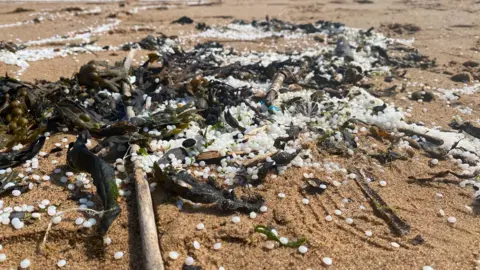
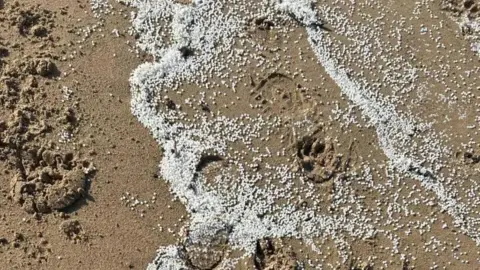
Tonnes of the pieces of plastic, known as nurdles, washed up on north-east England beaches after a collision between two vessels at the Port of Tyne damaged two shipping containers.
Thousands of volunteers have helped with the clean-up operation along the coast.
Port of Tyne said it tried to contain the spillage once it knew about it, but a maritime expert has criticised the speed of the port's response and said it should have acted sooner.
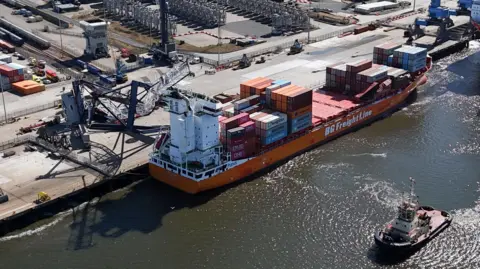
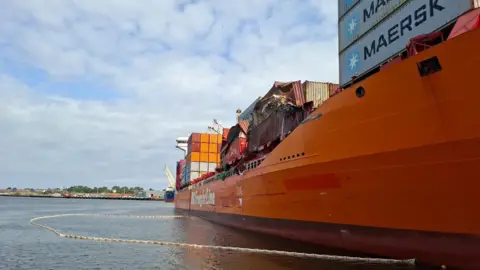
The Wind Orca, a wind turbine installation vessel, collided with a berthed container ship, BG Orange, on 19 July. A gantry crane on the quayside collapsed and ended up lying across the ship.
The two containers on the BG Orange were full of nurdles - pre-production plastic pellets, about the size of a lentil, which are used as the raw material to manufacture nearly all everyday plastic goods.
When the containers were damaged these tiny pieces of plastic spilled into the water and eventually washed up on beaches.
This prompted a huge volunteer-led clean-up, although North Tyneside Council had asked people not to try to remove the pellets by themselves. Wind Orca's owners, Cadeler, acknowledged the speed of the official clean-up response had "not met community expectations".
 PA Media
Last week, Port of Tyne said a boom had been deployed around BG Orange but the BBC has learned the large floating barrier did not enter the water until 22 July - three days after the collision.
A Port of Tyne spokesperson said: "Our response plan to the pellet spill was activated immediately we became aware of it.
"It involves a number of actions, including helping contain any further spill of pellets and getting boats out on the river as a matter of urgency to clear pellets from the water."
The port said "the immediate aftermath of the collision and crane collapse" had been "highly complex and dangerous".
The environment had been controlled by Northumbria Police for a number of days, preventing the Port of Tyne from accessing the site, it said.
 Port of Tyne
The editor of the industry publication Maritime Journal, Debbie Mason, said Port of Tyne should have told people about the spill sooner and its silence on this point in the immediate aftermath was "very strange".
"This happened on the 19th, the Sunday, they put out their first press release [referencing the spillage] on the 23rd," she said.
"This is four days later."
The Port of Tyne did release a statement on 19 July, detailing the collision but not the spillage, and Mason said she could not understand why it did not specifically address the spillage sooner, given the scale of the incident.
"This is a really big port, they should have operations in place, they should have cameras," she said.
"They should have known."
If the boom had been deployed sooner it would have stopped the nurdles travelling down the river onto the shores, she said.
She said port bosses had "so many questions" to answer, including how the crane was involved when it was on the quayside, who was to blame for the incident itself, and who would be accountable.
 Leah Pattem
Thousands of volunteers have been helping clear nurdles from beaches throughout the week.
Specialist contractors are now leading the clean-up operation, but environmental charity Fidra has warned this will be a "long-term issue" for the North East coast.
"Like other plastic, nurdles can last in the environment for decades," the charity's senior project manager Heather McFarlane said.
"We're already hearing from the fishing community they are two miles out at sea."
Big storms could wash up large numbers of nurdles in years to come, she added.
McFarlane also said stricter guidelines on storing plastic pellets at UK ports would prevent future disasters.
"There is definitely more that can be done to make containment and clean up quicker," she said.
"We saw pellets on the beaches pretty quickly after the spill. What initial containment happened at the time, it's unclear how effective that was."
 South Tyneside Council
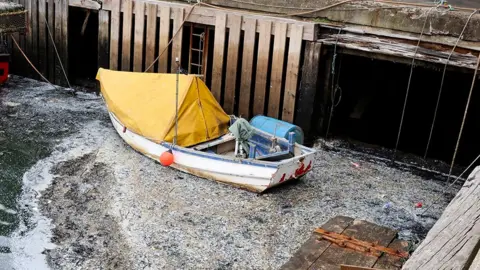
Simmie Harper, who lives in an apartment on the banks of the River Tyne in North Shields, said she saw what she thought was white foam in the water the day after the incident.
Looking at it more closely, she realised it was a large amount of plastic.
"The first thing I did was to see if there were any statements," she said.
"There was silence.
"We never heard anything about what happened with the container."
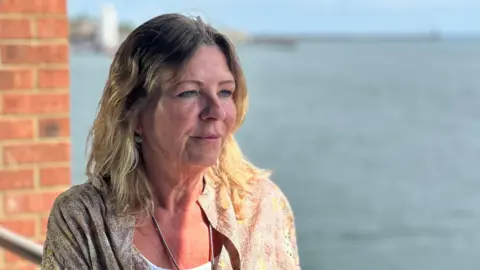
Harper said the community was "really proud" of its clean-up efforts but "really sad" about the spillage.
"We all love the coast and for this to happen is immense," she said.
"We've just this morning found two dead birds here in the dry dock.
"It might not be related, but it should be investigated."
The Marine Accident Investigation Branch (MAIB) said it had been "notified of an accident involving the Wind Orca and BG Orange on the Tyne" on 19 July.
"A team of inspectors was sent to the site and a preliminary assessment of the accident has been commenced to recover evidence, and to determine the next steps," a spokesperson said.
