Magnet fishers defend hobby following safety fears

 BBC
BBCThrowing a powerful magnet into waterways to see what might be pulled up may sound like a niche hobby, but magnet fishers say the pastime gives them both community and time in nature.
But with those taking part regularly picking up knives, bullets, and even guns, grenades and unexploded mortars, there's no denying its benefits come with considerable risks.
Last week, the Canal and River Trust issued a statement urging people to think twice about taking up the activity - a sentiment echoed by Wiltshire Council after a grenade was landed in a park in Chippenham.
Keen magnet fishers say they have no plans to abandon their passion, and say it can be done safely as long as those involved take precautions.

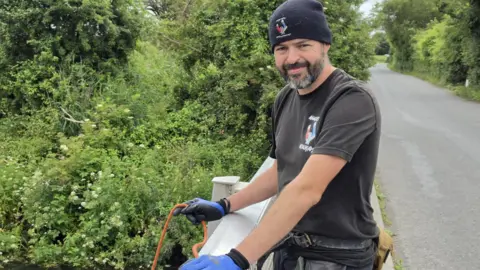
Gareth Morris regularly magnet fishes around Clevedon near Bristol, and is part of a group that goes on fishing expeditions all over the country.
For him, it is all about the thrill of finding an unusual artefact, as well as helping clear debris from the waterways.
"You're saving history, the Victorians used to throw a lot of stuff in, you find all the decorative bed knobs, fire surrounds and old weighing scales."
Morris also finds a lot of satisfaction in pulling out rubbish, both metals and bits of plastic and textiles that get tangled in the magnet's line.
"You often see birds with hooks in their beaks where they have grabbed a lure or something. If you can get those out before that happens then that's an animal saved," he said.
But not many pastimes require you to carry barricade tape in the event you need to cordon off an explosive, yet it is a key piece of equipment in Morris's kit following some hair-raising trips to urban areas.
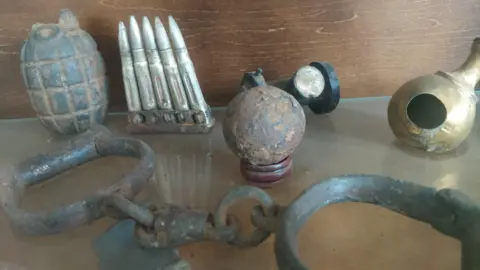
"I've had machetes come up, lots of knives and guns, sawn-off shot guns and rifles, live rounds and old war rounds," Morris said.
"With guns, bombs and explosives, you just call the police there and then and they will come and deal with it."
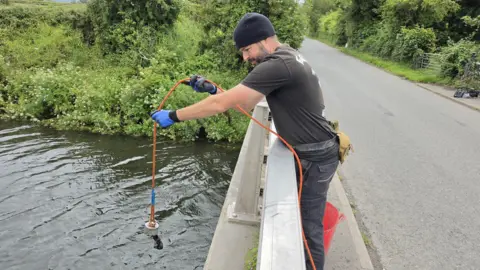
It is the risk of unexploded ordnance pulled out by inexperienced fishers that is worrying the Canal and River Trust.
In a statement earlier this month, it said: "Items dragged out by magnets could be sharp or heavy and cause you to be dragged into the water.
"We've even had reports of people fishing out old war bombs and dumped weapons.
"When people leave piles of metal on the towpath, it can cause problems for other visitors, for example families with young children."
 Gareth Morris
'Get the bomb squad'
The trust declined to comment further, but Dorset-based magnet fisher Grant Osborne, who runs the magnet fishing social media channels Finders Keepers, can see its point.
The father-of-four took up magnet fishing during the pandemic, and found a community of thousands of people all over the world ready to offer advice and support in difficult situations.
"(Magnet fishers) tend to follow the rule of 'get it in a bucket of water' when it comes to ordnance, then call the police who get the bomb squad down and they dispose of it safely," he said.
"But it's not the kind of hobby you would want children doing unattended."
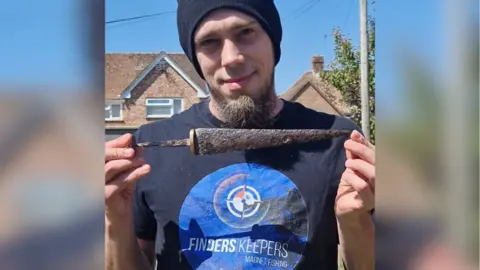 Grant Osborne
"I've found five live explosives and two failed shots. I've called the police out a total of six times," Osborne said.
"That's quite a nervous experience - when you have to say to people 'stay away from this area, the police are on their way'."
But for Osborne, the thrill of finding something special outweighs his concern about the risk.
His prize find is a 15th Century dagger, which is currently being examined by a museum in Oxford.
'Take responsibility'
"There's a lot of history to be found - in general you're going to be pulling out rubbish, but every now and then something incredible comes up and it's a nice bit of karma when it does come along," Osborne said.
"Even if we don't find anything good, we are happy just filling up a rubble bag and getting it down the scrap yard."
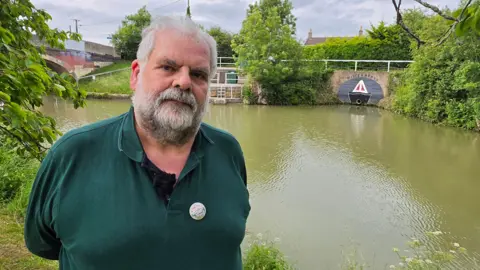
Graham Puddephatt, chair of the Kennet and Avon Canal Trust, said the main problem was magnet fishers dumping piles of rusty metal on the river bank was a bigger problem than the risk of finding explosives.
But he recalled one magnet fishing club turning up at a town with two trailers, and hauling away all the metal they found at the end of their trip.
"I think it's about taking responsibility for what you are doing - if you are going to pull these things out you have to take them away with you," he said.
Magnet fishing is legal in the UK as long as participants have permission from the landowner.
For now, it seems those taking part are a long way from being persuaded to hang up their ropes.
Follow BBC Somerset on Facebook and X. Send your story ideas to us on email or via WhatsApp on 0800 313 4630.
