'Surviving cancer isn't the end of the story'

 Cancer Research UK handout
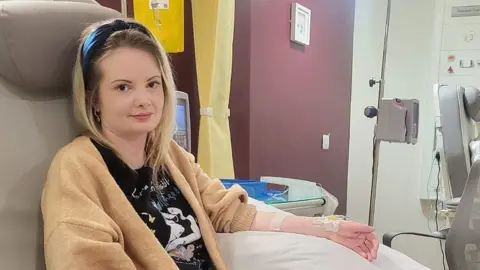
A cancer survivor who always dreamed of having children has opened up about the heartbreaking reality of going into surgical menopause at the age of 34.
Gemma Coleman, who was diagnosed with two separate cancers affecting her ovary and womb in 2022, was told she would never be able to become pregnant after needing two major operations.
The 37-year-old, from Turton, Lancashire, said her diagnosis had "felt like a death sentence, but surviving cancer isn't the end of the story" as she now hopes to adopt in the future.
"You have to learn to live with the long-term physical and emotional impact of treatment," she said.
Gemma underwent two major operations, including the removal of her ovaries, womb, fallopian tubes, lymph nodes and affected abdominal tissue, followed by eight months of chemotherapy.
Now three years into remission, Gemma has regular scans and blood tests while managing the long-term effects of treatment including chronic pain, fatigue, bone weakness and fibrosis.
 Cancer Research UK handout
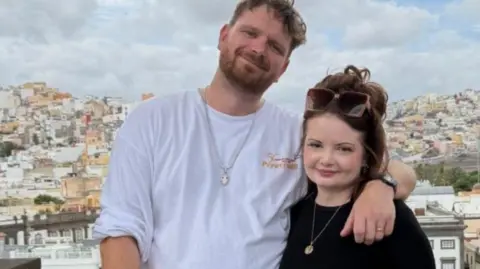
"People often tell me I'm an inspiration, but although I tried to look brave on the outside, inside I was struggling," said Gemma, who lives with her husband Jak, 39, and their cat Moggie.
"My life was completely tipped upside down. We always dreamed of having children. Having that choice taken away was heartbreaking.
"We're hoping that one day, when my health allows, we'll be able to adopt."
She has welcomed the news of a £2.5m Cancer Research UK grant for the next phase of an ovarian cancer research programme to develop better treatment options.
"Research gives people like me hope that one day cancer won't be something people fear in the same way, but something that can be treated much more effectively," said Gemma.
 Cancer Research UK handout
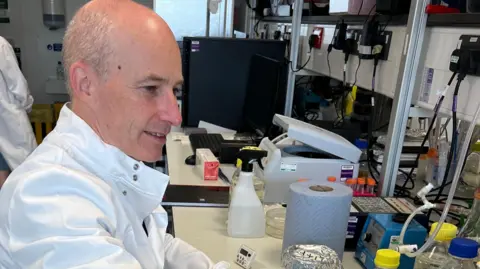
The five-year award will fund the next phase of the study led by Prof Stephen Taylor at The University of Manchester based at the Manchester Cancer Research Centre.
Prof Taylor said: "Our laboratory is home to the largest resource of living ovarian cancer cell cultures of its kind in the world.
"By understanding how these cancers grow and respond to treatment, we can identify new weaknesses that could be targeted with future drugs.
"Every discovery brings us a step closer to more personalised treatment for women with ovarian cancer."
Listen to the best of BBC Radio Lancashire on Sounds and follow BBC Lancashire on Facebook, X and Instagram. You can also send story ideas via Whatsapp to 0808 100 2230.
