£20m project aims to fight 'unique' flood threats

 BBC
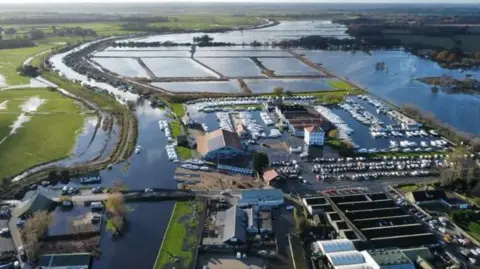
BBCCrucial flood defences that protect large swathes of the Norfolk Broads are being bolstered for the future as £20m of work takes shape.
Eleven pumping stations in the Upper Thurne catchment are being upgraded, helping to protect more than 700 properties and nature sites across 15,500 acres at high risk from flooding due to dangers from both storm surges and extreme rainfall.
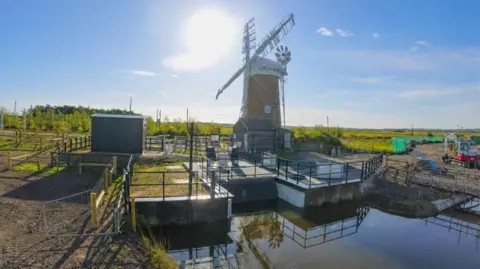
New technology will increase capacity to pump water by 50 % according to the Water Management Alliance (WMA), a group of internal drainage boards in Norfolk and Suffolk.
Mark Philpot, chief operating officer for the WMA, said the scheme will make the Broads "more dynamic and adaptable" to climate change.
 Water Management Alliance
Why is it needed?
More than 2,000 years ago, the Broads was a vast estuary but over several centuries, the land was drained through rivers being rerouted, drainage channels dug and windpumps used to move water.
The protected wetlands account for about 1% of the country's land area but is home to a quarter of Britain's rarest wildlife. A changing climate is putting these habitats under threat.
Extreme weather patterns and rising sea levels are creating growing pressures for the Broads, with prolonged flooding, tidal surges and salt incursions threatening sensitive freshwater habitats in the area.
Villagers living in places like Hickling and Potter Heigham faced prolonged flooding two years ago, which left some households unable to use their toilets due to sewage systems filling with flood water.
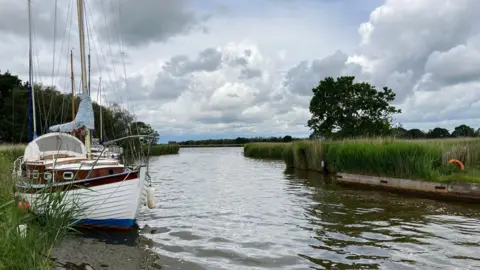
But in the summer months, the region is also particularly vulnerable to drought, which means water levels require careful management.
Matthew Philpot, chief operating officer of the WMA said: "The Upper Thurne is a very special part of the Broads in that it is home to a number of very significant wildlife designations and communities that rely on flood defences.
"Norfolk has unique flooding threats from the sea, from the rivers and from the sky.
"All manner of flooding can happen and the Broads in particular is very low lying, as such there's a lot of infrastructure which we rely on to keep us dry."
 Water Management Alliance
What are pumping stations for?
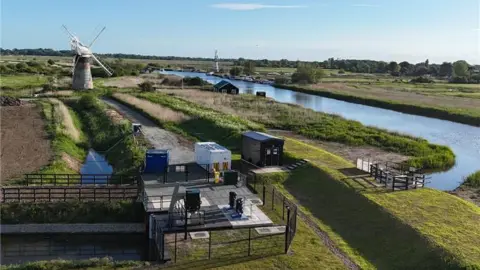
Many of the sites being improved are next to historic windpumps that helped drain the Broads landscape for centuries and the buildings remain a key feature of the landscape.
The technology was brought over by Dutch engineers in the 17th century and modern pumping stations work similarly but the way they are powered has changed.
Philpot said while the method is similar, the new facilities are now much more efficient.
"The technology uses the same principle, in that you are basically lifting water from a low level up to a higher level to keep those areas dry," he said.
"We went from wind to diesel and now we're on electric.
"We tend to put our pumps in the same place because they knew where the best place to pump from in the landscape. We are following in their footsteps."
 Owen Sennitt/BBC
Why do they need upgrading?
To better prepare for the future, the WMA aims to upgrade its pumping stations with significantly more efficient modern facilities capable of discharging 50% more water.
The current project aims to replace 11 stations over a decade at a cost of about £3.5m for each site in the Upper Thurne catchment, where villages like Hickling, Martham and Potter Heigham are found.
But there are ambitions to replace all 37 pumping stations in the Broads eventually, Philpot added.
At Horsey, where the finishing touches are being made, the two pumps will each be capable of moving up to 375 litres (82 gallons) per second of water.
A new pumping station has also been installed at St Benet's.
The pumping stations being replaced were mostly built in the 1950s and are now "significantly beyond the end of their design lives", the WMA has said.
More "fish-friendly" technology is also being used and the pumps will be able to better control the level of water being moved to ensure water levels are managed in drier periods.
 Owen Sennitt/BBC
The £20m funding package came as part of a £1.4bn investment in flood protection announced by the Environment Agency and Department for Environment, Food and Rural Affairs in March this year.
Other regions to benefit include Poole Harbour, Somerset and Kendal in Cumbria.
A spokesperson for the Environment Agency said: "We are very supportive of the work to improve pumping stations in the Upper Thurne.
"These are particularly important because they will help support the effective management of a unique, diverse, and highly managed landscape that is low lying and below sea level."
The EA added it is supporting other projects to manage flood risk and resilience in Norfolk, including improvements to Great Yarmouth defences and £1.5m for maintenance of flood embankments and other river maintenance projects.
Do you have a story suggestion for Norfolk? Contact us below.
Follow Norfolk news on BBC Sounds, Facebook, Instagram and X.
