Iraq War chaplain 'did not feel entitled' to PTSD trauma

 Combat Stress
When a dying child was thrust into the helpless arms of an Army chaplain, he silently carried the burden of that day for more than 15 years.
New research commissioned by veterans' mental health charity Combat Stress has uncovered public misconceptions around PTSD, with many failing to recognise its symptoms and wrongly believing it only affects combat troops.
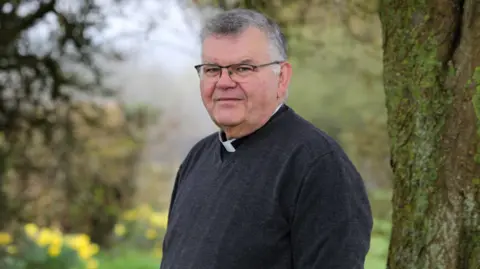
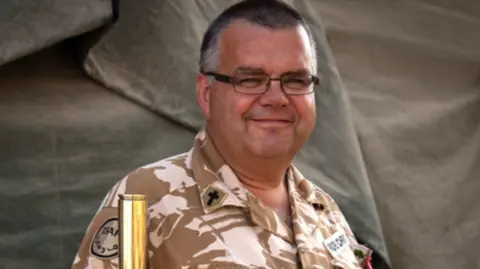
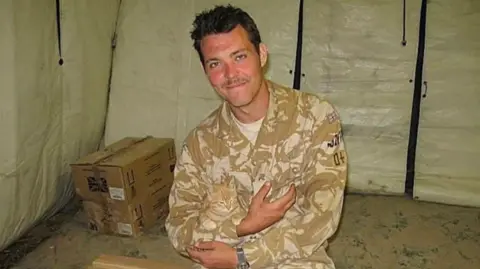
Former Padre Mark Christian, from Salisbury, Wiltshire, said the incident during the Iraq War in 2003 had left him traumatised, but he felt he was not entitled to be because he was in a pastoral role.
"I somehow felt that I didn't have the right to feel this because the burden I was carrying is nothing compared to losing a friend or having to kill somebody," he said.
What is PTSD?
According to the NHS, post-traumatic stress disorder (PTSD) is a mental health condition caused by very stressful, frightening or distressing events.
This may be experienced through flashbacks, vivid or intrusive images or thoughts and recurring dreams or nightmares.
Common symptoms can include dissociation, gaps in memory surrounding the traumatic event, difficulty sleeping or drastic changes in mood.
 Combat Stress
The recent YouGov survey revealed only 17% of the UK public identified the risk of PTSD in non-combat military roles - such as a driver, photographer or chaplain.
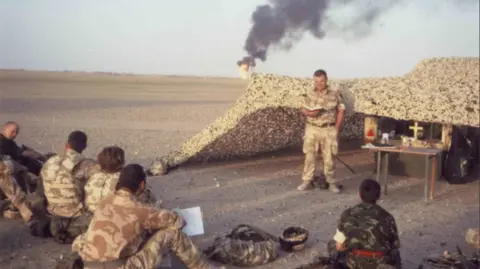
Army chaplains, often referred to as padres, are commissioned officers who provide pastoral care, spiritual support and moral guidance to military personnel.
In 2003, Christian was accompanying a troop through Iraq when they encountered a school full of "badly maimed children" following an attack by the Republican Guard.
"One was given to me and it was obvious the child wasn't going to survive but I was powerless to do anything," he recalled.
"What really got me was the pleading look in this young girl's father's eyes.
"I've been to lots of places, seen lots of things, but that severely impacted me."
- If you've been affected by the issues discussed in this story, information and support is available at BBC Action Line
 Combat Stress
For years he suffered in silence, avoiding all potential triggers, until one night he broke down in tears at a dinner party when a guest brought up the Iraq conflict.
"I just exploded. I tried to stuff it back in a box but it wouldn't fit," he said.
Christian reached out to Combat Stress last year and underwent group therapy during which he came to the realisation that he too had been "damaged" by the war.
"I'm not ashamed of it anymore, it's an injury like anything else. It just happens to be in your mind, not your body," he said.
"I used to be a 'man up' sort of Padre. I'm not now because I understand how debilitating the damage is, how it affects every single aspect of your living life."
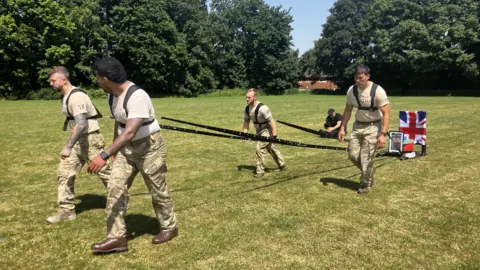
On 21 August, a group of seven soldiers from Bulford Military Camp will drag a sled 54 miles (86km) across the beaches of Normandy to raise money for Combat Stress.
The feat is in memory of Sgt Andrew Borthwick who took his own life in November 2025 following a long battle with PTSD.
Borthwick narrowly made it out of Afghanistan alive after being shot in the chest during a Taliban attack which resulted in the surgical removal of one of his lungs.
His close friend and comrade Rome Wilkinson, who will be taking part in the challenge, said his death had "shocked a lot of people".
He said: "He was one of those old school soldiers - you think their mindset is bulletproof.
"But it doesn't matter how long ago it was, it doesn't rest for some people.
"I do it as a tribute to him, to show how loved and respected he was as a soldier."
 Handout
Chloe Mackay, chief executive of the charity, said: "Any veteran who has served our country deserves to feel worthy of help, regardless of their role or experiences.
"PTSD does not go away on its own, it requires specialist treatment and support from those with knowledge and understanding of what veterans have experienced.
"As a nation we need to tackle the stigma and misunderstandings of mental health and ensure veterans come forward as quickly as possible, and don't face their greatest battle alone."
Follow BBC Wiltshire on Facebook, X and Instagram. Send your story ideas to us on email or via WhatsApp on 0800 313 4630.
