What to do if you didn't get the exam results you wanted

 Getty
GettyExam results days can be times of often conflicting emotions for young people.
The schools where pupils gather with friends to receive their GCSE grades will witness joy, relief, upset and sometimes confusion.
Exam pressure is all too real among teenagers after a nail-biting wait for the results of papers they sat in May and June.
Charities and school counsellors both say they receive an increase in calls from worried pupils as results day nears. Teachers say they too feel pressure.
But while not getting the marks you hoped for can feel like the end of the road, it can also open up new paths.
So what can you do if you don't get the results you expected? And what advice is out there?
Heightened concerns among Covid cohort
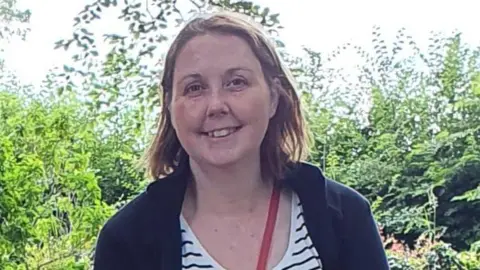
A school counsellor said she and her colleagues across Northern Ireland have seen an "unusually high number of Year 12s referred to pastoral care services this past year".
Some are linking the increase to this being the same cohort that, due to the pandemic, did not sit a transfer test.
"To build resilience we have to face difficult situations," said Linda-Jayne Hoey, a counsellor at Belfast High School.
"For many in this year group [who are receiving their GCSE results], this is the first time they have sat big exams and are awaiting their grades."
Because this year group was admitted to schools based on non-academic criteria, Hoey said more pupils have told her they are suffering from "imposter syndrome".
"I've spoken with colleagues and they say the same. Not all, but some, in this year group think they were lucky to get into the school they're at or feel they didn't have to prove themselves the way others did.
"I think, possibly, that is feeding into the negativity some are feeling in the run-up to results."
'The pressure on pupils is enormous'
 Brian Banks
Brian Banks, who is junior vice president of teaching union NASUWT and a teacher at Hazelwood College in Newtownabbey, said pupils are under "enormous" pressure to do well in exams.
"I think the central importance of examination performance in education has certainly become overinflated over the last few decades," he said.
"Parents expect it, employers expect it, universities expect it, politicians expect it, and schools expect it."
Banks said students are so afraid of failing exams, they generally experience relief if they get top marks, rather than joy.
"There's this sense of not letting themselves and others down," he said.
"I know when I got my own A-level results many decades ago I had the sense of a bullet dodged rather than a mountain climbed.
"That's tough pressure for a young person just starting out in the world."
Banks said teachers also feel pressure.
"It's hardly surprising as teachers and schools are measured by how well their students do in public examinations," he said.
Banks said good exam results are the "the easiest metrics to measure" in terms of how a school is performing, and have "become one of the strongest pressures on both educators and students".
So, while pupils are often told that their results will shape their future, is it possible that there are alternatives?
"It's a tricky job, ensuring students understand that good exam grades are important and useful for their future, while also assuring them that they can still build a successful and thriving life without these qualifications," said Banks.
'I was crushed by my results'
 Open university
When Rainers Ragainis was at school, he enjoyed learning and his teachers recognised his ability.
But every time he went into an exam hall, he invariably failed to give a good account of himself.
When he got two Es and a D in his A-levels he said he was "quite crushed" and "convinced higher education was out of my reach".
Years later, while taking bookkeeping and payroll courses through a job centre, somebody suggested Open University could be an option. So, he decided to enrol in a computing and IT course.
And it turned out to be just the thing for him.
"I read and studied at my own pace, not the teacher's, and there was less emphasis on traditional exams," he said.
He graduated in 2025 and now works in IT and customer support.
"Don't let anyone make you think that university is the only path or that not going to it is a mark against you," he said.
"As much as it feels like grades can be very defining of who you are, remember they're not.
"Even when you apply to jobs and courses and people see you as your grades, you are not what you got."
What support is out there?
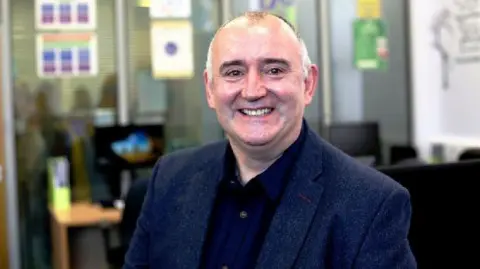
Between April 2025 and March 2026, Childline delivered 728 counselling sessions across the UK, where the young person was worried about exam results.
The number of monthly counselling sessions peaked last August, with 142 sessions offered.
Cormac Nolan from Childline said Northern Ireland received its fair share of calls from worried students.
Some pupils feel underwhelmed by low grades, while for others it becomes a crisis, he said. And the reaction can depend very much on the support they have.
"Parents and carers can be extremely supportive and understanding, but some put a degree of pressure or expectation on the young person and that's very hard for them to cope with," he said.
"Others may be distracted and have other things to deal with and maybe not able to give the attention the young person needs.
"In other cases, fractured or difficult relationships can leave them isolated."
Nolan said it is important to help pupils refrain from putting all their eggs in one basket.
"Ahead of exam results coming out, think of broad options," he said.
He added that most young people who do not get their expected results gain perspective over time, but some can require extra support to do so.
How did Thursday's GCSE pupils manage stress?

Max experienced stress when he was sitting his exams and awaiting his results, but martial arts training provided him with an escape.
"With exam stress, I had the opportunity with training, I kickbox six days a week.
"Our classes are only 45 minutes long, so you can bang out any stress you have, also keep you fit, and you were able to forget about everything.
"As soon as that was over you were able to get back with a steady mind."
Max said "spending time with friends and going to church on a Sunday" also helped control the pressure he felt.

Jack, who got his GCSE results on Thursday morning, said he would go on a walk, run or go to the gym "just to de-stress" during exams and on the lead-up to results.
"That would help me chill out, then I was able to study fully and thank God I got the results."

Sophie was mindful during exam revision to take steps to avoid mental fatigue, and to get the most out of her study time.
"Ways I dealt with exam stress were by making sure I was outside, taking walks, taking lots of breaks to make sure my mind was able to be ready for the next study session."
She said she thinks rest is essential for those preparing for their GCSEs or any other exams.
"Take time for yourself because your mind matters."
Helplines available
CCEA is operating a results helpline for students until 26 August on 028 9026 1260 or via email on helpline@ccea.org.uk
The Department for the Economy's careers service is also providing advice and support on 0300 200 7820 or online.
Childline is free to contact on 0800 1111 and counsellors are available to take calls 24 hours a day, seven days a week.
