More than 170 arrests in facial recognition trial

 PA Media
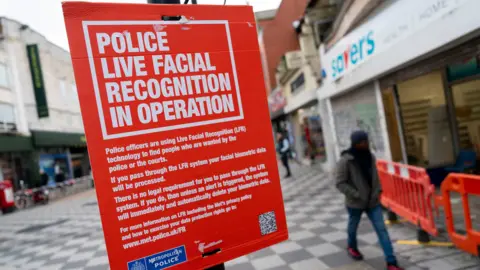
More than 170 alleged criminals, including a woman wanted for more than 20 years, were arrested during a six-month trial of live facial recognition (LFR) in south London.
The Metropolitan Police said crime reduced by 10.5% during the trial on Croydon's high street, which took place from October 2025 to March 2026. There was also a 21% reduction in violence against women and girls.
Arrests included a woman, 36, who was wanted for failing to appear at court for an assault in 2004. Other arrests included people wanted for kidnap, rape and sexual assault.
The Met said the data showed LFR was a "powerful tool", but campaign group Big Brother Watch called for "strict safeguards" for the technology.
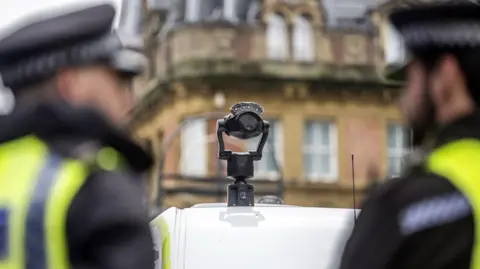
LFR deployments typically require a dedicated van which houses cameras and computer equipment.
During the pilot, cameras were mounted to infrastructure such as lampposts at the north and south ends of Croydon's high street.
'Intelligence-led watchlist'
Static cameras were activated and used in 24 separate operations, and officers made 173 arrests, the equivalent of one arrest every 35 minutes, the Met said.
The Met said each deployment of the cameras used a "bespoke, intelligence-led watchlist" that was created no more than 24 hours in advance and deleted immediately afterwards.
Other arrests linked to the pilot included a 31-year-old man who was wanted for voyeurism for more than six months and a 41-year-old man who was wanted for rape in relation to an incident in November in Croydon.
The force said 61% of the offences linked to arrests were committed in Croydon.
 PA Media
Lindsey Chiswick, national and Met lead for LFR, said the technology was a "powerful tool when it's used carefully, openly and in the right places".
"This technology is helping us find people wanted by the courts, identify serious offenders quickly and focus our resources where they make the biggest impact," she said.
"We will continue using static cameras in Croydon as part of our regular live facial recognition deployments."
The force said more than 470,000 people walked past the cameras and there was one false alert during the pilot. The person was not arrested.
Jake Hurfurt, head of research and investigations at Big Brother Watch, said Croydon's shoppers had been "treated like human guinea pigs" with "surveillance cameras that are rarely seen outside of authoritarian regimes".
Hurfurt said: "We all want the police to catch wanted criminals, but the Met's statistics today mask the many officer hours behind each arrest and huge resources that the force puts into LFR over more proportionate, traditional policing."
He called on the Met to end its use of LFR, adding: "Strict safeguards restricting live facial recognition to the most serious cases are long overdue. The technology has never been voted on in Parliament and there is no law explicitly regulating its use."
'Address fears'
After the Met won a recent high court challenge over legality of using LFR, Commissioner Sir Mark Rowley declared it an "important victory for public safety".
He has long been confident that the technology - which the Met is now using almost daily in deployments across the capital - is a fast and effective way to get criminals off the streets.
We saw this in action during the trial in Croydon in January - officers alerted every few minutes to a passer-by who had been matched to a suspect on their watch list.
Plenty of shoppers I spoke to in the town during this trial told me it made them feel safer, although others expressed concerns about accuracy, privacy and future use of the technology.
The Met will be hoping the results of this pilot will address those fears and strengthen public confidence.
It also comes as the government considers its approach to LFR, following a public consultation.
Sir Mark previously urged ministers not to "over-regulate" its use.
The government has expressed support for the technology, however, ministers also said they recognised opposition, including from civil rights and privacy groups, and that a "more specific legal framework" was needed going forward.
Listen to the best of BBC Radio London on Sounds and follow BBC London on Facebook, X and Instagram. Send your story ideas to hello.bbclondon@bbc.co.uk
