How Reform and Greens took advantage of Labour's slow-motion election nightmare

 Lucy Ashton/BBC
Politics has a reputation for being a ruthless and decisive business. Last week's local elections were held and victors quickly crowned, while losers were rapidly dispatched.
The past seven days in Yorkshire politics, though, have been a marathon of endurance - not a sprint.
Last week, Reform UK may have won big majorities in Barnsley, Calderdale and Wakefield, but the political parties in Bradford, Kirklees and Sheffield have spent this week negotiating coalition deals.
Meanwhile in Westminster, Labour has spent an agonising week debating who should lead the party and the country with no end yet in sight.
So, a week on, what should we take from this year's local election results in Yorkshire?
First, quick and decisive election nights now appear confined to national general elections.
In this year's local ballot, no other region took as long as Yorkshire to tally its council results. From the polls closing at 22:00 BST on Thursday, it would take 42 hours and 29 minutes to count and verify all of the region's votes.
All seven councils holding elections this year chose to count from Friday morning, rather than overnight on Thursday, in a bid to cut costs and protect staff welfare.
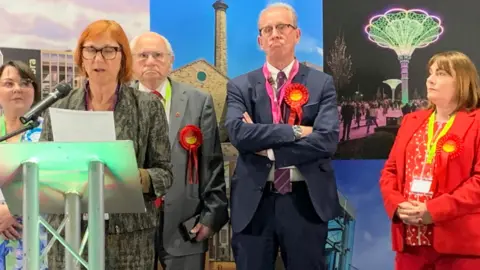
The prolonged count meant that Labour's worst local election performance in the region played out over two days - in an area once considered a stronghold for the party.
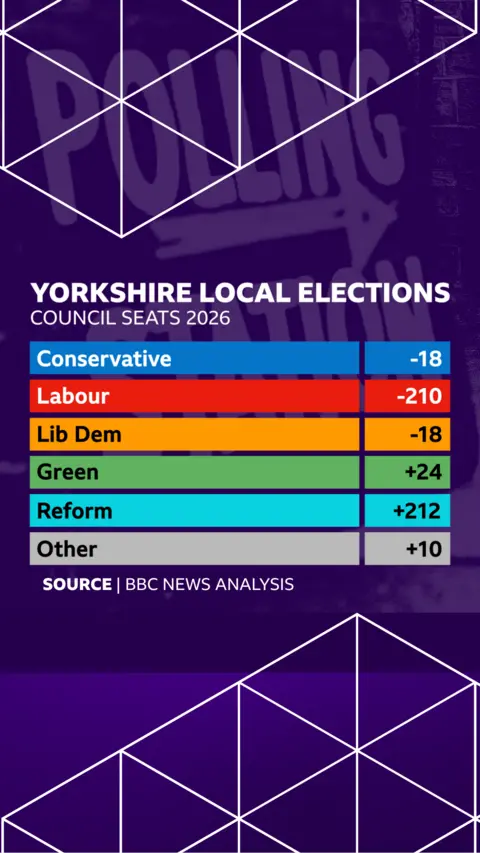
Labour lost 210 councillors - its single biggest loss of elected representatives in the region since the modern system of local government was introduced in 1974.
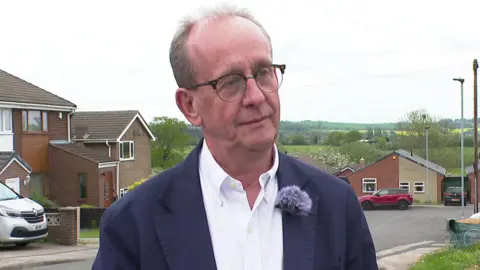
"The Prime Minister rang and asked me what the biggest issue on the doorstep was, and I was quite blunt with him: you are," said Sir Stephen Houghton, the former Labour leader of Barnsley Council, who will now sit in opposition to Reform.
A surface-level reading of the local election results would suggest they acted as a referendum on Sir Keir Starmer's performance as prime minister.
But for Sir Stephen, who led Barnsley Council for 30 years, the root cause of Labour's electoral losses runs much deeper.
"Discontent has been building and building and building in traditional working-class areas," he said.
"The political class got a warning with Brexit - people felt left behind and felt no-one cared.
"Then those same communities were hit by austerity more than anybody else, and then they were hit by Covid more than anybody else."
Sir Stephen's analysis is borne out in the results of individual council wards in working-class areas across the region.
In South Elmsall and South Kirkby in Wakefield, Labour's vote fell by 52% compared with 2024. In Bingley East in Bradford, it fell by 42%.
Another ward to see significant change was Ovenden, just north of Halifax town centre and home to just under 13,000 people according to the latest census.
Nearly half of all households in the ward live in rented accommodation. A third have no access to a car and rely on local public transport. Of those in work, 60% are in manual - or "blue-collar" - jobs, as opposed to "white-collar" workers who work predominantly in offices or from home.
Life in places like Ovenden can seem increasingly insecure for many residents, with rising food and fuel prices - stoked by international conflict - leaving household budgets feeling more and more stretched.
In 2024, 55% of voters in Ovenden backed a Labour candidate in that year's local elections. This year, 60% of voters in the Calderdale ward backed Reform.
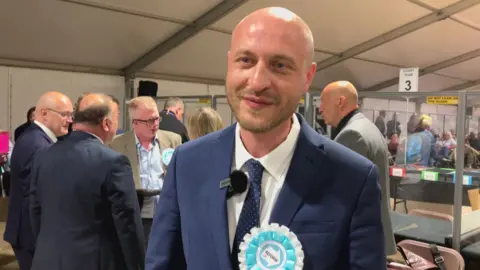
"People are desperately wanting change," said Councillor Dan Sutherland, a former Labour councillor who will now lead Calderdale Council for Reform.
"We want to keep people's council tax as low as we possibly can, moving away from the maximum tax rises that have become the norm under other parties," Sutherland explained.
"We want to invest in areas, restore pride in our communities, clean them up, deal with fly-tipping and anti-social behaviour, end the anti-car agenda, and see the towns of Calderdale thrive again."
Looking ahead, Reform this year won spectacularly in Labour-dominated areas outside the big urban cities of Sheffield, Leeds and Bradford.
Within those cities, Labour either retained council seats or lost them to the Greens or independent candidates.
But in highly prosperous areas with a long tradition of voting Conservative - such as Ilkley in Bradford, Wetherby in Leeds and Denby Dale in Kirklees - Reform was pushed into second or third place behind the Greens and the Conservatives, who won all those wards. Affluent voters appear less ready to back Reform.
In 2027, voters in the most prosperous parts of Yorkshire will have the chance to go to the ballot box - in York and North Yorkshire. The next question is whether Reform can win there too.
Either way, like this year, it is unlikely the votes will be counted quickly overnight.
Listen to highlights from West Yorkshire on BBC Sounds, catch up with the latest episode of Look North.
