'No one warned me about the reality of motherhood'

 Getty Images
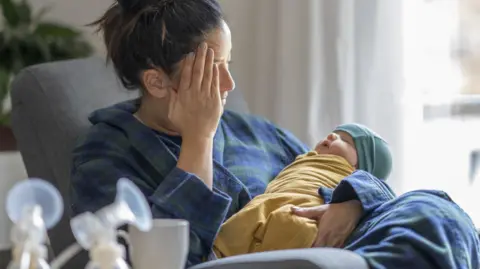
A mother-of-two who suffered from postnatal depression and intrusive thoughts is urging other women to speak up about the harsh reality of motherhood.
Emily, from Bristol, said she had felt "very isolated" after giving birth and struggled to bond with her babies, despite always wanting to be a mum.
Postnatal depression affects more than one in 10 women, with symptoms including anxiety, low mood, withdrawing from loved ones and feelings of hopelessness.
Emily eventually found support from Mothers for Mothers, a support group comprised of women with lived experiences of the mental health condition.
"Sometimes I still struggle, but I have two beautiful children aged two and three who I love, and I wouldn't be where I am without the support I received," she said.
Emily described experiencing an "overwhelming amount of pressure" during pregnancy, exacerbated by "picturesque" representations of parenting online.
"You end up spiralling into this mindset that you need to be perfect for your children," she said.
"But we need to be more aware of what pregnancy can do to a woman emotionally and mentally. It completely changes you."
She recalled labour as a "traumatic and a tremendous shock to the body", yet within just a few hours, "you're told to go home, you don't need help anymore".
- If you've been affected by the issues in this story, help and support is available via the BBC Action Line
Emily told BBC Radio Bristol how dwindling visits from friends and the constant attention on her baby had left her feeling detached from her child and even resentful at times.
"The picture that was painted to me was glowing and beautiful - where it's all about watching your baby grow and develop," she explained.
"But I don't think anyone ever warned me there'd be no focus on how I was coping at all. I felt very isolated, and it came to a point where I felt like I didn't want my child.
"I thought I was weird, crazy, really wrong - like I shouldn't be a mum."
What is postnatal depression?
Postnatal depression is a common condition affecting more than one in 10 women within a year of giving birth, according to the NHS.
Symptoms can include a persistent feeling of sadness, tiredness, a lack of energy, a lack of enjoyment, trouble sleeping or withdrawing from people.
Research shows mental health issues, including suicide and substance use, are the leading cause of late maternal deaths occurring between six weeks and one year after pregnancy.
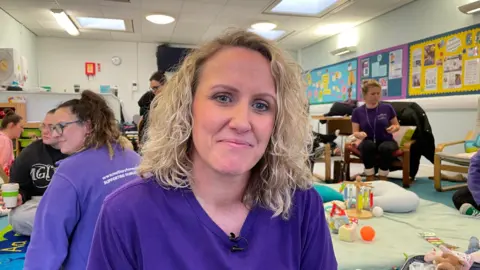
The charity Mothers for Mothers offers psychotherapy and counselling sessions across Bristol, North Somerset and South Gloucestershire.
Business manager Kaeti Morrison joined the group after her first daughter, Ella, was stillborn in 2007.
"Motherhood has always been seen through rose-coloured glasses as a beautiful, wonderful experience," she said.
"Mums don't feel able to disclose their challenges for fear of judgement, stigma, or their baby being taken away. We need to start talking about it."
Follow BBC Bristol on Facebook, X and Instagram. Send your story ideas to us on email or via WhatsApp on 0800 313 4630.
