Giant E.coli sculpture unveiled in sewage protest

 BBC
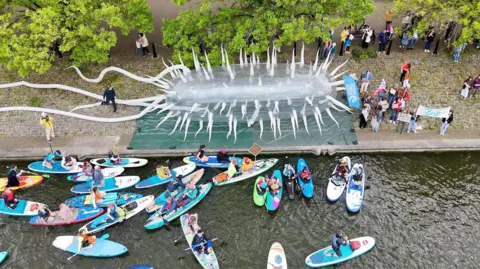
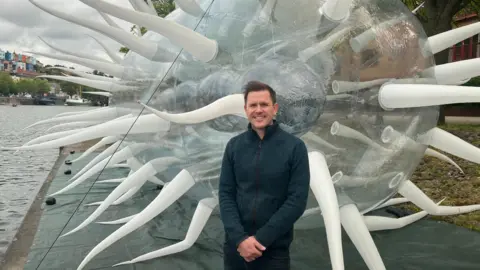
BBCA huge sculpture of E.coli has been unveiled as part of a national protest against water pollution.
Bristol-based international artist Luke Jerram, who is behind the piece, said it was installed on Baltic Wharf, Bristol, on Saturday to highlight concerns about sewage being discharged in docks, rivers and the sea across the UK.
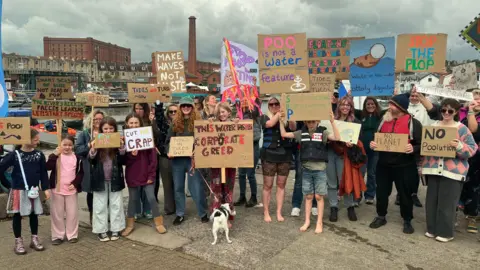
Many people turned out to protest against pollution in Bristol and Taunton in Somerset - along with rallies across the country - calling for change including nationalising water companies.
The government said it has "taken swift action to hold water companies to account".
Levels of public anger have risen in recent years at the number of pollution incidents, leaks and water outages which have affected thousands of customers across England and Wales.
According to Environment Agency figures, water companies spilled raw sewage into England's rivers and seas for 1.9 million hours in 2025.
This was a reduction on the previous year, when water companies released raw sewage for a record 3.61 million hours.
Jerram, who kayaks in the harbour in Bristol and whose previous work includes a sun in a swimming pool, said the sculpture is "five million times larger than the real thing".
He said: "I really care about this place, and if we get it right we should be able to clean up the docks and make it a place for everyone to enjoy - make it safe, beautiful and full of wildlife."
The national protest was organised by Surfers Against Sewage.
Professor Steve Simpson, University of Bristol Professor of Marine Biology and Global Change, said: "We've seen improvements but at the moment standards are slipping.
"There's been a lot of loss of regulation and as a result now we're starting to see people get sick from surfing again. That can't be the future."
Anna Steele-Perkins, volunteer at Surfers against Sewage in Bristol, said: "We want public health to be put first and foremost. We need a restructure, the end of privatisation, and to put people over profit."
 Kim Johnson
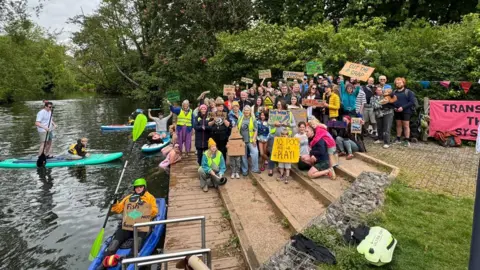
More than 50 people attended the protest on the River Tone by the French Weir in Taunton.
Jo MacDonald, who organised the event, said she has swum in the river for four years and knows people who have fallen ill after going in.
"We don't know what's in there, we know we're risking out health every time we swim," she said.
In 2024 the River Tone was granted bathing water status meaning it started receiving regular water monitoring from the Environment Agency.
The BBC reported on Friday the River Tone was among 14 river locations where warnings are in place telling people not to swim due to unsafe water quality.
 PA Media
A Wessex Water spokesperson said: "Rivers in rural catchments will always have bacteria in them – from wildlife, agricultural run-off and roads to private septic tanks, regulated storm overflows and treated sewage discharges.
"The safety of swimming and recreation at specific locations is for councils and others to determine, but we want to help people make an informed choice by delivering real-time water quality information using AI at popular coastal and inland sites.
"Over the next five years we'll be making unprecedented investment in sealing drains and sewers, nature-based solutions for sewage treatment, nutrient removal and rainwater storage to further improve river health."
In January the government announced a series of key measures to overhaul the water industry including inspections without notice and regular MOT-style checks of water companies.
In the King's Speech on 13 May, King Charles outlined The Clean Water Bill which will merge the functions of several existing regulators, including Ofwat, in a bid to end the "fragmented oversight" over the privatised water sector.
Follow BBC Bristol on Facebook, X and Instagram. Send your story ideas to us on email or via WhatsApp on 0800 313 4630.
