The WW2 spy killed in mystery crash days after the war ended

 National Archive
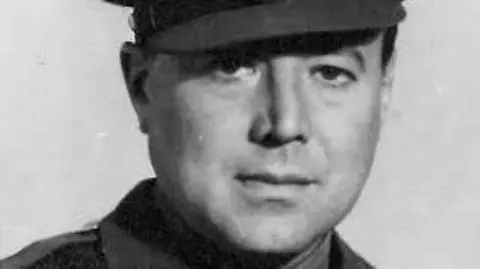
Jacques Vaillant de Guélis was a decorated World War Two hero of both Wales and France, but his death - involving a German soldier just days after the end of the war - remains shrouded in mystery more than 80 years on.
Born in Cardiff to French coal magnate parents, at the outbreak of war the Oxford graduate gave up a successful career in advertising to sign up for the Army.
Soon recruited into the top-secret Special Operations Executive, (SOE), he flew several missions behind German lines, organising and equipping French resistance fighters.
Just eight days after Victory in Europe (VE) Day on May 8, 1945, during his final operation to collect intelligence on concentration camps, he was fatally injured yards from Flossenburg Camp near the current Czech Republic border when he was hit by a car being driven by a German soldier who had, until recently, been working there.
The cause remains unclear, with author Greg Lewis saying "the case was closed almost as soon as it was opened".
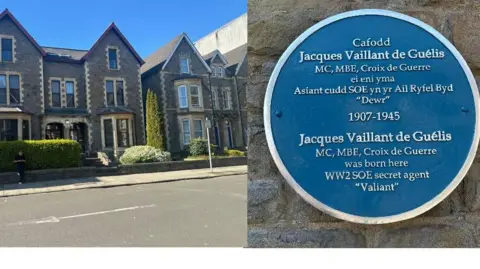
Born in 1907 on what is now Museum Place close to the city centre, his family home bears a Blue Plaque in recognition of his bravery.
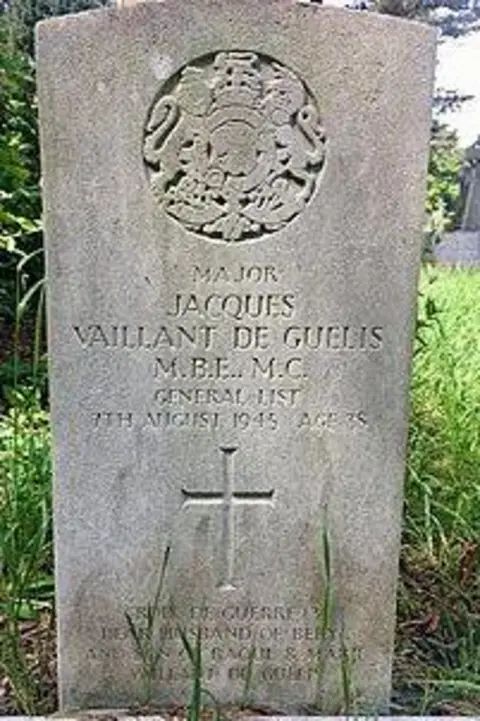
Cardiff author Greg, who has written about espionage, resistance and World War Two, became interested in Jacques during research into Cathays Cemetery, where his ashes are interred in a family plot.
 BBC Wales
He says Jacques' background was typical of what SOE would have been looking for.
"Jacques' family moved to Cardiff in order to export coal to Britanny. He would have been educated, sophisticated and, most importantly, very difficult for the Germans to tell apart from a native-born Frenchman.
"What's more, from his earliest days in France on the outbreak of war, he'd proved himself to be incredibly resourceful in extreme circumstances."
 Friends of Cathays Cemetery
Jacques was first posted as a liaison officer to the British Expeditionary Force during the earliest days of the war in 1939.
After the German invasion of France he was evacuated from Dunkirk, but no sooner had he returned to Britain than he was sent back on 12 June 1940 via Cherbourg, in order to help other trapped men to escape.
Greg said: "After he'd co-ordinated all the evacuations which were possible, he had left it too late to leave via the Channel himself, so headed south via Marseille and over the Pyrenees into supposedly neutral Spain.
"There he was interned before the British government secured his release on a ship back to Glasgow."
 Getty Images
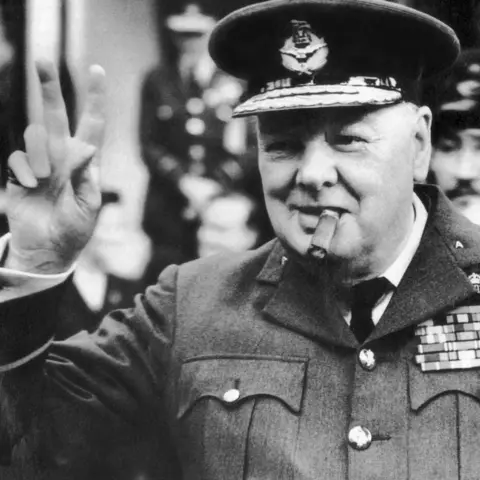
It was this exploit which first drew him to the attention of SOE in April 1941, recruited by Maj Lewis Gielgud - brother of actor Sir John Gielgud - and was reputedly even interviewed for the role by Prime Minister Winston Churchill himself.
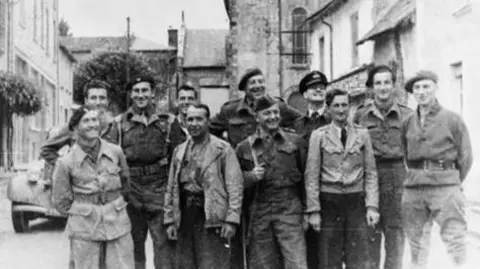
Jacques parachuted into Vichy France in August to bolster French resistance efforts by providing forged travel documents, radio sets and military intelligence.
Having completed his mission, he radioed to be taken out by the RAF from a crudely-constructed airstrip some weeks later.
 Imperial War Museum
Now a major, soon he joined up with General Charles De Gaulle's Free French Army in Algeria, pursuing the Germans out of north Africa and into Corsica.
There he was involved in hand-to-hand fighting until the enemy were driven off the island in 1943, when he was recalled to Britain for briefing ahead of another top-secret assignment shortly after D-Day.
"In July 1944 Jacques was again dropped behind enemy lines to co-ordinate resistance fighters who were hampering the Germans as they attempted to retreat deeper away from the front", said Greg.
"It would have been highly unusual for somebody of his importance to be so directly involved, because of the risk of his capture and the knowledge he could have potentially disclosed, but such were his skills in the field that it was considered vital to have him on the ground."
 National Archive
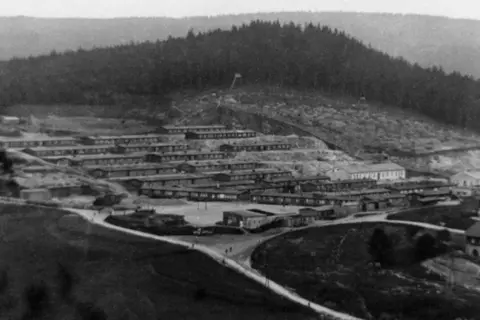
For his final, and ultimately fatal, operation, Jacques was deployed inside Germany to learn the fate of fellow SOE officers who had been captured and sent to the notorious Flossenburg concentration camp in Bavaria.
On 16 May 1945, just days after the end of hostilities, he was outside the gates of the camp when he was hit by a car being driven by a German soldier who had, until days before, worked there.
Ever since, there have been suspicions that Jacques was deliberately targeted because of what he may have discovered at Flossenburg.
While Greg believes there is nothing to point towards an "organised hit", a lack of detail does raise questions.
"Those early days were crucial in the gathering of evidence towards what would later become the Nuremberg Trials. There would have been many Nazis who really wouldn't have wanted that information to become public," he said.
"Germany was so chaotic then, that it's highly unlikely to have been an organised hit, but could it have been one Nazi acting on his own?
"Maybe not, as the records don't make very much of it, and the case was closed almost as soon as it was opened."
 Imperial War Museum
Immediately after the crash, Jacques was flown to Paris for emergency treatment, and was then repatriated to Burtonwood Hospital, Staffordshire, where he underwent further operations.
But he could not be saved and died on 7 August 1945.
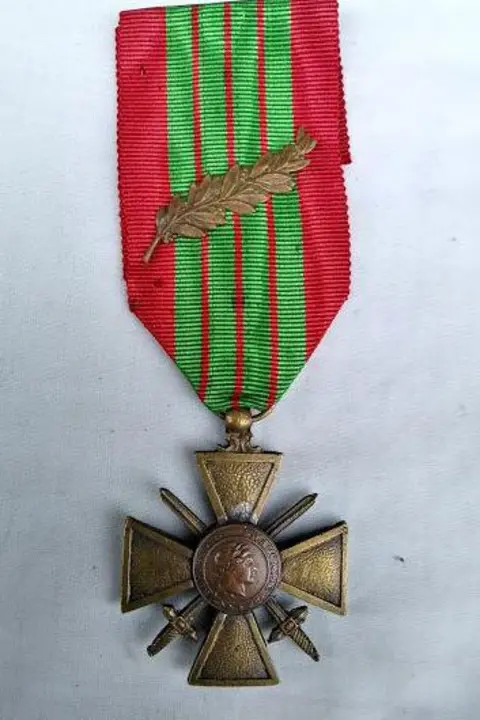
He was posthumously awarded the MBE by Britain and the Croix-de-Guerre with Palm by France, the country's highest award for gallantry.
However, Greg believes it is a tragedy that Jacques' war was never heard in his own words: "I've written about several SOE operatives who survived the War, and their recollections are as insightful as their military record.
"Though with Jacques, all we have is his glittering personnel file, but sadly personnel isn't the same as personal."
