Why pioneering work at Victorian mental asylum has now earned global recognition

 Crichton Archive Collection/ DGC Heritage Service
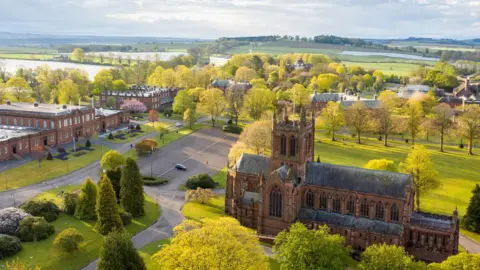
The archive of a former psychiatric hospital in the south of Scotland has been recognised among some of the most significant documents in British history.
Historical records of the Crichton Royal Institution (CRI) in Dumfries now sit in the UK's Unesco Memory of the World Register - alongside the likes of the Magna Carta and the Declaration of Arbroath.
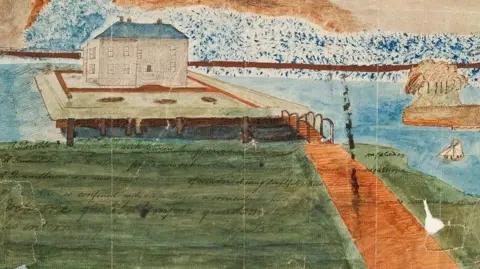
The collection includes writings and artworks by patients who were being treated with pioneering creative therapies between 1838 and 1879.
But what makes the items gathered on the sprawling estate worthy of such recognition?
 Crichton Archive Collection/ DGC Heritage Service
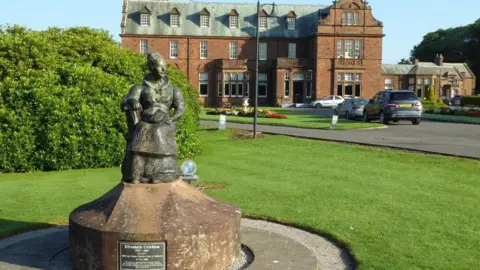
In 1829, Elizabeth Crichton wanted to create a university in Dumfries with an inheritance from her late husband.
However, she was fighting against the belief that unfilled places in other parts of the country meant such a campus in southern Scotland was unnecessary.
Eventually, after about a decade, she admitted defeat and an "Institution for Lunatics" opened on the estate instead.
It was not until the 1980s, in a changing healthcare landscape, that its services were finally declared surplus to requirements.
It was bought by the council and is now leased to the Crichton Trust, becoming a become a home to, among others, universities and other educational institutions.
 Crichton Archive Collection/ DGC Heritage Service
The archive submission to Unesco focused on three exceptional record sets that give unique insights into the lives of the patients and staff in the Victorian asylum.
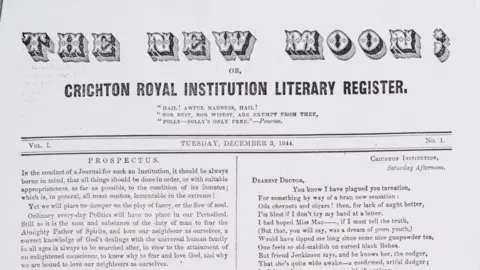
The New Moon Magazine - started in 1844 - was one of the first and longest-running asylum magazines in the world.
It was written and printed by patients giving a platform for their "free and undisguised feelings and views".
The second item was a scrapbook documenting the CRI's early years with over 600 items.
Dr Charles Cromhall Easterbrook kept creative works by patients including records of the first play ever performed in an asylum by an all-patient cast and crew.
Finally, there was the early patient artwork - from 1843 to 1867 - which shows "vivid creative responses to mental illness and care".
All of which, it was successfully argued, showed the creative use of therapy, literature, art, music and drama "in ways that were ahead of their time".
 Philip Halling
The Unesco Memory of the World Programme recognises archives, manuscripts, records and other documentary collections of outstanding significance.
It raises awareness of the need to preserve these records and make them accessible to present and future generations.
Rachel Hosker, chair of the UK Memory of the World committee, said it felt there was "strong evidence for the significance of the documentation of globally-pioneering psychological and mental health care".
"It also clearly showed the local to global influence," she added.
 Dumfries and Galloway Council
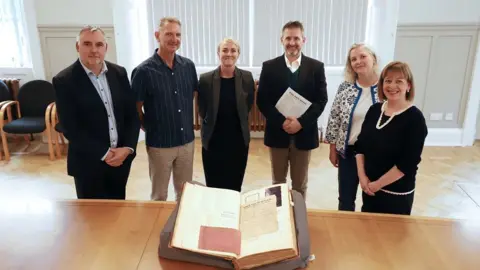
Jennifer Challinor, head of research and development at The Crichton Trust, said it was an honour to secure the recognition.
"The Crichton was the home of pioneering mental health care and practice," she said.
"It highlights that CRI went further than contemporaries in moral treatment of patients, advocating for holistic, creative therapy, occupational therapy, and patient-focused recovery from its founding."
She said it could shine a light on Dumfries as a "place of innovation" with such a special collection.
"It's the voices of staff and patients, particularly women and the less wealthy, who are not normally part of the record," she explained.
"Some of the archive consists of artwork, publications and letters created by patients themselves, so it captures part of their story first hand in a way most institutional records don't.
"It shows a place that was ahead of its time in how it cared for people in mental distress."
The archive is owned by NHS Dumfries and Galloway and is cared for by the team at Dumfries and Galloway Council's Heritage Service.
Much of it was digitised in 2014 and is available online.
Some items - particularly patient and staff records - are subject to access restrictions with any inquiries directed to the heritage service.
Challinor added that although some of the language used in the archives was "potentially upsetting" to a modern audience, it reflected its time.
"Remembering matters, because the Crichton story has layers," she said.
"It includes trauma and injustice, and we acknowledge that - but it also includes innovation, care and human connection."
