Warning as AI clones voices and law falls behind

 Getty Images
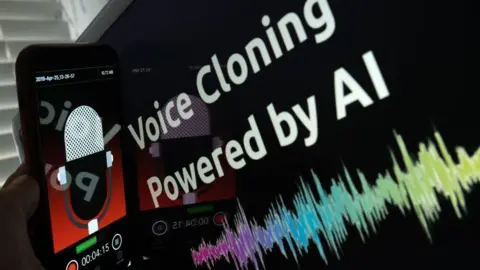
People in the UK could have their voice or face cloned using artificial intelligence without their knowledge and current laws may not be strong enough to stop it, experts have warned.
Rapid advances in AI mean realistic digital copies can now be created from short audio or video clips, raising concerns about identity misuse, scams and loss of control.
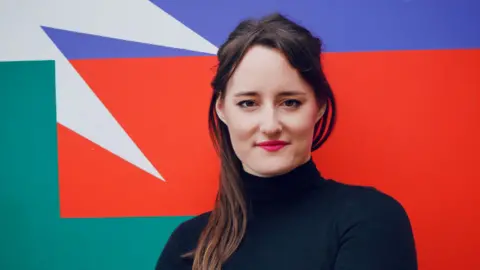
Media lawyer Dr Mathilde Pavis, said UK legislation was now "unfit for purpose" because it was written before this technology existed.
"The law comes close, but it doesn't fully protect your voice, your face or your identity," she said.
She added other countries including France, Italy, the Netherlands and Denmark have "effective laws" that protect personality rights.
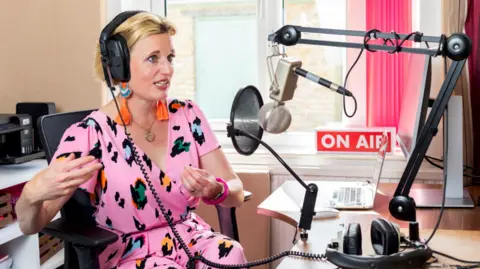
A Bristol voice-over artist, Faye Dicker, said she was in "disbelief" after discovering her voice had been cloned and sold online without her consent.
Dicker said her voice had been downloaded on US-based AI firm Fish Audio more than 900 times.
She said: "I have no idea who has used my voice, how they have used it and what they have recorded me saying," she said.
Fish Audio said it takes "the protection of recognisable public voices seriously" and removed the content.
Laws struggling to keep up
Dr Pavis said the UK relies on a "patchwork" of laws - including copyright, data protection and trademarks - to protect someone's likeness.
But she said these "come close to protecting your likeness", for example your face, voice and body - but were not designed with AI cloning in mind, leaving gaps.
"Instead they protect films, they protect recordings they protect what classes as personal data when it is used in certain contexts.
"But it doesn't protect your physical and personal likeness," she said.
 Mathlide Davis
Trade union Equity says AI cloning is now a major issue.
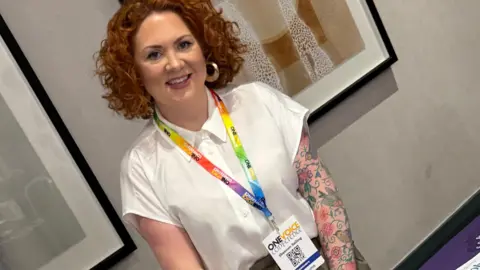
Representative Shannon Sailing, who looks after voice artists, said the union has submitted claims on behalf of more than 20 members whose voices were allegedly used without permission.
"It's taking up so much of my time," she added. "It's one of the main things I deal with now."
A Fish Audio spokesperson said the company's terms of use prohibit users from uploading material and the creation of voice models without the necessary rights and consent.
"We will continue to work on technical solutions that better support rights," they added.
 Equity
Calls for stronger protection
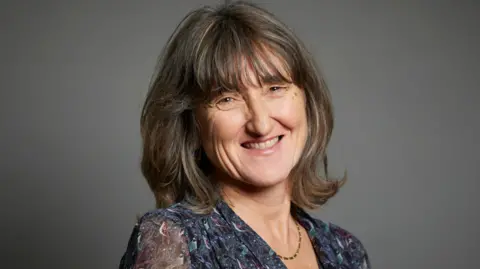
A leading global campaigner for digital regulation is Baroness Beeban Kidron OBE, a crossbench member of the House of Lords.
She believes the government is not doing enough to protect creative rights.
Kidron said: "The failure of the current government to strengthen and protect UK copyright, and to swiftly give likeness the same status as other forms of protected IP [intellectual property] is a disaster."
She also accuses the government of "protecting big tech [companies] over UK citizens."
Kidron, a successful film director making movies such as Bridget Jones: The Edge of Reason, said: "I have been inundated with calls saying US artists are being offered vastly bigger sums than those in the UK for their likeness."
The government said it recognises that digital replicas "can be a powerful tool", but it understands AI can be harmful when someone's likeness is replicated without permission.
"We will launch a consultation to seek views on how we address these harms, while protecting legitimate innovation," a spokesperson for the government said.
 Roger Harris Photography/UK Parliament
'A gap in protection'
Pavis said some European countries have long recognised personality rights as part of protecting identity.
"And they didn't wait for AI or the internet," she added.
Since 1858, French law has treated image rights as part of protecting a person's identity, alongside rights such as privacy and reputation.
Today, French law protects specific personal features like a person's name, image, voice and privacy, rather than giving one broad "personality right".
GDPR is a gap in UK law at the moment which lawyers are "desperately" using against deepfakes and cloning, Pavis added.
"But it's not that effective because it wasn't written with voice cloning or digital cloning in mind," Pavis said.
She said one of the rights that can be effective in cloning is GDPR, because when you make a clone of someone, you have to process their personal data.
"As for Faye they [the individuals that cloned her recording] are still interfering with her digital dignity and personal autonomy and as a voice actress they are actively interfering and competing with her business which is not ok," Pavis said.
 SuperFunkyPenguin
Dicker now wants more protection for voice actors in the industry.
"This was so upsetting because the industry is in decline, my income is in decline, and for something like this to happen makes a massive impact," she said.
Follow BBC Bristol on Facebook, X and Instagram. Send your story ideas to us on email or via WhatsApp on 0800 313 4630.
