How festivals are trying to survive heatwaves

 Getty Images
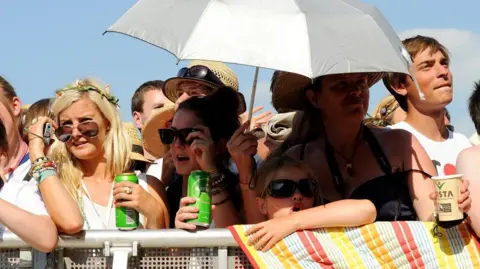
If Glastonbury Festival had not been taking a fallow year, revellers would have been arriving during a rare red alert for heat and then faced days of extreme temperatures.
Scientists are warning even hotter temperatures are likely in the years ahead, leaving some to fear for the future of major festivals.
Susan Tanner is the CEO of the National Outdoor Events Association and was the events director at the Bristol Balloon Fiesta for 16 years. She said that an event's success or failure depends on the forecast.
"The weather is an event organiser's biggest worry and we spend months planning for all outcomes. It can make or break a year.
"We are having to take into account climate change now and starting to look at [the fact] these events [heatwaves] may not just be one-offs," she said.
Most organisers agree that, as heatwaves become more frequent, festivals needs to adapt to survive.
What are organisers doing to adapt?
Even during this week's extreme heat warnings, events were still able to go ahead, with organisers announcing a raft of new safety measures.
Despite temperatures reaching 36C (96.8F) in Bristol, the city's annual Bristol Sounds took place with no reports of people falling ill on Wednesday or Thursday night.
The site included extra water stations and a medical team was also on alert for signs of people suffering from sunstroke or dehydration.
In London, a Harry Styles' Wembley concert is going ahead later with half-price water and free sunscreen.
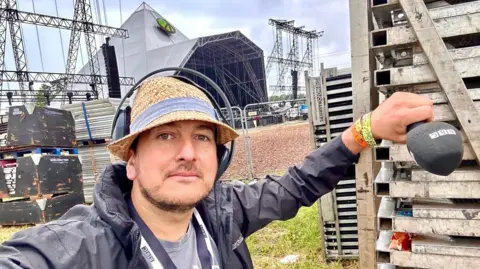
Andy Bennett, BBC Radio Somerset presenter, has been to various Glastonbury Festivals since 1998.
He said the event has already changed to help people during hot weather.
"I've definitely seen the changes in weather preparations at the festival in the last 28 years, whether that's rain or sun.
"In recent years, 2022, the first festival after Covid, was really hot and you could see the organisers bringing in a huge amount of pallets of water and sunscreen. They often might open the gates a bit earlier when it's hot as the queues are long.
"Just in the last ten years, there are a lot more water stations. I'd say almost double the amount of refillable stations in fact," he added.
Should it be all down to the organisers?
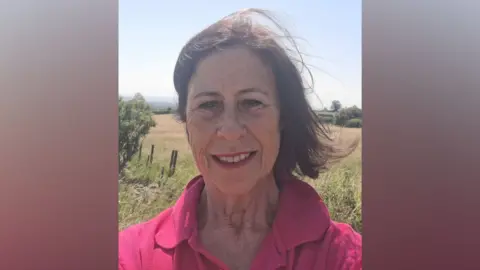 Susan Tanner
Tanner said while organisers prepare lots of measures to keep people safe, the public has to meet them halfway.
"The event organisers can put in lots of mitigation things to help you at the event, but if the public could also help us in that come with hydration, come with your extra water, sunscreen, it really helps us.
"We have to be creative with this. One of our members has started using gazebos as a tent to spray mist and water over guests which makes a difference," Tanner added.
At Bristol Sounds, people were urged to bring their own refillable bottles and to make sure they came wearing sunscreen.
What dangers do people face at festivals?
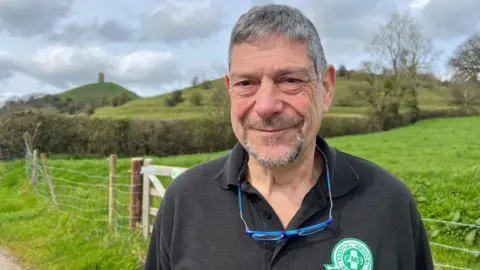
Nich Woolf, a trustee for Festival Medical Services who supports the health services on the ground at Glastonbury Festival, said he has had rain, sun and about every weather condition onsite.
And despite rising temperatures over the last decade, most patients were not presenting with weather-related ailments.
"There is so much pre-planning that goes into an event like Glastonbury and looking after people's health - and the weather forecast plays a huge part," Woolf said.
"The largest numbers of cases that we deal with are soft tissue injuries...some bruises and maybe a few fractures.
"We see about 5,000 patients over a usual festival and 98% or more are treated on site, so we do not unload it onto the local health services," he added.
Follow BBC Somerset on Facebook and X. Send your story ideas to us on email or via WhatsApp on 0800 313 4630.
