Scotland's NHS is putting reputation before patient safety - officials

 Getty Images
Scotland's NHS is more focused on its reputation than patient safety, senior health officials have claimed.
Dr Iain Kennedy, outgoing chair of the British Medical Association (BMA) Scotland, told the BBC there was a "culture of cover-up" in the NHS and that clinicians who raised concerns often had their "characters challenged" and their careers had suffered.
It comes after a scientist involved in the construction of Glasgow's super-hospital claimed his safety concerns were ignored for 15 years in a late submission to the Scottish Hospitals Inquiry.
Health Secretary Angela Constance said the idea that health boards had put their reputation first was "simply untrue".
She said: "The Scottish government works very closely with NHS Boards to deliver on our shared priorities for patients.
"Central to this is patient safety and ensuring our hard-working NHS workforce is supported to deliver high-quality care."
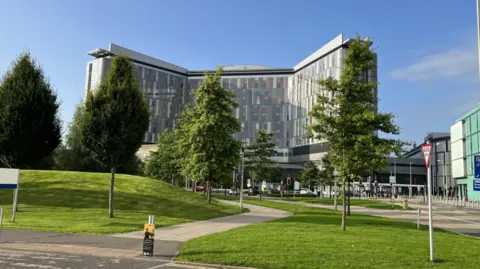
The criticism comes at a difficult time for Scotland's NHS, particularly its hospitals.
This week Dr Gray's hospital in Elgin suspended all planned paediatric surgery after concerns were raised about the quality and safety of care for children.
It followed an unannounced inspection by Health Improvement Scotland (HIS) in April.
Meanwhile, in his late inquiry submission, Dr Michael Bradnam revealed he had received no "formal responses" when he raised issues about ventilation systems, electrical safety and humidity control at Glasgow's Queen Elizabeth University Hospital (QEUH).
Families who lost loved ones as a result of environmental issues at the hospital said they were "shocked to the core" by the claims.
Glasgow's health board said that when Bradnam's concerns were raised with the current leadership team, "we engaged quickly and established a formal review process to investigate issues thoroughly".
Kennedy, who was a whistleblower over bullying at NHS Highland, said he was "not surprised at all" by Bradnam's experience.
He told the BBC's Radio Scotland Breakfast programme: "Sadly there is a culture of cover-up, there's a culture of trying to keep things hidden and to protect the reputation of health boards and ultimately to protect the government."
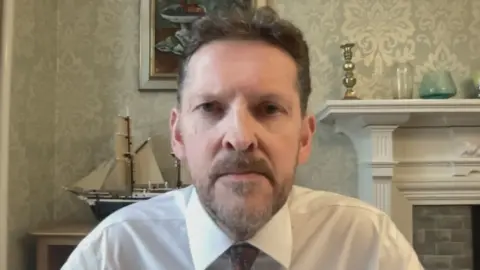
He added that a survey of 17,000 BMA Scotland members found the problem was "absolutely across the board" and that change had to come from the "very top".
"The culture is set at the top, at the very top, so it's really important that whoever is first minister in Scotland and the cabinet secretary for health, they set the culture, as do the MSPs in Holyrood," he said.
"The message has to be clear that those clinicians, those doctors who raise concerns about patient safety and wrongdoing, will be listened to, they will be rewarded, they will be encouraged, and the focus will not go on to them, but it will go on to the patient safety and wrongdoing concerns that they raise."
Scotland's patient safety commissioner Karen Titchener had a similar view.
Although she said she could not make sweeping statements about all health boards, in her experience "it would appear" reputation was placed above patient safety and there was a "'nothing to see here' culture".
Health boards, she said, sometimes turned on patients when they made complaints.
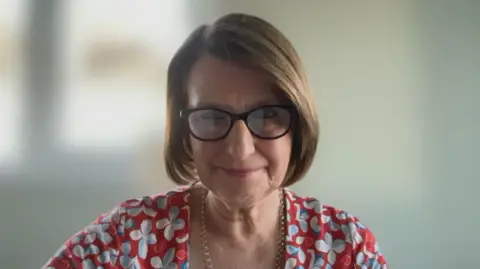
"Time and time again, and I would say with the majority of our stories, the patients just shut down and they're not listened to," she said.
"They're even seen as a pest and an aggressive patient when they're trying to bring up something when they feel that harm was caused to them.
"That's the concern - we should be putting the patients first and we should be saying 'somebody's raising a concern or saying look this is how my care happened'.
"If they're just being dismissed, then that's very concerning, because how can we change care if patients' concerns are being dismissed?"
Titchener added that there needed to be a change in culture which "has to come from the top".
She added: "We all have to be open and transparent, but also we've got to start taking accountability for what goes on."
Constance said she took a zero-tolerance approach to bullying and harassment.
She said: "I expect all boards and their employees to act in line with NHS values.
"Employees should be able to raise any concerns safely and we will continue to ensure support for whistleblowing is in place across every board.
"We will also continue to invest in NHS staff wellbeing, to ensure they can continue to deliver the best care."
