Calls for 'neglected' railway station to be saved

 Thomas Ollivier
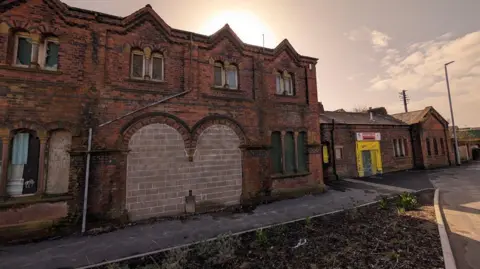
A "neglected" Victorian former railway station and railwaymen's club should be reclaimed before it is lost, a group has claimed.
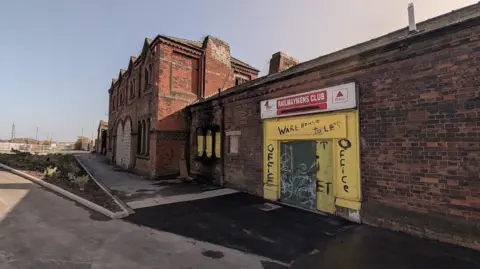
The Grade II-listed Strand Railway Station was Barrow-in-Furness's first railway station in 1863, evolving into a railwaymen's club in the early 1900s and serving as a social space until 2008.
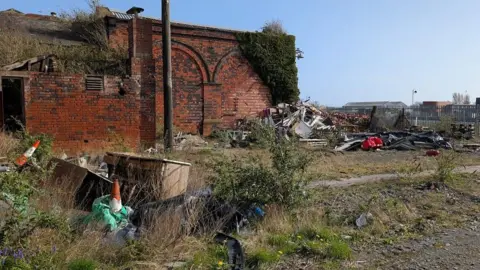
The Victorian Society, which campaigns to preserve heritage, added it to a list of endangered buildings and said it stood "vacant and deteriorating" despite being a "focal point" for Barrow for more than a century.
Campaign for Real Ale's (CAMRA) Pub Heritage Group said its "prolonged closure is a tragedy for the town and its heritage, and must serve its community once again".
The Victorian Society said the Strand "stood at the centre of the transformation" of Barrow when it became a "major industrial and maritime centre, driven by the extraction of iron ore and the development of rail and dock infrastructure".
By 1856, 464,823 tonnes of iron ore were raised in Furness, of which 445,013 tonnes were transported via the Furness Railway and shipped from Barrow, the society said.
Barrow's central station and a new through-route was opened in 1882, with the Strand being relegated to secondary uses.
In the early 1900s, the building became a reading and library room for railway employees, with parts of the site being used as a drill hall.
 Thomas Ollivier
"It provided educational and social facilities and remained a focal point for the community for over a century," the Victorian Society said.
Its northern conservation adviser Thomas Ollivier explained: "For a long while the club was teetotal, reflecting the rise of temperance in working communities as part of non-conformist religious beliefs.
"Sadly, time was called at the club in the summer of 2008 after a 101-year history."
The society said the building was owned by an "absentee landlord and was in visible decline", calling for it to "be brought back into active use through sensitive restoration".
"You don't get early train stations remaining to the current day as they usually get replaced, so this is a rarity," it added.
 Thomas Ollivier
The director of the Victorian Society, James Hughes, said its "history of adaptation shows exactly the kind of sustainable reuse we should be championing today".
"What is needed now is a clear commitment to securing its future before further deterioration takes hold," he added.
Chair of CAMRA's pub heritage group Paul Ainsworth said the club played a "significant role in the town's evolution" and added it was "sad to see the club has been out of use since 2008".
"Its prolonged closure is a tragedy for the town and its heritage, and must serve its community once again.
"Our heritage pubs and clubs are an essential part of our social history, and must be recognised and protected for their incredible contribution to local communities and the wider beer and pub sector."
In August, the site was included in Westmorland and Furness Council's Marina Village development plans.
Furness CAMRA pubs officer, Ann Summers-Glass, said the group "hoped the project would be successful and that any repurposing of the building included a community asset such as a pub or club".
Westmorland and Furness Council has been contacted for further comment.
