Largest Thomas Hardy collection free to view

 Getty Images
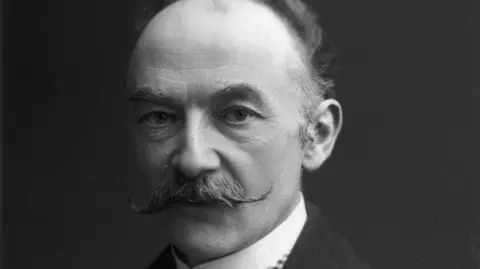
A collection of notebooks, photographs and more than 5,000 letters owned by the author Thomas Hardy has been made accessible for public view.
The archive - thought to be the largest relating to the Dorset writer - comprises of 100 boxes and includes manuscripts for three of Hardy's major novels.
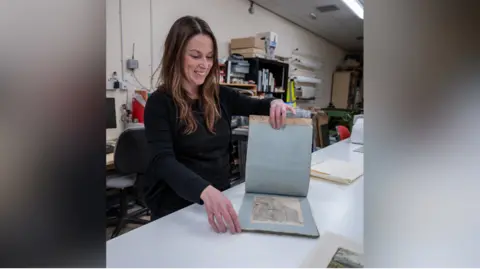
The collection has been made free to access by appointment at the Dorset History Centre in Dorchester and the catalogue can be viewed online.
Ryan Hope, the council's cabinet member for culture, said it was a "remarkable collection".
 Dorset Museum and Art Gallery
Hardy's works include Jude the Obscure, Tess of the D'Urbervilles, and Far From the Madding Crowd.
One of England's most acclaimed novelists and poets, he was born in Dorset and lived in the county for much of his life. He died in 1928, aged 87.
The archive comprises of more than 100 boxes. It started when Hardy gifted his manuscript of The Mayor of Casterbridge to Dorset County Museum in 1911.
After his death, personal items, correspondence and further manuscripts were bequeathed, while other material has since been acquired by the museum and the history centre.
The archive also includes school exercise books, architectural drawings, sketches, and the Hardy family music books.
Eleven notebooks filled with Hardy's handwriting have been digitised and are free to view online, along with draft manuscripts of Under the Greenwood Tree, The Mayor of Casterbridge and The Woodlanders.
Hardy's novels and poetry include some of the most evocative and enduring images of the county, and he often fictionalised names for actual places such as Casterbridge for Dorchester and Sandbourne for Bournemouth.
The cataloging project began in 2024 following following a successful fundraising campaign led by Dorset Archives Trust.
The archive includes letters from Hardy's contemporaries, from Robert Louis Stevenson and the women's rights campaigner Dame Millicent Fawcett to the younger generation of writers such as Virginia Woolf.
Ruth Burton at Dorset History Centre said: "The letters are full of news and opinions on literature and the historic events and movements of the day - including World War One, animal rights and women's suffrage - making them a wonderful resource. "
Hope said the collection showed "how deeply Dorset shaped Hardy's imagination".
"...we know it will inspire new generations of readers and researchers to engage with some of the county's most significant cultural heritage."
Mark Chutter of the Thomas Hardy Society, said the collection was "fascinating, intriguing and highly eclectic".
