Double amputee 'prisoner' in flat without lift

 BBC
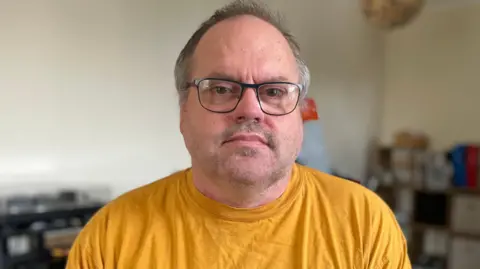
BBCA double amputee living in a top-floor flat without a lift or means of escape in an emergency has said he feels like a "prisoner".
James Smith, from Plymouth, has had both legs amputated below the knee in the past three years after an accident and complications from diabetes.
He now uses a wheelchair and is unable to leave his home unless a specialist wheelchair is provided for hospital appointments.
Plymouth City Council, which is responsible for his housing and social care, said it could not comment on the circumstances of individual residents but added it worked with people with care and support needs "to assess their situation and identify any support that may be required".
"This is the second floor," Smith explained while sitting in his wheelchair in the living room of his flat.
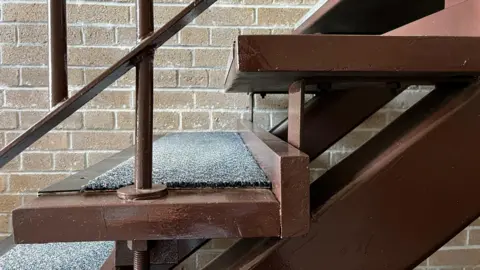
"It's literally two flights of steps to get outside, which are open steps, so they're quite difficult for even specialist chairs, and there's no lift."
Smith said he had been waiting for a year to be rehomed but it was yet to happen.
He said: "I don't know what would happen in an emergency. I haven't had that kind of scenario.
"I assume that someone would rescue me, but I wouldn't count on it."
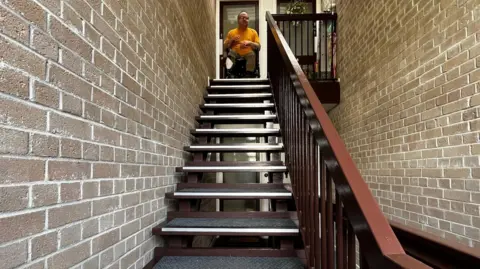
Smith can only leave his flat when a specialist wheelchair is provided by the hospital for medical appointments. He said the rest of the time he felt like a "prisoner".
He said: "It lowers your motivation to do anything and you get a bit depressed about it as well because of the isolation.
"I miss walking. I used to walk a lot. I miss going out for a drink, socialising.
"Sometimes I don't see anyone for like a couple of weeks because I'm just isolated in here."
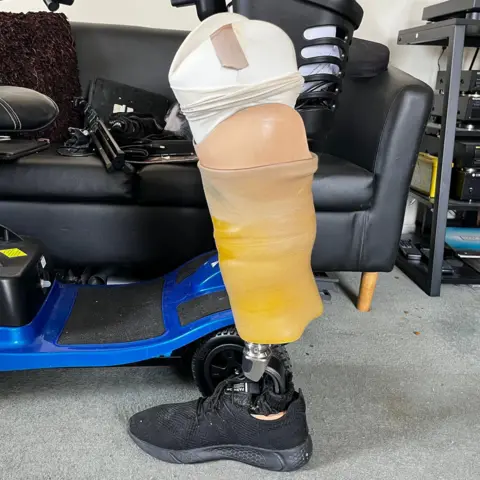
Smith lost one of his legs below the knee after a fall broke a bone. The damage was so severe he needed an amputation.
He said he got used to his prosthetic leg, kept his career as a chef and mostly maintained his independence.
He moved into his flat - which he rented privately – through choice.
But after he had his second amputation in May following complications from diabetes, things changed, he said.
He became a social housing resident after experiencing a loss of income due to being unable to work.
"Since I had my other amputation, it's been quite hard to get around. My mobility is basically lost," he explained.
"I hope that when my next prosthetic is fitted things will get better. I'll be able to move around on two legs, and might even be able to navigate the stairs – although I'd rather not."
Smith is receiving physiotherapy following his surgery and is due to be fitted for a prosthetic leg for his second amputation once the wound has healed.
But Smith said he would still prefer to move to a ground-floor flat that had been adapted for a disabled person.
He has been assessed by housing providers that work with Plymouth City Council as Band Two or Band B, which is a high housing need but not considered an emergency.
But, after the BBC asked the council why this was the case, Smith was moved to Band One or A and made a priority.
Plymouth City Council said: "We fully sympathise with the difficulties described and understand the concerns raised.
"While we cannot comment on the circumstances of an individual resident... we take concerns about people's wellbeing, support needs and housing circumstances seriously.
"Where someone has care and support needs, we work with them and relevant partner organisations to assess their situation and identify any support that may be required.
"If a person's circumstances change, those needs can be reviewed to ensure appropriate support is in place."
It added: "Housing and social care services have distinct roles, but where a resident has needs that involve more than one service, agencies work together to help ensure the individual receives appropriate advice and support."
Follow BBC Devon on X, Facebook and Instagram. Send your story ideas to spotlight@bbc.co.uk.
