'There's nowhere we can stay': The holiday struggle facing disabled people

 BBC
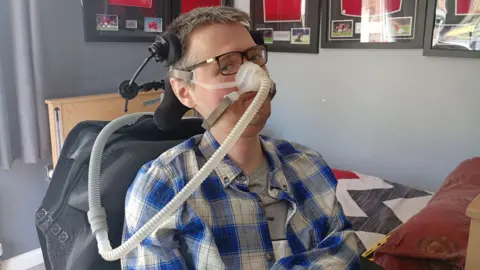
BBCGoing on holiday is very important to Richard Douglas but finding a property that can accommodate him has become increasingly challenging.
Richard has Duchenne muscular dystrophy (DMD) – a rare genetic condition that causes muscle weakness that gets worse over time.
He needs specialised equipment such as a hoist which allows him to be transferred from a wheelchair into a bed, or helps him use the bathroom.
However, when planning a holiday, even at home in Northern Ireland, he says "there's nowhere really that suits my needs".
In the early years of his condition, he was able to enjoy trips abroad with his family, but over the years he progressively lost the ability to move his body.
"There are certain places we've found over the years that have been really good but there's really nowhere in Northern Ireland that suits my needs," he explained.
"There's nowhere really we can stay."
Creating holiday space for those with disabilities
In order to change that, Richard is now aiming to raise enough money to create bespoke seaside accommodation that he feels allows disabled people and their loved ones to have a holiday they deserve in Northern Ireland.
He was inspired after visiting and staying in similar accommodation in Culdaff in County Donegal in the Republic of Ireland.
"Loads of people that use wheelchairs – they are not able to go in a plane – as it's just too awkward – so to have somewhere local is very important," said Richard, who was diagnosed with DMD aged three.
Richard feels there is not enough support available to enable people like him to go on holiday in Northern Ireland.
"The law means reasonable adaptions, but for people like me that doesn't go far enough – you need the hoists and the beds to really make it workable," he said.
What does the law say?
Paul Oakes, the equality development manager with the Equality Commission in Northern Ireland, said service providers had to make any adjustments which were regarded as reasonable adjustments so that disabled people could use their service.
The stipulation comes from the Disability Discrimination Act of 1995.
Paul said the real issue was the adjustments had to be reasonable.
"Reasonable is based on things like the cost of the adjustment and the resources available to the holiday provider – so for example big holiday providers would be expected to do more and spend more than perhaps someone who runs an Airbnb," he said.
"Disability is unlike any other equality issue.
"When you look at disability it's all about individuals and each individual is different – even individuals who have the same disabilities - the impact and therefore the requirements that they have can be very different.
"So, you can't have a law that is overly prescriptive because you are dealing with individual people who have individual needs."
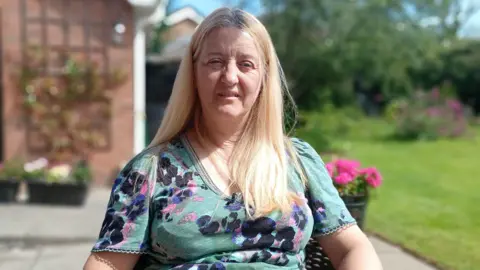
Richard's mum Sharon Douglas said being able to go on holiday to County Donegal was important for the whole family.
"When we can go to a purpose-built accommodation that has all this equipment that Richard needs – it's amazing for Richard, but actually, it's amazing for the whole family that's caring for Richard," she said.
"It can be very intense, very demanding and we all spend a lot of time at home – so it just gives us all a lift to be able to go somewhere different - a change of scenery.
"The work with Richard goes on 24 hours a day – but it's just amazing to have that wee glimpse of normality - and be able to be away and enjoy a few days away from home."
A spokesperson for the Department for the Economy said Tourism NI supported an "inclusive tourism sector by encouraging accommodation providers to consider the diverse needs of visitors".
They also said guests could filter accommodation based on their accessibility needs when using the Tourism NI consumer site.
However, they added that "regulations set out minimum criteria for tourist accommodation", but that "disability access is not specifically covered by these regulations, as it falls under other regulations".
