Spurs academy approval may be biased, court told

 Guardians of Whitewebbs
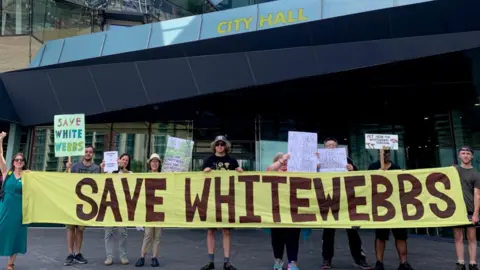
There was "a real possibility of bias" in a council's decision to let Tottenham Hotspur build a training facility on a London park, the High Court has been told by a campaign group.
The Guardians of Whitewebbs is challenging Enfield Council's decision to grant planning permission for a 16-hectare women and girls' football academy at Whitewebbs Park in north London.
Lawyers for the group argued the decision should be quashed on several grounds, including potential "predetermination", "as Spurs had unparalleled access to senior council figures".
They also claim planning officers got it wrong when assessing the impact on the green belt.
 Friends of Whitewebb Park
The council, which was Labour-controlled at the time but is now run by a Conservative minority administration, withdrew its defence on Wednesday after its new leader said last month the club was "no longer welcome" to build on the park.
But Spurs are continuing to defend the action, with the club's lawyers telling the hearing the bias claims were "completely overblown" and the decision-making was the "opposite of closed-mindedness".
In written submissions, Jenny Wigley KC, for Guardians of Whitewebbs, said between March 2024 and July 2025, Spurs offered hospitality to senior council leaders six times, which were mostly accepted.
These included the then-chief executive attending a "working lunch" at the training ground, and the then-council leader attending a reception with the club's board to celebrate Spurs winning the Europa League last year.
 Enfield Council
Wigley said the incidents were in breach of the council's own policy, which expressly forbids this conduct in the context of outstanding applications for planning permission.
She said: "One would readily expect a local Premiership football team to have a close working relationship with the local authority where its training facilities are based.
"However, the closeness of that relationship does not mean that behaviour which would otherwise give rise to the appearance of bias can be excused."
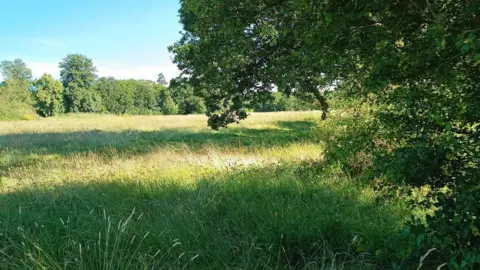
She also claimed the council "irrationally failed" to assess the implications of loss of public open space.
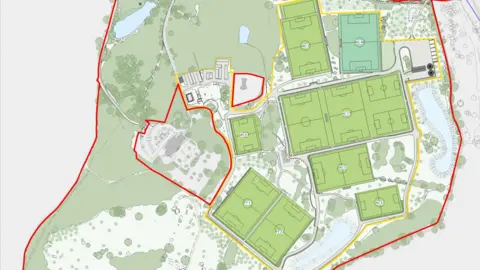
The club agreed a 25-year lease for the site in 2023, a decision unsuccessfully challenged at the High Court in 2024. The plans would see 10 football pitches built on the park near the club's men's training facilities.
In response, James Maurici KC for Spurs said the council's withdrawal of its defence was "purely a political decision" and that the women's facilities allowed the club to "positively respond to gender inequality".
He said members of the planning committee were "never offered or involved in" hospitality, and those who attended publicly declared it.
He added: "Modest hospitality does not give rise to apparent bias unless it is accompanied by evidence that it was intended to influence the decision-maker improperly or that it was excessive. Neither is the case here."
The hearing before Sir Tim Kerr is due to conclude on Thursday, with a judgement expected in writing later.
Listen to the best of BBC Radio London on Sounds and follow BBC London on Facebook, X and Instagram. Send your story ideas to hello.bbclondon@bbc.co.uk
