Man took own life after hospital medication delay

 PA Media
A "tragic sequence of events" which led to a man's death may have been different had he been prescribed medication at the correct moment, a coroner has said.
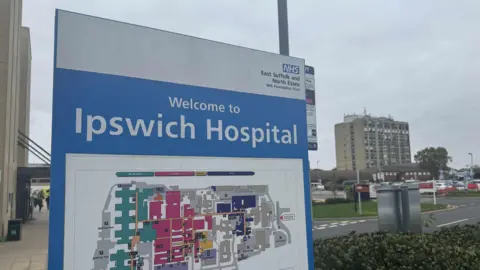
Jake Read attended the emergency department at Ipswich Hospital at 16:36 BST on 3 May 2025 in an "agitated state" requesting support with his mental health.
The decision was made to prescribe him Diazepam, but it did not take place and the 29-year-old left the hospital before being given it and took his own life at home two days later.
In a Prevention of Future Deaths Report, Nigel Parsley, senior coroner for Suffolk, questioned why a protocol for the administration of medication was not in place.
 George King/BBC
Parsley said his "primary concern" was the lack of national guidance or timelines for giving medications when a patient is in a state of mental health agitation or crisis.
"It was not possible to identify on the available evidence whether the administration of Diazepam to Jake on the 3rd May would have prevented his death," he added.
"However, there was a chance that, had the Diazepam been administered, it might have changed the tragic sequence of events leading to Jake's death."
 George King/BBC
According to the report, shortly after arriving at the hospital Read was identified as requiring a consultation with the mental health liaison team, which happened at 17:30.
About an hour later it was decided he would be given a dose of Diazepam to calm his agitation, to allow for a "more effective mental health assessment".
However, the medication was not prescribed until 21:19 - more than two hours after Read was understood to have left the hospital.
He died less than two days later on the afternoon of 5 May at his home in Melton, Suffolk.
According to the report, one of the members of staff who spoke with Read could have prescribed the immediate herself, but had no direct access to the drug.
Instead, they had to request an emergency department clinician to prescribe it, resulting in the delay of two hours and 44 minutes.
"Evidence heard in some cases clinical staff are given a clear timeline in guidance as to when it is expected a required medication is to be administered," said Parsley.
"The court was told that no such guidance exists for the administration of drugs in mental health cases."
'Significant risk of future deaths'
During the inquest, the court heard how, since the death, systems at Ipswich Hospital had been changed.
The mental health liaison team's non-medical prescribers are now able to both prescribe and access prescription medications within the emergency department.
But Parsley said that it was still not known that was just a local arrangement or if it is replicated in other jurisdictions on a national scale.
"Unless action is taken to address the above concerns then there is a significant risk of future deaths," he added.
The East Suffolk North Essex NHS Foundation Trust said it welcomed the coroner's findings and "that the issue is being highlighted at a national level".
NHS England has also been contacted for comment.
Do you have a story suggestion for Suffolk? Contact us below.
Follow Suffolk news on BBC Sounds, Facebook, Instagram and X.
