Wildfire damage could take hundreds of years to recover from, experts say

 PATRICK O'NEILL
 PATRICK O'NEILL
It could be hundreds of years before habitats destroyed by wildfires in Wales recover, an environment watchdog has said.
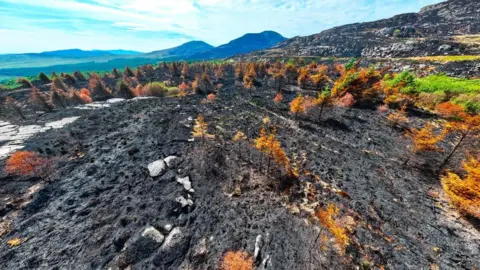
Nick Thomas, from Natural Resources Wales (NRW), said if soil had been incinerated in upland areas rich in peat, which grows at about a millimetre a year, it could take centuries for the vegetation to come back.
He expects 2026 to be the worst year Wales has ever experienced.
As well as damage to natural habitats and animal life, Thomas warned loss of soil could increase flood risks, because it no longer acted as a "sponge" holding water on high ground.
Wales has witnessed huge wildfires this summer, including one major incident and the evacuation of a village in Conwy county.
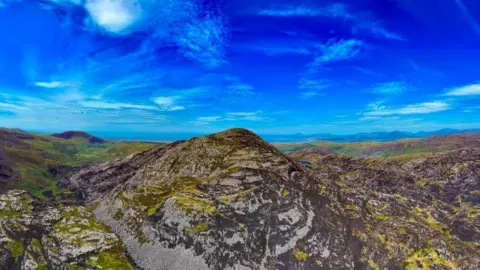
In the Rhinogydd mountain range in Gwynedd, which is home to a National Nature Reserve and a Special Area of Conservation, a blaze burned for nearly two weeks and affected over 2,000 acres.
Both fires were visible from space.
Meanwhile, a fire in Blaenavon, Torfaen, could be smelt as far away as Cardiff.
Although fewer wildfires were reported in the second half of July in England and Wales compared with 2025, Thomas said: "This year seems to have been worse, I would say, than any of the ones I can remember.
"I would expect this to probably be the worst year for wildfires perhaps we've ever had."
While some areas will recover quite quickly - potentially within a couple of years - he said: "It all depends on how deep the fire goes.
"If a fire burns into the soil and incinerates the soil... then you've lost hundreds of years worth of soil.
"So it's going to take hundreds of years really for that vegetation to come back in a similar way to what it was."
 PATRICK O'NEILL
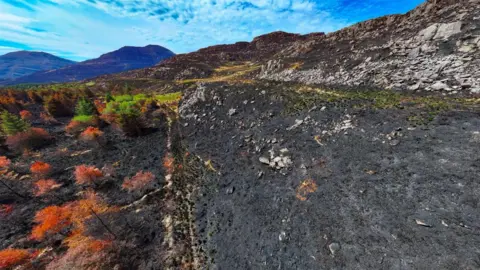
Thomas said a large wildfire on Mynydd Llantysilio near Llangollen, Denbighshire, in 2018 had incinerated about 10cm (4in) of peat in some areas.
Eight years on, there is still no heather in large patches.
The mountain also saw a "big upsurge" in heather beetles this year - possibly linked to milder winters. The beetles stripped plants of their leaves and left combustible woody stems, he said.
"It's kind of all part of the vicious circle which is associated with climate change."
While it may be months before the full scale of the devastation this year is known, Thomas said the situation was "very frightening".
"It is really worrying because there is so much moorland, heathland in Wales, and forest, which can easily be set on fire. So, we need to be doing more to address that," he said.
Management of moors and heaths to "reduce the fuel loads" could help, he said, as well as grazing, but: "The public can do so much because they're all started by people basically."
Bird protection charity RSPB Cymru said it was also devastated to see the impact of wildfires, which "can have significant impact on breeding birds and fragile habitats that can take years to fully recover".
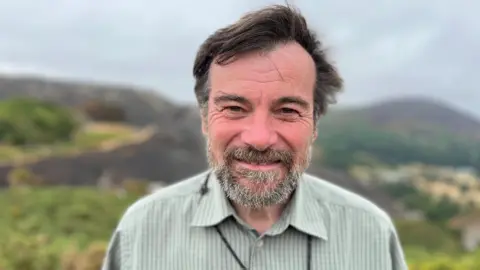
Julian Thompson, who has been warden of Pensychnant Conservation Centre for 36 years, said the soil had turned to dust "right down to the rock" after the nature reserve had lost about one-third of its 150 acres during the wildfire in July.
While fires have been used for centuries as a way of managing the mountainside, Thompson said controlled burning was usually done in the winter.
"This fire, being in the summer in the middle of a drought, was so intense that it's burnt away the soil. There is no organic matter left."
Rare moths and snakes 'destroyed'
He added: "Things like the snakes, adders, reptiles, they can not escape, so they will be destroyed.
"All the invertebrates will be destroyed.
"There are a number of very rare moths which occur there, in particular two - the Ashworth's Rustic and the Weaver's Wave - which occur in the mountains of Snowdonia and Meirionyddshire and nowhere else.
"This is the best-known place for them. So on our land... they will have been destroyed."
The moths would survive in some surrounding areas, he said, but their habitat is "diminished".
"Nature is quite resilient, but it can't cope with catastrophes on this scale over and over again. It won't keep on coming back."
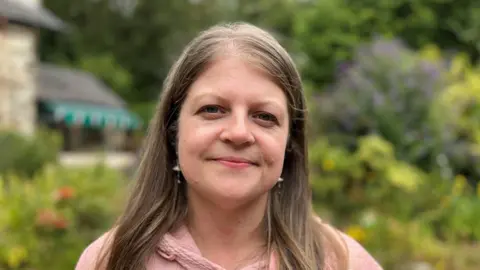
The Pensychnant reserve is supported by volunteers who help preserve and run the centre, including Gwyndaf Pritchard, from Dwygyfylchi.
He said it had been a special place for the community and that the loss of wildlife had been "tragic".
"We've talked about it for years and years, but now climate change is here and we have to start to respect the countryside and we have to be in a position to actually stop these fires happening again," he said.
Evie Roberts, a silversmith who teaches jewellery-making at the centre, said people needed to be educated about the dangers of discarding bottles or cigarettes, which could cause fires.
"Your actions can have devastating effects and I think that education for people is vital to stop this," she said.
"There's a new fire every week at the moment, and there's so much of our land damaged."
