Cherry Kearton: The eccentric influence on a young Sir David Attenborough

 Cherry Kearton
As a child, Sir David Attenborough was transfixed by the work of Cherry Kearton, a photographer and filmmaker who almost single-handedly changed the way we view the natural world.
In the late 19th Century, photography was a laborious process suited more to indoor portraits than the great outdoors.
The highest-quality cameras shot on glass plates and were cumbersome constructions made of hardwood and brass. The plates needed plenty of time to expose an image – hence the studied gazes of subjects in Victorian studios, standing stiffly in front of the camera's lens.
Sir David Attenborough at 100
As Sir David Attenborough turns 100 years old, we look back to the key influences of his extraordinary career as a naturalist and broadcaster. You can read more on the fossil discoveries that inspired him at an early age here.
It was only towards the turn of the century that cameras became small enough to be truly portable. In a leafy corner of Surrey in England, two brothers out on a walk used one to take pictures of a bird's nest. It turned out to be the first-ever photo of a bird's nest with eggs in it.
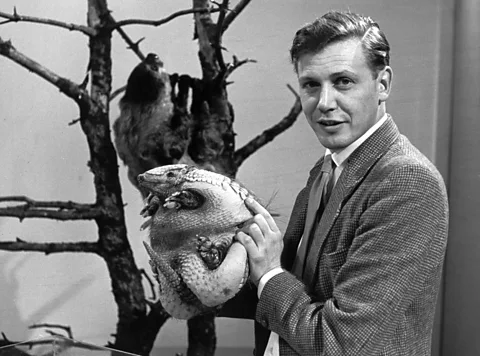
In doing so, one of them – Cherry Kearton, the younger – not only became probably the world's first professional wildlife photographer, but helped inspire a young boy who would later become the most famous naturalist of the television age – Sir David Attenborough.
"Kearton's films captured my childish imagination," Sir David said ahead of the radio series Attenborough's Life Stories in 2009. "It made me dream of travelling to far-off places to film wild animals."
In 2012, Sir David even travelled to Bradford to the National Science and Media Museum to view the cinema camera Kearton designed himself and which he used to shoot his 1935 documentary The Big Game of Life.
 Alamy
AlamyBritish bird life
Richard and Cherry Kearton grew up on a Yorkshire farm in the late 1800s. John Bevis, who wrote a biography of the brothers called The Keartons: Inventing Nature Photography, says they "were from a very working-class family who were mostly miners; Richard was the elder brother by about nine years".
Richard had been invited to a job in publishing in London, and eventually his younger brother Cherry joined him.
"They were out together with friends in Elstree, about 1892, and Cherry was always very interested in the latest innovations, and cheap cameras, pocket cameras, were just becoming available, and he'd brought along a camera. Richard was more knowledgeable about natural history, and he found a bird's nest and he said, 'Cherry, have a go at taking a photo of this.'
"They had an idea on the spot that they would make a book, illustrated entirely with photographs, of birds and birds' nests. There hadn't been a book like that up 'til that time. That meant travelling all across the country, because a lot of birds have very site-specific nesting locations."
Written by Richard and illustrated using Cherry's pioneering photographs in 1898, the book British Birds' Nests: How, Where and When to Find and Identify Them was the first nature book to be entirely illustrated with photographs. More books followed, and the pair would publish together for more than a decade. "Cherry was a very good photographer; compared to the natural history photographers of the time, his composition was very nicely framed, he had an artistic eye," says Bevis.
He adds that having catalogued the birds' nests and eggs of the British Isles over thousands of photographs, "[Cherry's] next thing was to get photos of birds themselves, and they needed to make some kind of [animal] hide".
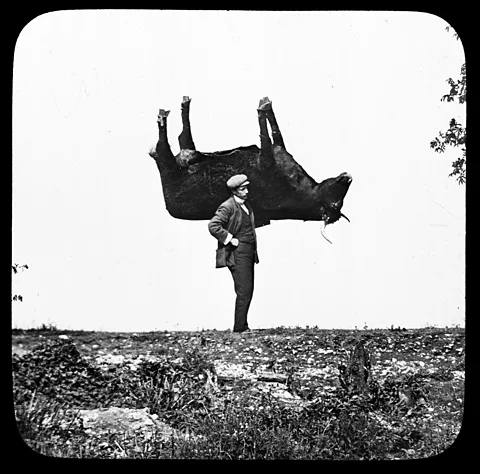
"They came up with this series of wonderful realistic hides, the most famous of which was the Hollow Ox, which was a cow's hide over a wooden frame with just enough room for a photographer inside, standing in there bent double, with the camera sticking out of a hole in the neck. It was very good, it was very effective, but it was an absolute pain to operate.
 Alamy
Alamy"There was a stuffed sheep, which was too small for a photographer, so they set it up in front of a likely perching spot and pointed a camera out of a hole in the neck and operated it with a pneumatic tube."
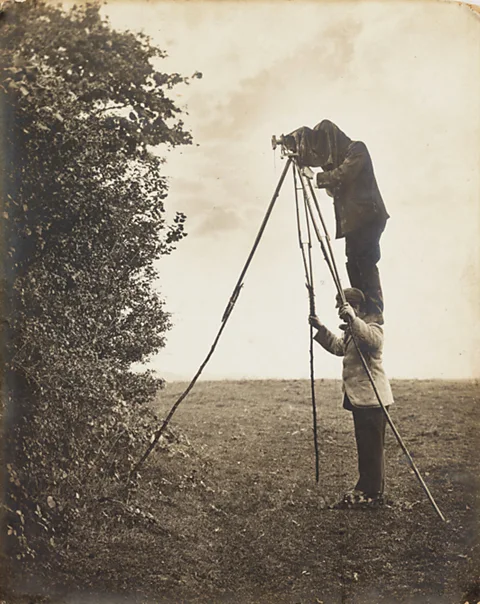
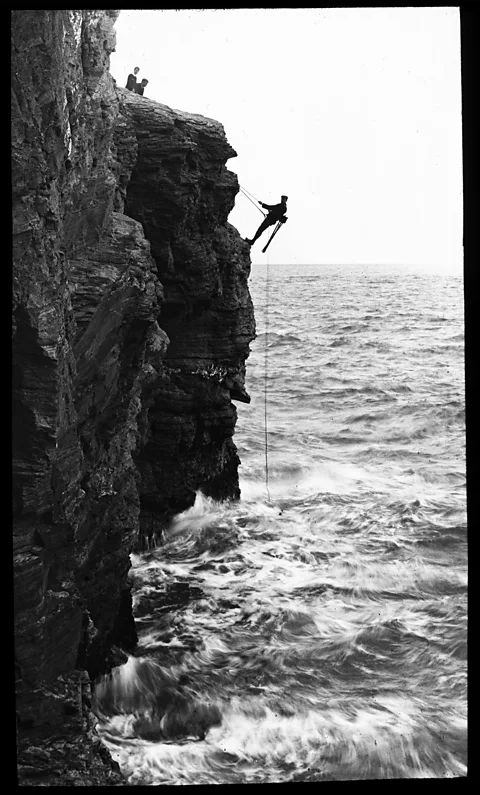
The Keartons used ladders supported with ropes to get shots of nests on high branches; Cherry learnt to abseil so he could snap seabird nests built in the nooks of cliffs. Little seemed too difficult or dangerous.
The Keartons' designs were fiendishly inventive, and Richard Kearton would become known as the "Machiavelli of bird photography".
Cherry's fascination with technology went far beyond photography; the turn of the century also brought ways of capturing sound, such as recording onto wax cylinders. Cherry, got his hands on one. "He made the first ever recording of a bird in the wild… it wasn't a great recording, but it was the first one in the wild," says Bevis.
The Keartons also embraced the moving image, setting up a studio where they created the first rudimentary wildlife documentaries. In 1908, Cherry took the first moving images of London from the air, having hired an airship which took off from Wandsworth Gasworks south of the River Thames. Six years later, while in Belgium, he would take the first moving images of the war that would devastate Europe and kill more than 17 million people.
African wildlife
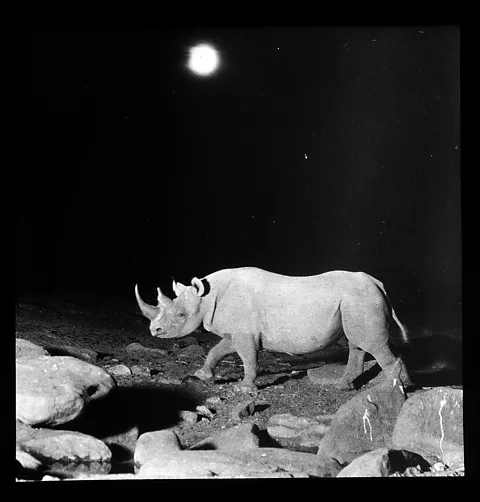
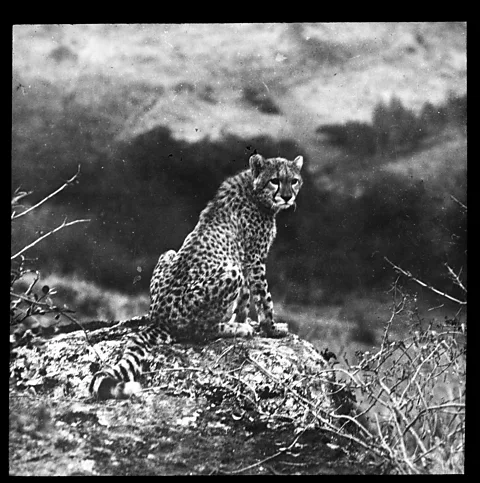
His first successful film came after former US president Theodore Roosevelt, an enthusiastic hunter, requested a meeting in Africa. "Roosevelt was trying to get away from being in public eye for so many years," says Bevis. Cherry was only interested in shooting with a camera, and took a dim view of Roosevelt's hunting. He said that helping "accomplish the extinction of anything beautiful and interesting is a crime against future generations".
 Cherry Kearton
Cherry and Roosevelt were both drawn to Africa's wildlife but for very different reasons, says Austin Farahar, the head of photographica at Chiswick Auctions in the UK, who sold some of the Kearton's archive and cameras in early 2026.
"They had a certain level of admiration, but I don't think they saw eye to eye, because Roosevelt was going through Africa, shooting everything, and just having a great laugh," says Farahar. "Obviously Kearton was slightly less of the opinion that that was how to do it." Bevis adds that Roosevelt only met up with Kearton "a bit reluctantly", but was persuaded that the British wildlife photographer could accompany him and shoot footage.
Kearton made a successful film of Roosevelt's safari across eastern Africa; it was released with much fanfare in 1910 as Roosevelt in Africa. Given their completely opposing views on wildlife, it was an odd – if lucrative – collaboration.
Kearton then spent much of the First World War as part of an allied unit in East Africa, formed of "mavericks" who were at home in the African bush, says Bevis.
"In the early 1920s he got married to a South African opera singer [Ada Forrest]… I think from that time forward he started to have a more comfortable life – the safaris became a little more sedate," he adds.
 Cherry Kearton
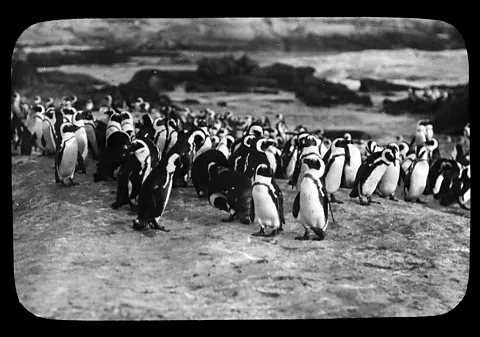
Kearton, however, was by no means slowing down. Cherry and Ada travelled to an island off the coast of South Africa, and lived as the only human inhabitants in a warden's shack among what Kearton described as "five million" penguins. They made a film – called Dassan: An Adventure in Search of Laughter, Featuring Nature's Greatest Little Comedians – which was released in 1930. (The island's name is actually spelled "Dassen".)
"They spent six months filming and photographing and writing about these penguins," says Bevis. "And that was the film that a young David Attenborough saw in 1933. When Kearton wasn't filming and photographing, he was doing lectures around the country, and Sir David Attenborough would have gone to one of those and seen that film."
There is, in effect, only one degree of separation between a boy fascinated with the wildlife he saw on a Yorkshire farm in the 1880s, and the natural history documentaries we enjoy watching today: Bevis believes the brothers would have greatly appreciated the effect their films had. "The Keartons were very interested in the educational aspect, and they were very interested in spreading the word."
 Chiswick Auctions
More like this:
A legacy camera
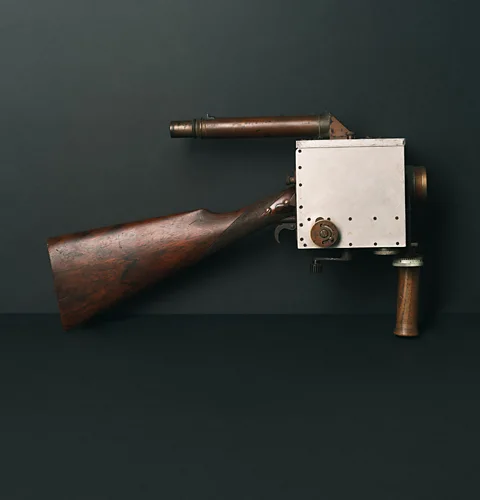
Cherry was a keen inventor, and had been frustrated at how cumbersome many of the cameras he had to take with him were. In the early 1900s he fashioned a more portable camera using a rifle stock with a plate camera attached – but after the war refined it into a much smaller device, one that could use lighter roll film and which would automatically advance to the next frame after every shot – technology that wouldn't become mainstream for another two decades, says Farahar.
The camera was sold earlier this year as part of a large lot of items from Cherry Kearton's estate (he died in 1940, and Ada in 1966), including books, letters, prints and the various paraphernalia Kearton had used to take his pictures and films. "It becomes so rewarding to put the pieces of the jigsaw puzzle back together again," says Farahar. "And that's what it was like with this camera… there's no picture of him with it. It's very, kind of naïve, and very rough… he literally battened it together in his shed. But it works."
Farahar couldn't wait to get his hands on the camera, which is now more than 100 years old. There was no manual – it was a one-off Kearton had built using his own intuition.
 Cherry Kearton
Farahar says he showed the camera to an old schoolfriend – wildlife cameraman Hector Skevington-Postles, who has worked on some of Sir David's own documentaries, such as Planet Earth and Asia.
"He was at my house, and he said, 'Got anything interesting at the moment?' And I literally thought, 'This rifle camera!' I was like, 'What you make of that?' And he said: 'Are you joking, this is incredible!'"
Before the sale took place in February, Farahar was able to spend more time with the device. Playing around with it before the sale, he was able to get its transport mechanism whirred into life – proving Kearton's remarkable talent. "I was trying to get to grips with it for a long, long time," he says. "I was like, 'How does this thing work? What are the secrets of this camera?' And then I eventually figured out how it cocks and whines. Everyone in the office was going mad because I was making so much noise."
--
If you liked this story, sign up for The Essential List newsletter – a handpicked selection of features, videos and can't-miss news, delivered to your inbox twice a week.
