'A powerful piece of propaganda': The bloody 1770 image that fuelled the American Revolution

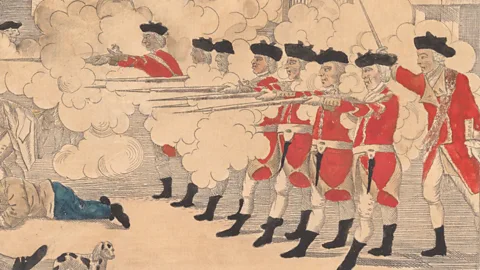 The Metropolitan Museum of Art, New York/ Gift of Mrs Russell Sage
How a gory depiction of the 1770 Boston Massacre by Paul Revere ignited fury against British rule, becoming arguably the most effective example of propaganda in US history.
On the evening of 5 March 1770, in Boston, Massachusetts, icy snow coated the ground, and a lone British sentry stood guarding the Custom House, his breath forming clouds of white mist in the freezing air. Stepping out of the darkness, a teenager began taunting him and pelting him with snow, soon joined by a growing crowd.
Warning: This article contains a graphic image that some readers may find upsetting.
When soldiers were called to the sentry's aid, the confrontation escalated. The crowd hurled oyster shells, coal and hunks of ice at the soldiers, until the disturbance took a devastating turn. The British opened fire, leaving three men killed and two mortally wounded.
In Britain, the event was known euphemistically as "the incident on King Street", but locally it was named "the Boston Massacre". It proved a major catalyst for American Independence, which marks its 250th anniversary on 4 July and is being commemorated by cultural institutions across the US.
Three weeks after the massacre, a copperplate engraving made by the prominent silversmith Paul Revere, appeared for sale in Boston newspapers. It was titled The Bloody Massacre perpetrated in King Street, Boston on March 5, 1770, by a party of the 29th Regiment.
Its gory depiction of felled patriots streaming with blood being fired on by a line of smirking soldiers served to stoke anti-British sentiment and fan the flames of the rebellion.
One of 29 existing prints of the engraving resides at the Wichita Falls Museum of Art in Texas. The museum is marking the anniversary of the signing of the Declaration of Independence with the exhibition Printing the American Revolution, which explores the role print media played in American Independence.
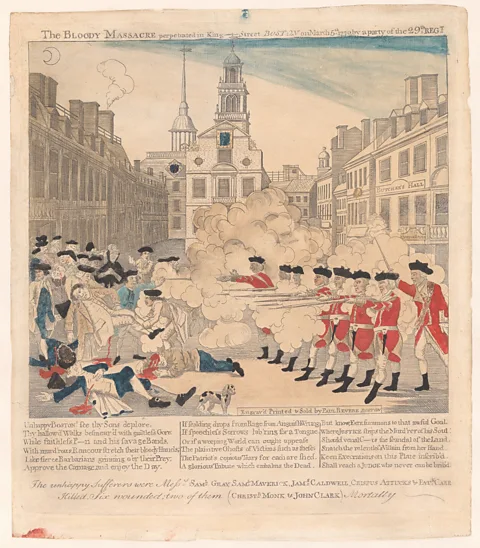 The Metropolitan Museum of Art, New York/ Gift of Mrs Russell Sage
"Revere's rendering of the Boston Massacre was a powerful piece of propaganda, especially in a world where literacy rates ranged across regions and populations," Mary Draper, co-curator of the exhibition and associate professor of History at Midwestern State University, tells the BBC. "By arranging the British soldiers in an orderly line and capturing the chaos of the unarmed colonists, he conveyed a clear message about who was at fault and who were the victims. It rallied colonists to resist British rule."
The work also contains hidden messages about who is at fault: a "Butcher's Hall" sign hangs over the British soldiers, while a dog, a symbol of loyalty, is prominent among the colonists. "This image is obviously intended to incite in the viewer outrage at what is happening because it's showing defenceless citizens being gunned down by soldiers," Constance McPhee, co-curator of Revolution! at The Met Fifth Avenue, New York, tells the BBC.
The engraving is a highlight of the show, which unites artworks that provide insights into the origins of the American Revolution and the ensuing events. The image implied that the British were no longer "a friendly, paternal force" but an "oppressive force", she says. "It starts changing people's minds."
For those who could read, Revere's impassioned inscription beneath the image hammers home the brutality of the British, who are described as "fierce barbarians", acting with "murd'rous Rancour". And it urges patriots to "appease The plaintive Ghosts of Victims" who are listed beneath the text. As the historian Steven L Danver notes in a 2022 essay on the engraving, the work "played a pivotal role in shaping colonial attitudes towards British rule" and "succeeded in uniting colonists under a common cause and fostering a sense of urgency for independence".
Crucial timing
The timing of the engraving was crucial. Tensions were running high among American colonials, embittered by a growing British military presence, eroded civil liberties, and a series of unelected taxation policies that had Americans plugging the British national debt. This incident outside Custom House, the very symbol of unfair taxation, was too good an opportunity to miss.
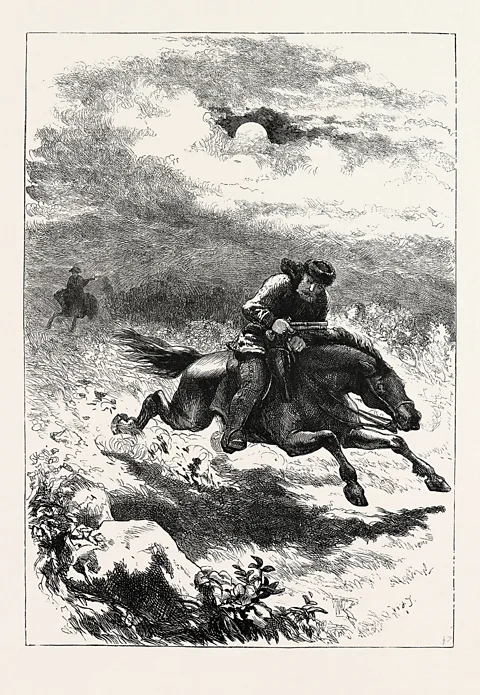 Alamy
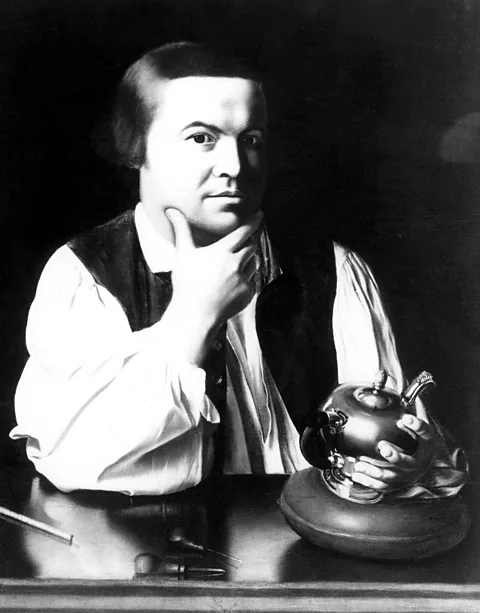
AlamyRevere was a member of the patriot resistance group The Sons of Liberty. He was later hailed a national hero for his "midnight ride" of 1775, where he helped defeat the British army by riding ahead to warn patriots of their advance - one of several riders to do so. He seized on the Boston massacre to galvanise support for the group's mission, capitalising on the heightened emotion. Plagiarising a sketch of the event made by Henry Pelham, Revere rushed his engraving to market. He neither credited nor compensated Pelham, who sent him a bitter letter deploring his "dishonourable actions".
'It whipped up fury'
Part of the artwork's impact stemmed from its rarity. "It's one of the few prints by an American printmaker," says McPhee, and its wide and speedy distribution, she adds, "indicated how important people felt it was". During that era, she says, "there's no other work where so many copies were created". As the engraving spread news of the massacre, it whipped up fury.
Broadsides of it were displayed in shops and taverns or sold as prints to raise money for the Sons of Liberty, whose numbers swelled as this once-underground group became a standard bearer for the patriot cause. Meanwhile, plagiarised versions of the engraving circulated, such as Jonathan Mulliken's, giving Revere a taste of his own medicine but echoing his call to action.
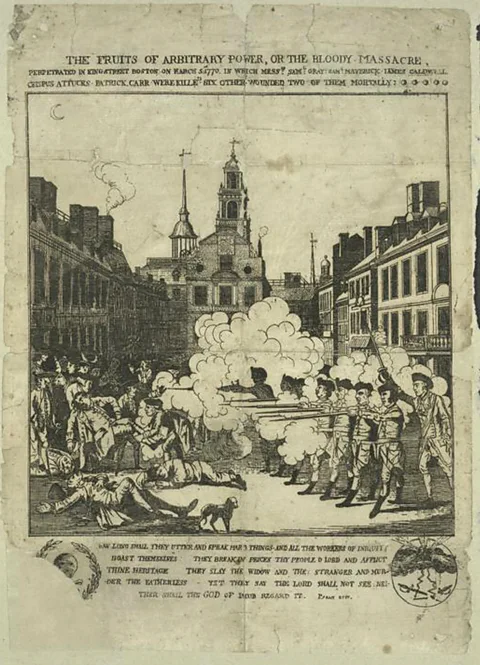 Alamy
AlamyRevere's engraving also became the frontispiece for the 1770 pamphlet A Short Narrative of the Horrid Massacre in Boston. The propaganda travelled thousands of miles when the pamphlet, and versions of the engraving, were printed in London. The horror and injustice of the Boston massacre now confronted the British people on their home soil.
'The fervour of our zeal'
With its aim to hammer home a strong message, the image is full of exaggerations and falsehoods. It sets the event in daylight and omits any evidence of patriot aggression. Even the snow that was hurled at the soldiers in provocation has melted without trace. Most importantly, as witnesses would later testify in court, it incorrectly depicts the British as initiating the conflict, with Captain Thomas Preston (on the right) giving the command to fire on a powerless crowd – something he denied and was later acquitted of.
The word "fire" was heard, reported some, but from the mouth of patriots, daring the soldiers to shoot. In his opening statement, the defence attorney Josiah Quincy appeared to caution the jury on the engraving's power to influence and mislead. "The prints exhibited in our houses have added wings to fancy," he declared. "And in the fervour of our zeal, reason is in hazard of being lost."
More like this:
The engraving's propaganda lingered in the public consciousness long after its creation. When, on the massacre's first anniversary, Revere incorporated it into a giant illuminated display in the windows of his home, thousands of spectators flocked to see it. A century later, portrayals of the event by artists such as W L Champney and Alonzo Chappel made factual adjustments but kept the main narrative alive.
 Alamy
AlamyAccording to the Gilder Lehrman Institute of American History, "Paul Revere's historic engraving… was probably the most effective piece of war propaganda in American history." It is certainly one of the most recognisable images of the American Revolution, and its effect is still felt today. "Despite its small size, the piece still evokes emotions among viewers," says Draper.
"Part of its power lies in its continued relevance. Each generation can interpret this piece in ways that reflect their own ideas about authority, violence and protest." It's also "a striking reminder", she says, "that the past is just as contested as the present."
Revolution! is at The Met Fifth Avenue, New York until 7 September 2026.
Printing the American Revolution is at the Wichita Falls Museum of Art until 22 August 2026.
--
If you liked this story, sign up for The Essential List newsletter – a handpicked selection of features, videos and can't-miss news, delivered to your inbox twice a week.
