Backrooms and Obsession: How two low-budget horror films caused a Hollywood earthquake

The last few weeks have been an extraordinary time for cinema – with a pair of indie horrors by Gen Z directors making massive profits, while traditional blockbusters have flopped. It could be the start of a new era.
Which film would you expect to be a summer hit – a family-friendly action-adventure which is based on tried-and-tested IP (intellectual property)? Or a creepy low-budget horror film dreamt up by a first-time director? Until very recently, most of us would have put our money on the first option.
But this summer, it's looking as if low-budget horror will be triumphant, with two indie films, Backrooms and Obsession, vanquishing two megabudget extravaganzas, Masters of the Universe and Star Wars: The Mandalorian and Grogu.
You can feel the foundations of Hollywood shaking. "This is a pivotal moment for the entertainment industry," Kayla Cobb, Senior Reporter for The Wrap, tells the BBC. "The traditional film industry has focused on reheating the same tired IP, but audiences – particularly Gen-Z audiences – are craving more original movies."
 Focus Features
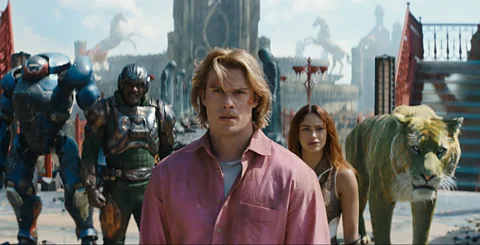
The difference between the appeal of tired IP and original movies is illustrated by this weekend's US box office figures. Masters of the Universe, which derives from a 1980s Mattel toy range and cartoon about a loincloth-sporting, perma-tanned warrior prince, is a new release which made just $29m (£21.7m). The Mandalorian and Grogu, which came out in May, is faring poorly for a Star Wars film: this weekend it made $10m (£7.5m).
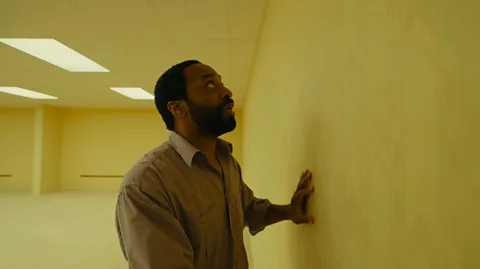
In contrast, we have Backrooms and Obsession. Both are dark, nasty little films that were shot on a shoestring. And yet both have been momentous hits. Backrooms, with Chiwetel Ejiofor and Renate Reinsve, is a nightmarish and deliberately puzzling peek into a labyrinth of murkily lit rooms and corridors. It doesn't exactly scream big box-office. But the film, released by hipster indie studio A24, took $81m (£61m) in the US on its opening weekend. It's total in the US is now $135m (£101m).
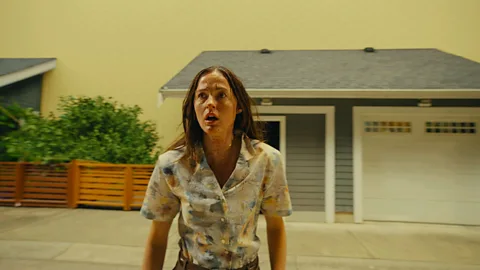
Obsession, released by Focus Features, is an even less likely summer hit. Featuring no famous actors at all, it's the gory cautionary tale of a shy man who wishes that his beautiful friend will love him more than anyone in the world. Not only did it have a healthy opening weekend, but it's also the first film since ET the Extra Terrestrial in 1982 to have its takings go up rather than down in its second and third weekends in cinemas. Its total take is now $152m (£114m) in the US and $225m (£169m) globally.
This weekend, both Backrooms and Obsession made around $25m at the US box office – not far behind Masters of the Universe and well ahead of The Mandalorian and Grogu, even though they were both released in May. Obsession is now predicted to end up with a total worldwide box office beyond that of both of the conventional sci-fi blockbusters.
But it's not just the box-office tallies that will have prompted emergency meetings all over Hollywood. What's even more striking is the difference between the money spent and the money made in each case. The budget of The Mandalorian and Grogu is reported to be $165m (£124m), and the budget of Masters of the Universe is reported to be $200m (£150m). Take into account the marketing costs, and those films have to make between $300m and $400m (or £225m and £300m) just to break even.
Along with Joker: Folie à Deux and The Flash, they are part of a disastrous trend for absurdly expensive Hollywood IP fodder. The budget for Backrooms, on the other hand: $10m (£7.5m). And Obsession? $1m (£750,000), tops. Suddenly, spending a fortune to make a fortune no longer seems like a winning formula.
How young people are driving profits
As with so many revolutions, youth is the driving force of this one. The director of Obsession, Curry Barker, is just 26, while Kane Parsons, the director of Backrooms, is turning 21 on 18 June. That means that he was a teenager while he was shooting his debut film. Bewildering, but true.
 A24
A24Both of these Gen Z directors learnt their craft by making YouTube shorts, a method that allowed them to spend years shooting and editing films, getting feedback, and building a following – all without having to apply for a film school, let alone work for a studio. Parsons made his Backrooms web series when he was just 16. The first episode has been viewed 81 million times. In film-making terms, he's already a master of the universe.
It's not just the youth of the creators that is crucial, though – it's the youth of the viewers. Star Wars has been around since 1977, while Masters of the Universe is an IP which was at its most valuable in the mid-1980s, so the films in both franchises are aimed at nostalgic middle-aged fans. That may have been their producers' fatal mistake.
In April, a survey by Fandango noted that 87% of Gen Zers and 82% of millennials had seen at least one film in cinemas in the past year, compared to 70% of Gen Xers and 58% of baby boomers. Gen Zers and millennials also went to cinemas more regularly than their elders: around seven times a year, compared to 6.1 times for Gen X and 5.7 for baby boomers. There wasn't a vast readymade audience for Stars Wars and Masters of the Universe, then, whereas a generation of enthusiastic cinemagoers was primed and ready for Backrooms and Obsession.
According to a recent article in The Guardian, films provide Gen Z with a welcome break from doomscrolling, and cinemas provide a place to hang out with friends. "What Gen Z are looking for is a 'third space'," said the article, "a social environment away from home and work. And for many, the cinema can fill that role."
What makes these films click
That's why it makes sense that both Backrooms and Obsession are horror films. As the success of Sinners and Weapons demonstrated last year, horror has been stunningly profitable in the post-pandemic era: it can be made with a small budget, and yet can still attract viewers who treasure the immersive, communal experience of screaming and gasping in a crowd. Another example is 2022's chilling Talk To Me, which was made by Danny and Michael Philippou, two Australian YouTubers, while they were in their 20s.
More like this:
What else do Gen-Z audiences want from the cinema? Judging by the discourse on social media, teenage and twentysomething viewers want a film they can discuss and dissect. Take, for example, The Drama, which is reported to have cost $28m (£21m) and raked in about $100m (£75m) more than that. It's a comedy rather than a horror film, and it has two popular stars – Zendaya and Robert Pattinson – but, like Obsession, it stretches a romantic relationship issue to an uncomfortable extreme. It feels as if it's actually about something.
Audiences can debate the relative morality of the characters, just as they can debate their own relationship issues online. In the case of Backrooms, they can debate what exactly is going on. Neither Masters of the Universe nor The Mandalorian and Grogu leaves quite as much scope for such post-film analysis.
 Sony Pictures
That doesn't mean that we've seen the last of the old-school blockbuster. The biggest box-office hits of 2026 are bound to include Spider-Man: Brand New Day and Toy Story 5, among other IP-driven sequels and remakes – and similar fare will continue to plop off the production line. "Hollywood is risk-averse and reactive," Jeremy Kay, Screen International's US editor, tells the BBC, "and while the studios will now be opportunistically scouring YouTube and the web for all types of IP and creators with large fanbases, by and large the legacy studios will stick to their tentpoles."
But these studios can no longer assume that such films will get millions of people buying tickets and tie-in popcorn buckets. Nor can they ignore the possibility that some of their would-be blockbusters will be trounced by smaller films that have been made by young directors for young viewers. Kay predicts "greater emphasis on films that skew younger to cater to the cinema-going Gen Z crowd", especially from "younger, nimble Hollywood studios like A24, Focus Features and Neon".
Innovative, economically viable films that are their makers' passion projects, but which cater for an eager audience? It's a crazy idea, but it might just save cinema.
--
If you liked this story, sign up for The Essential List newsletter– a handpicked selection of features, videos and can't-miss news, delivered to your inbox twice a week.
