'She beat Disney by a decade': How a 26-year-old German woman made the world's oldest animated feature film

 BFI
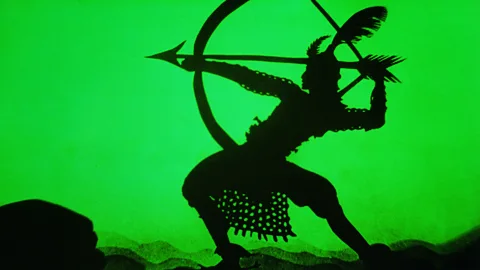
BFILotte Reiniger's The Adventures of Prince Achmed was released a century ago in 1926. This stop-motion classic makes her "a key figure in the history of cinema".
Starting out in the film business isn't always glamorous. In the silent era, aspiring German actress Lotte Reiniger began her career on an adaptation of a folk tale, The Pied Piper of Hamelin. But she wasn't in front of the camera. Her job was to handle the rats.
Despite this inauspicious beginning, Reiniger would soon earn a place in cinema history. Just a few years after her rodent-wrangling experience, she was in the director's chair. That was extraordinary enough – in the 1920s, few women were given the opportunity to direct. But Reiniger's project was particularly innovative. Released a century ago in 1926, The Adventures of Prince Achmed is recognised as the world's oldest surviving animated feature film – despite what Walt Disney's publicists might prefer you to think. Disney's Snow White and The Seven Dwarfs is often considered to be the first ever animated feature. But Lotte beat Walt by more than a decade.
"You can't think of an equivalent to Lotte Reiniger," says Jez Stewart, Curator of Animation at the British Film Institute. "This young female artist had the vision and skills to create a timeless classic that still speaks to audiences across the world. Even 100 years on, we're still thinking, 'How did she do that?'"
Reiniger was born in Berlin in 1899. In her early years, she expressed her interest in acting through shadow puppets, cutting out silhouette figures to stage miniature Shakespeare shows. It was her skill with the scissors that got her on to the set of the Pied Piper film (she hand-cut the title cards). But it was the rats that proved most influential.
As she recalled in a 1970 book, Shadow Puppets, Shadow Theatres and Shadow Films, the animals were uncooperative: none of them would follow the Pied Piper. So, the film-makers switched to wooden rats. They shot one frame at a time, moving the models inch by inch, creating an illusion of motion when the film was played back. "This was my first encounter with animation," Reiniger said. It sparked an idea: she could bring her old-fashioned shadow puppets to life using this "stop-motion" technique.
 Getty Images
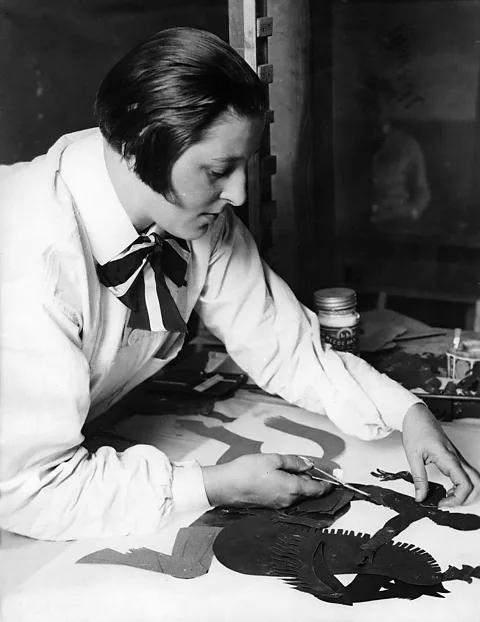
Reiniger experimented with placing her articulated silhouette figures flat on a glass plate, lit from below. As she adjusted their movements frame by frame, a camera captured each shot from above. It was a painstaking process, requiring more than a thousand frames per minute of film. But by 1919, she had completed her first short film, The Ornament of the Loving Heart. Over the next few years, she made several more. "She was always interested in fairy tales," Stewart tells the BBC, noting her early adaptations of Sleeping Beauty and Cinderella. "She even made an advert for Nivea cream."
At that time, animation was in its infancy (Mickey Mouse wouldn't appear for another decade), so Reiniger's short films stood out. In 1923, they caught the attention of a Berlin banker, who offered to finance a longer production. "The opportunity to make a feature-length animated film at that time was an anomaly," Stewart explains. "But that anomaly was connected to the way Reiniger made films. It was an affordable, artisanal method using limited means."
The film's greatest technical achievement
Indeed, once Reiniger accepted the proposition, she took on just a handful of staff. This included a few animators, an assistant to track the frames shot, and Reiniger's husband, who controlled the camera. As well as directing, Reiniger constructed the silhouette puppets herself, cutting characters from cardboard and lead, before fixing their joints with wire hinges. She also devised the film's scenario, combining several Middle Eastern fairy tales into one story, The Adventures of Prince of Achmed.
Reiniger's yarn follows the titular prince as he battles a shape-shifting sorcerer across various adventures. A century later, many of the film's mystical sequences still dazzle. In one stand-out scene, the sorcerer fights a witch, with the duo transforming into lions, scorpions and dragons mid-combat. Focusing on myth and magic made perfect sense for animation. As Reiniger put it in one magazine article, animation enabled her to "show events which could not be performed by any other means".
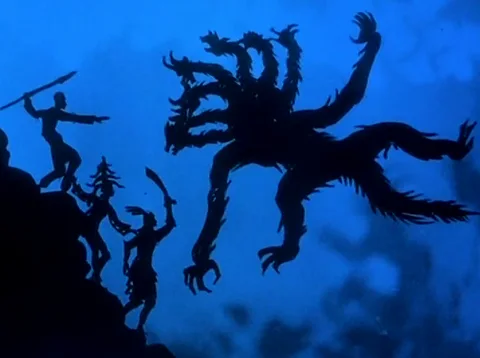
But the film's greatest technical achievement was in its background imagery. "She introduced an early version of the multiplane camera," explains Cristina Formenti, President of the Society for Animation Studies. "She used it to create a sense of depth. If you watch the film, you can see that it's not just a flat image."
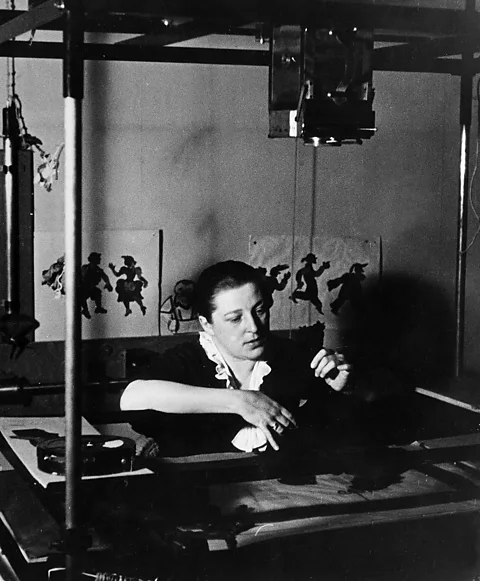
Reiniger's multiplane device was essentially a tall scaffold. The camera was mounted at the top, shooting down through multiple layers of glass. Reiniger placed her silhouette characters on one layer, while background imagery and effects were animated on different levels. She later explained the technique in her book, referencing a scene of Prince Achmed on his flying horse. "[T]he starry sky was worked out on three layers. All three were moved at a different speed… This arrangement of movement produced a feeling of space, giving to the shot a weird fantastic quality."
Although Reiniger pioneered this innovation, she didn't receive much credit for it. In 1940, Walt Disney was awarded a US patent for the multiplane camera. In 2000, he was inducted into the National Inventors Hall of Fame for inventing the device. "Obviously, Disney's version was more complex," Formenti says. "But Reiniger is the first one that's known to have used it."
More like this:
This wasn't the only way Disney's achievements overshadowed Reiniger's: the studio's DVD and video boxes have declared that Snow White and the Seven Dwarfs was "the first full-length animated feature ever made", a claim that echoes the cartoon's initial marketing in 1937. "Disney was a genius in many ways," Stewart says. "Self-marketing and promotion was definitely one of them." The film's original posters and trailer emphasised that Snow White was "Disney's first full-length feature production". As Disney's name was synonymous with animation, the idea that Snow White was the world's first animated film quickly took hold.
 Getty Images
But even though Reiniger's film came a decade earlier, historians still hesitate to confirm it as "the oldest" animated feature. In 1917, Argentinian film-maker Quirino Cristiani used a cut-out technique similar to Reiniger's to create a film called El Apóstol. Some historians believe this could be the first-ever animated feature. But all copies have been lost, and its exact running time is undocumented. In the face of this uncertainty, Stewart prefers to describe The Adventures of Prince Achmed as "the earliest surviving animated feature" rather than the oldest.
Influential but unique
In any case, Reiniger's film was certainly the most ambitious animated production ever made up to that time. It received its premiere in May 1926, having taken three years to complete. Reiniger was just 26 years old. "To give somebody three years to make a film – that didn't happen at that time," says Stewart. "It's another way in which this film is a complete anomaly."
Over the following years, The Adventures of Prince Achmed was screened in France, the United Kingdom and the United States. It was well-received by critics and audiences. Film-maker Jean Renoir even compared Reiniger's genius to Mozart's. But it never achieved the widespread attention of later animated films like Disney's Snow White. "It ended up being distributed more as an experimental film rather than an entertainment film," Formenti explains. "That limited the scope of its success."
Despite its limited distribution, The Adventures of Prince Achmed has continued to amaze viewers for a century – and continued to evolve. "Some of the best screenings I've seen have been with different musical accompaniments," says Stewart. He recalls one musician in Beijing who mixed a live electronic soundtrack using a laptop. In August, he has a 100th anniversary screening planned at the British Film Institute which will feature new live music. Other centenary performances have already been held in the United States, Canada, the Netherlands, the Czech Republic and Reiniger's native Germany.
Stewart also hopes this milestone anniversary can bring attention to Reiniger's later works. "After Prince Achmed, she never got to make another feature film," he says. "But she had some prominence in the 1950s." She returned to her fairy-tale roots, creating a series of short films based on stories like Puss in Boots and Thumbelina, which were screened on the BBC and US television.
Reiniger's legacy also extends to subsequent generations. Director Nora Twomey described Reiniger as "a big influence" on her 2017 Oscar-nominated film The Breadwinner. But as influential as Reiniger has been, Stewart believes that she is still unique. "She was a young female artist making an unprecedented feature film in animation – and it's still in circulation 100 years later. It's just extraordinary."
Her place in the history books is certainly a long way from her unpromising start as a rat handler. But just like her fairy stories, there is a touch of magic about Lotte Reiniger's tale. It's as if she were imbued with the powers of those witches and sorcerers of her own imagination – breathing life into shadows to create a legacy that would last a century, and beyond.
--
If you liked this story, sign up for The Essential List newsletter– a handpicked selection of features, videos and can't-miss news, delivered to your inbox twice a week.
