'He told people what they needed to hear': The weatherman crucial to D-Day victory

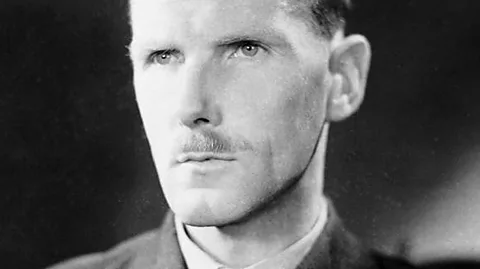
It was the boldest military operation in history – and its success hinged on weather forecaster James Stagg. A new film with Andrew Scott and Brendan Fraser explores his role in the end of World War Two.
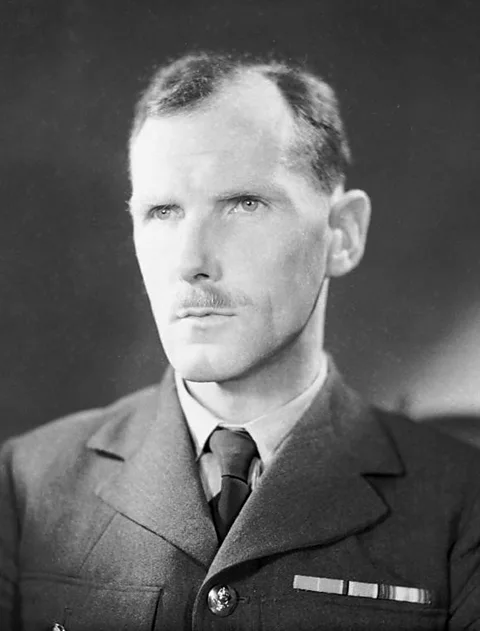
On his inauguration day, in 1961, John F Kennedy asked the outgoing president, Dwight D Eisenhower, what had given him the advantage over the Nazis on D-Day, when Eisenhower was Supreme Commander of the Allied Forces. "We had better meteorologists than the Germans," Eisenhower said. That anecdote is cited at the end of the new film Pressure, which suggests that Eisenhower's reply was not much of an exaggeration. The film tells the true story of the life-or-death decisions the Allies' chief meteorologist, Scottish Royal Air Force Captain James Stagg (Andrew Scott), and Eisenhower (Brendan Fraser) had to make in the three days leading up to the Allied invasion of Normandy, which historian Antony Beevor, in his authoritative D-Day: The Battle for Normandy, calls "almost certainly the most ambitious operation in the history of warfare".
As events unfolded, on 6 June 1944, nearly 160,000 Allied troops arrived in Normandy by air and sea, which proved to be a turning point in the war. But days before the landing, which was initially planned for 5 June, Stagg could see that a dangerous storm was coming, even though the team of meteorologists he led disagreed with him fiercely. His job was to distil the forecasts into a simple Go or Don't Go recommendation for Eisenhower. But it was fraught with pitfalls: going into a storm could have cost thousands of lives, but a delay could have meant waiting weeks for the right conditions and risked word of the operation leaking to the Nazis.
 Focus Films
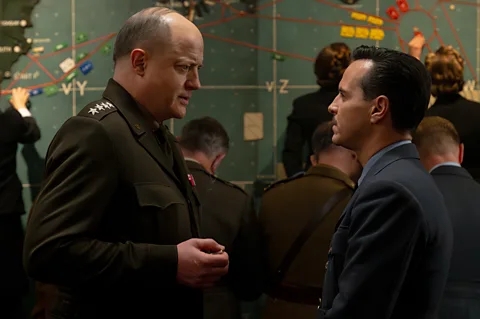
Based on David Haig's acclaimed 2014 play, the film turns those events into a tense drama full of clashing opinions and egos. And as its creators tell the BBC, it is also a story about relying on the hard evidence of science, and the heroism of telling uncomfortable truths.
"How do you make a slow-moving weather system feel thrilling? It's not just the weather," the film's director, Anthony Maras (Hotel Mumbai), who wrote the screenplay with Haig, says. "How do we look at the characters, put them under immense pressure, and see how they morph and change?" From that perspective, he says, "You can make a film about a slow-moving weather system feel like the biggest thing on Earth because it is to these characters."
A personality clash
Scott portrays Stagg as historical accounts do: a taciturn, buttoned-down personality. He had, Haig says, "a quiet, steely integrity", and Scott allows us to see the depth of feeling beneath the brusque exterior. Much of the film takes place in offices and rooms full of weather maps in Southwick House, the 19th-Century estate near Portsmouth used as Allied headquarters, where, for security reasons, the meteorologists couldn't communicate with the outside world. There, Stagg remains unemotional on the surface, even when he gets word his pregnant wife is in labour.
His rival meteorologist is a brash, self-important American, Irving Krick (Chris Messina), who had Eisenhower's trust. Krick's forecast, which saw clear skies ahead, was based on charting historical weather patterns. At the time, Haig says, that approach made sense "for North Africa and the USA," where Krick had made successful predictions, but didn't account for the changeable English weather. Meanwhile, Stagg was noticing troubling changes in the approaching air currents, a then cutting-edge method of weather forecasting not common in 1944.
 Alamy
AlamyEveryone from Eisenhower to Krick to British Field Marshall Bernard Montgomery (Damian Lewis) wanted to go ahead on 5 June as planned. Stagg had to give them a Don't Go recommendation. Maras says: "You had a character in Stagg who wasn't interested in what people wanted to hear, but was intent on telling them what they needed to hear. And I think there's a type of heroism in that." In the end, Stagg saved the operation by discerning that there would be a brief break in the bad weather on 6 June, but he could not have foreseen that when he delivered his unwelcome verdict.
Why the story is worth retelling
Stagg's decision resonates today at a time when facts and science are often seen as opinions. Maras says of Stagg: "He looked in the eyeballs of the fiercest military commanders on planet Earth, at least on the Allied side" and said, essentially, "All we can do is go on what we know. There is evidence and there is data." And his backbone is not mere Hollywood gloss. Beevor writes, "Stagg felt compelled to follow his own instinct and overlook the more optimistic views of his American colleagues."
More like this:
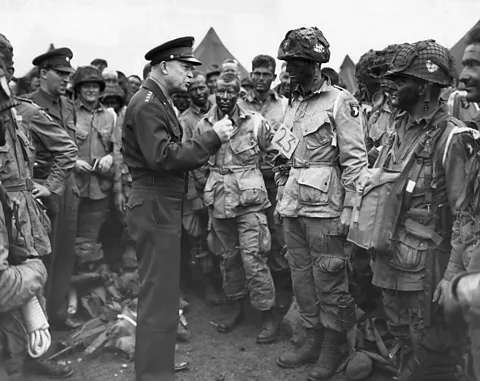
While Stagg will be a little-known figure to the film's audience, so will be the Eisenhower we see on screen, also based on historical accounts. In the popular imagination, his presidency overshadows his military career. Fraser says that before reading the script, the name Eisenhower would have brought to mind the famous, catchy slogan from his presidential campaign and the simplistic image that has come down through the decades. "I would have thought of a campaign pin that said 'I like Ike' and a cartoon drawing of a smiling bald man who I also knew was involved in the planning of Operation Overlord", as the D-Day invasion was officially called.
But during Eisenhower's war years, Maras says "He was a guy who was smoking four to six packets a day, who was drinking something like 20 to 24 cups of coffee a day, whose body was breaking down, who had an ulcer on his back that was an open wound. He was a mess. And he was extremely vulnerable in his private moments."
We see that vulnerability in moments he shares with his driver and personal assistant, Lieutenant Kay Summersby (Kerry Condon). First assigned to Eisenhower as a member of the British motor corps, she became his confidante. There has long been unproven speculation about an affair between them, but the film depicts their close emotional bond without suggesting anything further took place.
 Getty Images
Their private conversations on screen reveal how much Eisenhower's responsibility weighed on him, partly due to the shadow cast by Exercise Tiger. That a live-ammunition rehearsal for D-Day, which, Eisenhower had authorized six weeks before, The film opens with a recreation of that exercise, which went so monumentally wrong that more than 700 Americans died when miscommunications led them into friendly fire and an attack by German boats.
Fraser sees the film's World War Two story offering a lesson for today. "Let us be reminded of what leadership looked like at one time, and see the importance of paying attention to facts and science and the need to speak truth to power," he says. 5 June 1944 did bring a howling storm, just as Stagg's evidence predicted.
Pressure was released in US cinemas on 29 May.
--
If you liked this story, sign up for The Essential List newsletter– a handpicked selection of features, videos and can't-miss news, delivered to your inbox twice a week.
